• Intersections of Protest, Art, and the University
    J. Howard Miller Rosie The Riveter 25730_keith-haring-ignorance-equals-fear.png_d83a0ec2-f63a-40fe-b478-47c9d1c1cd9d_x2 Friday, February 9, 2018..United at The Rock rally against racism. Chancellor Beverly Davenport...Photos by Erik Campos..41161 IMG_7598 Make_Art_Not_War_24x36_offset-01_1024x1024 Written by Diana Dalton
    Edited by Josh Strange

    Posters. Chants. Marches. T-shirts. Sit ins. Walk outs. Violence. Division. Throughout the history of the modern university, student protest has been a constant presence. In America, there lies a rich history of student protests ending in triumph, tragedy, and bitter stalemate. Because protest in general frequently tackles issues of culture, the histories of American protest and art culture and inextricably entwined, as art of all forms has been an inspiration to changemakers spanning generations.

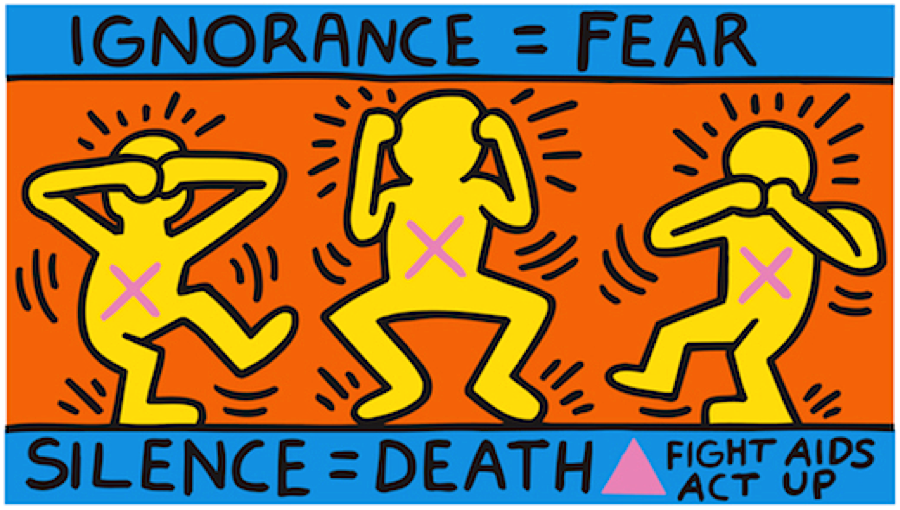
    Contemporary protest has long utilized art as a means to sway emotion and opinion. What comes to mind when you picture the 2016 Women’s March, for example? Alongside the iconic images of pink-hatted throngs in D.C., the answer is art in every form. Take Shepard Fairey’s “We The People” campaign, a poster series created for the march. You may not recognize Fairey’s name, but you probably recognize his work: the street-style portraits of a diverse group of American women boldly hued in red, white, and blue. Keith Haring’s provocative pop art played a powerful role in bringing awareness to the American AIDS crisis of the ’80s. To this day, Haring’s dynamic artworks are canonized as quintessential in the protest art movement. Informal collectives also produce impactful protest and performance art, as seen in the radical takeover of the Robert E. Lee monument in Richmond, Virginia in July 2020. The controversial statue was adorned with messages including “No America without Black America”, painted with various pro-Black and anti-police messages, and became the site of vigils and sit-ins for days. The collective action was later deemed “the most influential form of American protest art since World War II” by The New York Times. The iconic art the Times was referencing could have been Rosie the Riveter, the glamorized factory-working woman who remains a household name eighty years after the war. Although Rosie’s once-undisputed status as a feminist icon has been denounced in recent years, there is no doubt that Rosie was a progressive symbol of female power in the 1940s, one which continues to resonate in popular culture today. Viewed side by side, Rose even shares a steely, determined expression with the women of Fairey’s “We The People”.

    Our campus, like any, is no stranger to cyclical protest art. Chalkings championing social and political causes line sidewalks and Pedestrian Walkway, replaced by the next underfoot gallery with each rain. Lamppost stickers are weathered, scratched away, covered, and installed again. Politically-charged carvings and sharpie scribbles on bathroom stall doors are as common and as inescapable as the next repainting of the Rock.

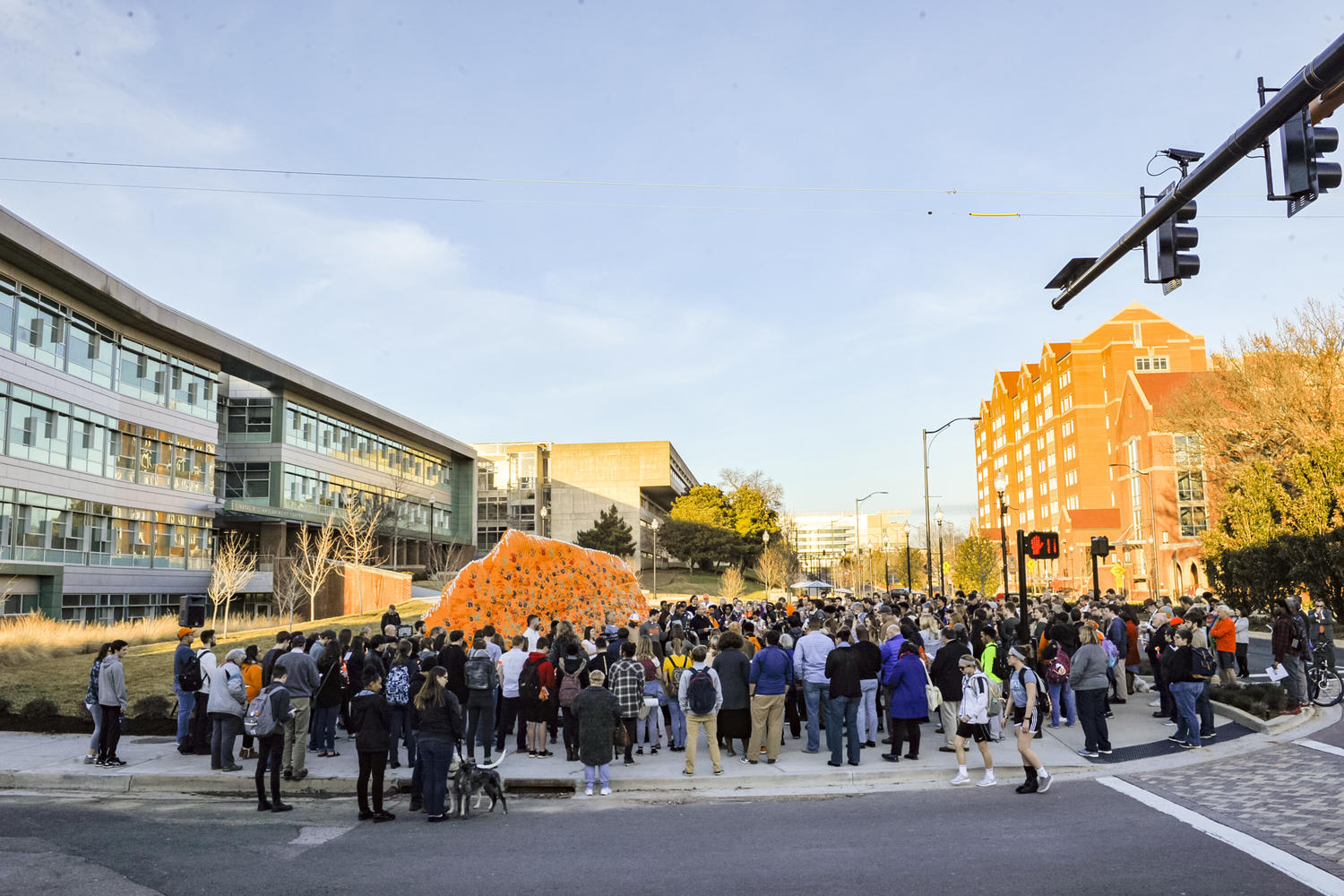
    For over 50 years, the Knox dolomite slab known as “the Rock” has been a unique canvas for student voices at Knoxville’s University of Tennessee campus. Installed in 1966 as a symbol of Volunteer strength, the name of the Rock was chosen from a student suggestion reported in The Daily Beacon, and the painting tradition began about 14 years later. A walk past the Rock today will usually offer a club promotion, a holiday or birthday recognition, a meme, or some cacophonous mishmash of all of the above, all lovingly painted amid spray paint fumes and fierce competition for canvas space. Since the tradition of painting the Rock was born around 1980, its 97.5 ton face has worn wedding proposals, a “God Bless America” tribute following the attacks of 9/11, and portraits of revered Volunteers and alums. It has also worn slurs and swastikas. In response to a spate of bigoted messages on the Rock in 2018, the annual “United at the Rock” event began, inviting Vols to slather the Rock in a rainbow of painted handprints as a symbol of unity. The hate speech hasn’t stopped, but has become more publicized and villainized since the installation of a 24/7 livestream of the cultural slab in October 2019. The Rock stirs a conversation about free speech, artistic expression, and community accountability. Is it possible for the Rock, owned and monitored by the university, to be a truly liberated canvas of expression? It’s certainly a start.

    At the time of writing, the Rock’s streetside face wears a message promoting Earth Week in a green curlicue font on a sky blue case. Within minutes of watching, it’s being repainted again; a small group in matching white T-shirts have converged on it, shaking spray paint cans. The back of the Rock is more of a collage, currently wearing colorful tagging and large blacked out portions.

    On our campus and in places where young people congregate across space and time, social values are imprinted on the landscape. Student art is not amateur; we are not junior activists. The cultural exchange between generations is vital to the growth of the ever-elusive “movement”, and art on large and small scales keeps the human spirit running, while activism keeps the boundless human capacity in check. Understanding university protest is indispensable to understanding trends of protest and protest art on a broader scale. University protest is a terrarium, incubating and dismantling internal governmental and social practices while looking to the outside world for large-scale environmental cues. The glass is not one-sided; the larger cultural disseminates and adopts the messages carried by young organizers as well. Art has been the pulse of this activism. Art makes the memorability, the outrage, and the introspection of cultural shifts tangible. Art can hold the bleakest and loveliest junctures of the human experience.


    Artwork by Shepard Fairey & Keith Haring
    Photographs from NBC, UTK News, & UTK Commission for Women
  • The University’s Beauty: Intention Beyond Functionality 
    Written by Abby-Noelle Potter
    Edited by Josh Strange

    The side door of Clement Hall flings open as I untangle my headphones and begin speed walking to class. As I head to my 10:00 am, I briefly look around. The identifiable buildings, between the constant construction, seem unremarkable. My head fills with conversations that I have had with other students as they talk about how their dorm is on fire or has flooded, and I am reminded of the mold in my own dorm bathroom. Of course, this is followed by a sarcastic “Go Vols!”. In my experience days pass like this. In the rare moments that I find solitude from life and my own thoughts, I am filled with peace. In those moments, I would like to envision a campus filled with beauty. Especially since the serenity of campus is often interrupted by a power drill. 

    Travel and Leisure Magazine in 2013 chose UTK as one of “America’s Ugliest College Campuses”. Noting, “with a lack of green space and a road slicing the campus in half, the brick and concrete environs of the University of Tennessee could double as a skateboard park. The John C. Hodges Library is a notable eyesore.” Art in all forms, including architecture, can be criticized for its blunders.

     Even though Hodges has been critiqued for its design aesthetic, that does not stop it from being the most popular library among students at UT. Its architectural design is often described as a ziggurat, however, Jennifer Akerman, associate professor at the College of Architecture and Design, rather describes Hodges “as being more like a hill or mountain” (University of Tennessee Knoxville News). Stating that it is “appropriate given the terrain of East Tennessee and our campus’s relationship to that landscape” (University of Tennessee Knoxville News). Art can represent or spread awareness to specific groups or even locations. Hodges, being one of the central locations on campus, is beautifully curated in its purpose to serve the University and represent the surrounding land. Incorporating the history and geography of Tennessee into the imagery and architecture of the University remains an important priority for campus planners. However, this edifice did not always loom so large on campus. Roughly fifteen years after opening, Hodges was expanded and reopened in 1987. This “more than tripled the library’s square footage” and during that time “Hodges Library was at the time the largest and most modern library building in Tennessee” (University of Tennessee Knoxville News). According to Akerman, “This formal organizational strategy creates a monumental structure that’s less hierarchical and more democratic in terms of distributing prime views and adjacencies” (University of Tennessee Knoxville News). The building, a quintessential location for any student on campus, does not receive enough credit. It is important to unpack the intention behind the building of Hodges Library and pay homage to its forgotten history.  

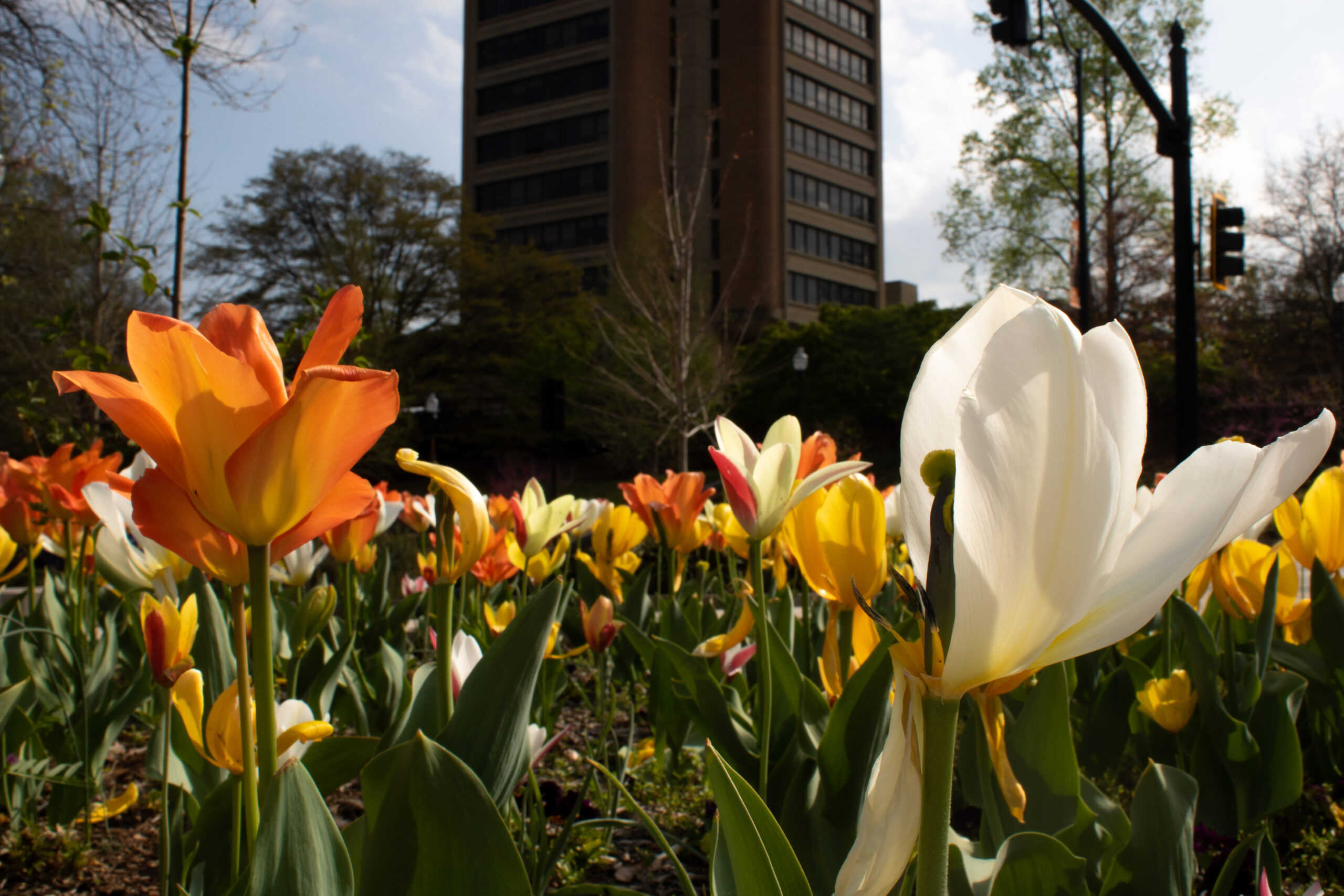
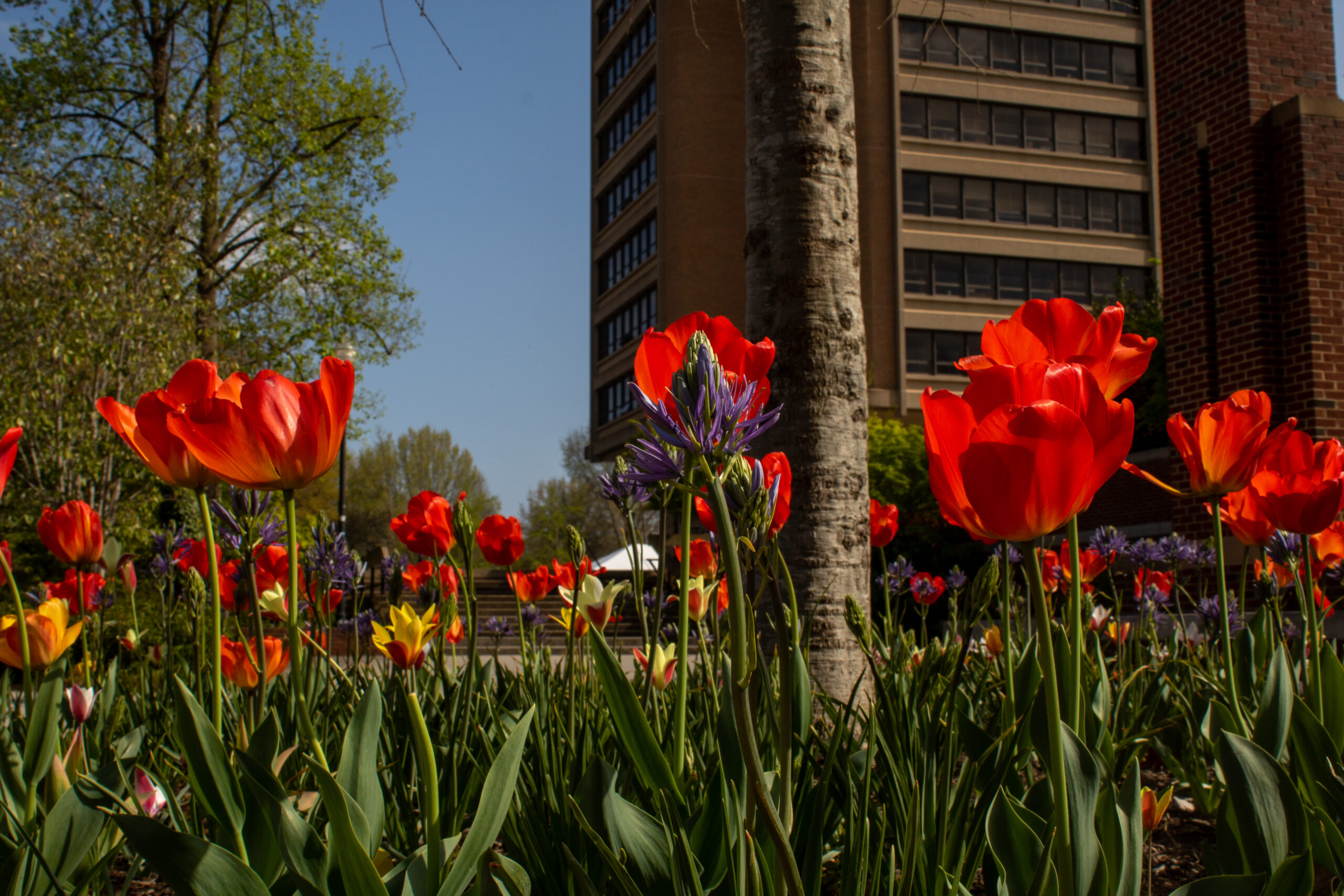
    Other efforts by UTK to beautify the campus has been done in recent years. According to the University of Tennessee Knoxville News article, “Campus Beautification Initiative Improves More Than Aesthetics” in 2019, “The City of Knoxville originally planted one species of sycamore along the boulevard, and now dogwoods, oaks, redwoods, and holly trees line the street” (University of Tennessee Knoxville News). This specific quote is referencing the many trees and shrubbery that line Volunteer Boulevard. Not just by the Boulevard but walking or driving through campus the vibrant colors are hard to miss. Jason Cottrell, assistant director of landscape services at UT, talks about the benefits of choosing plants along Volunteer Boulevard. Cottrell said this was designed not only to “create the illusion that the road is cramped” which slows down oncoming traffic, but it “was to improve water quality in the Tennessee River” through using a “bioswales-network” that purifies runoff water (University of Tennessee Knoxville News). The landscape that provides comfort in its beauty also serves the functional purpose to protect the community’s environment. The connection between art and this landscape is easily seen, due to its picturesque wonder and innate beauty. 

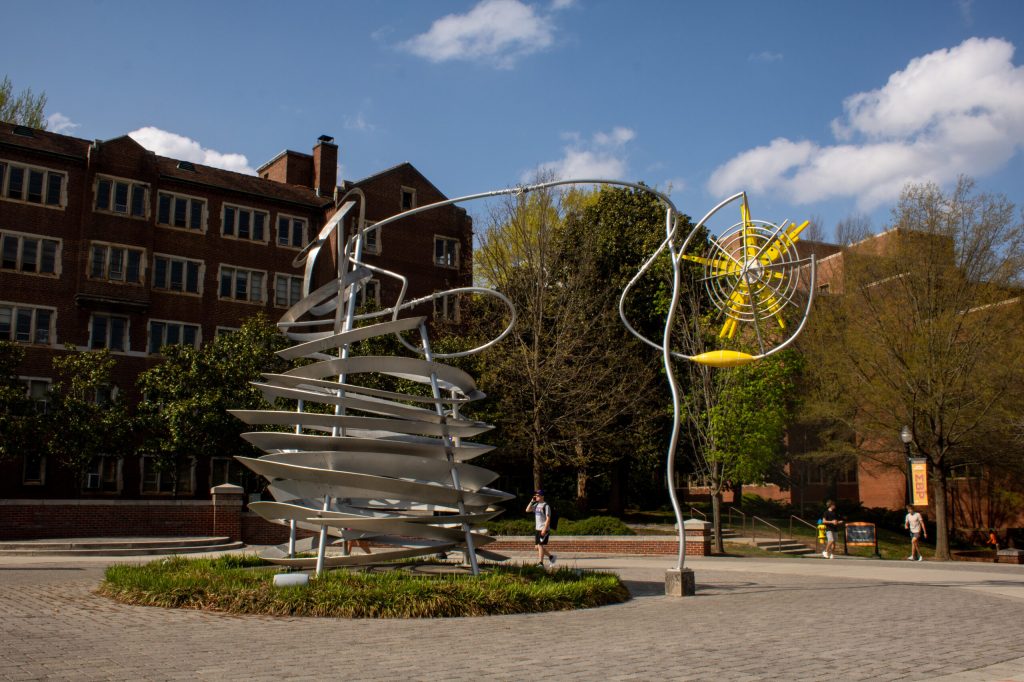
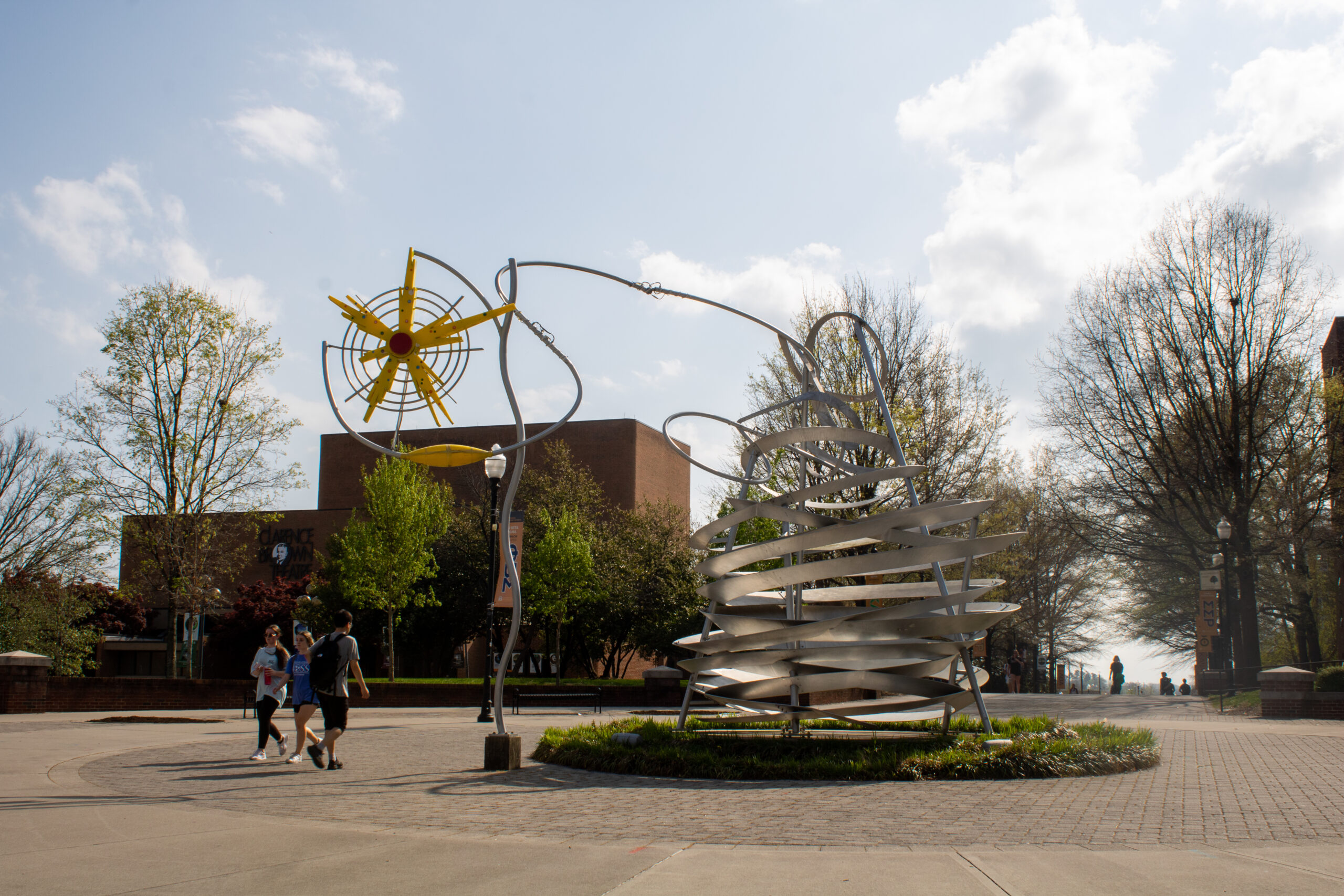
    In 2009, the enormous sculpture on PED walkway was installed. While this might be an eyesore for some, as it lights up at night it could have a different meaning for others. The statue, A Startling Whirlwind of Opportunity, was created by artist Alice Aycock. According to The University of Tennessee Knoxville News, she said the statue represents “the acquisition of knowledge is not a static series of steps but an incredibly dynamic, energetic, and creative ricochet of information. Ideas are not at rest”. The complexity of metal swirls bends toward an incisive red dot that has yellow spikes jutting from its center. This “dynamic” display of energy probably could be found in some form during a student’s time spent at the University, even though it may not typically be thought of as this representation. The artist’s intention aligns with the University’s mission of “a shared commitment to discovery, creativity, learning, and engagement.” A Startling Whirlwind of Opportunity reminds onlookers to understand the intention behind artistic choices, even if they may not be apparent.

    While fulfilling my duties as a student at the University, I may spend a second longer admiring the campus and its buildings and people. For all the effort put into the design of UT’s campus, these buildings, sculptures, and roads must be acknowledged. According to Unigo.com, a university student said, “The campus is a wonderland” (Travel and Leisure Magazine). Maybe it is well time that students put on their rose-colored glasses and view it as such.


    Photography by Diana Dalton
    IMG_7115 IMG_7101 IMG_7111 IMG_7100 IMG_7105 IMG_7120
  • First Friday Visit at Le Swamp: Enshrine Room

    Photos & Words by Rose Hamm

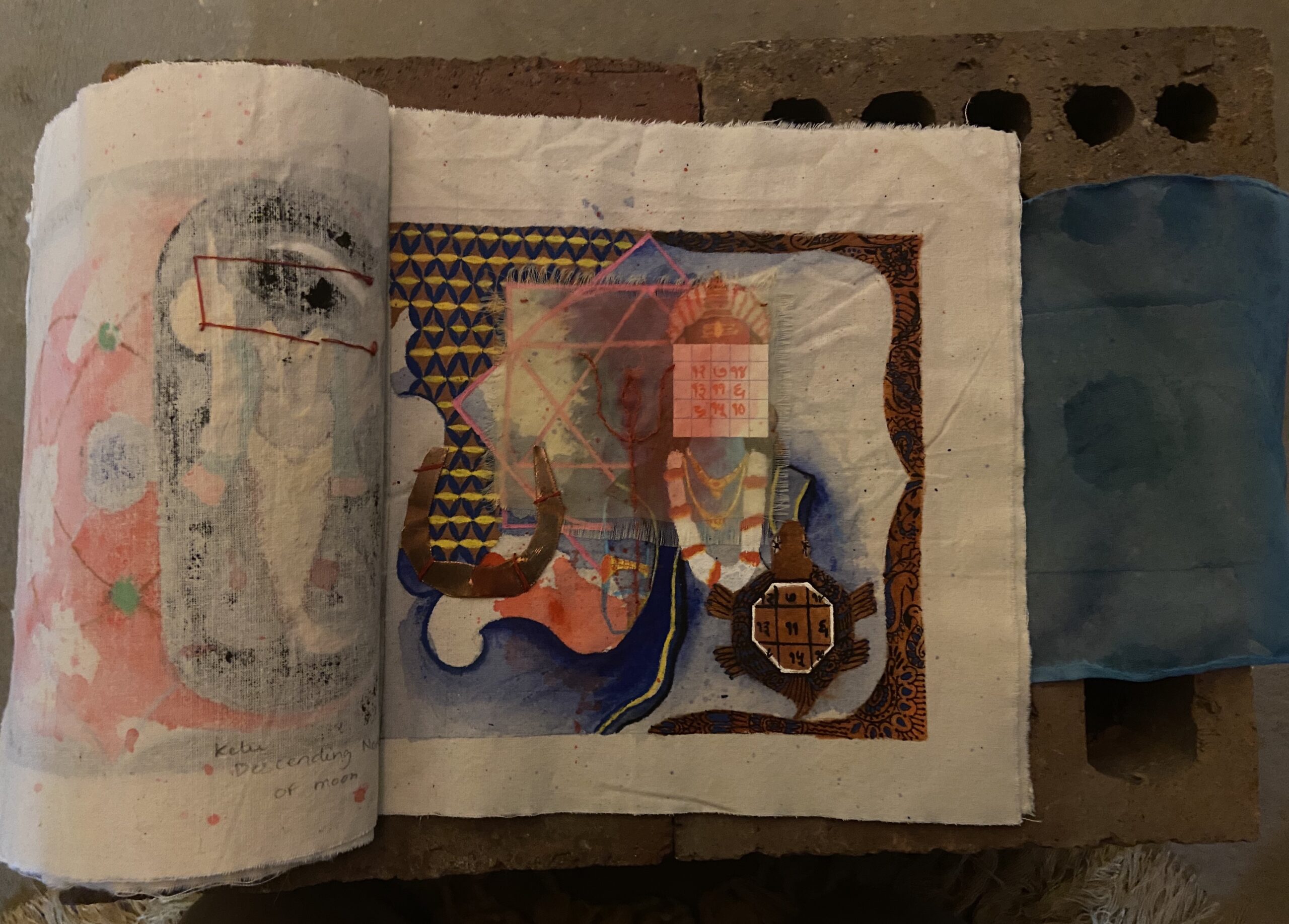
    Enshrine Room is installed at the artist-run-space Le Swamp from April 1-9, featuring artwork by Ashley Ekstrum, Ginger Markli, Kirby Miles, and Saloni Parekh.

    1

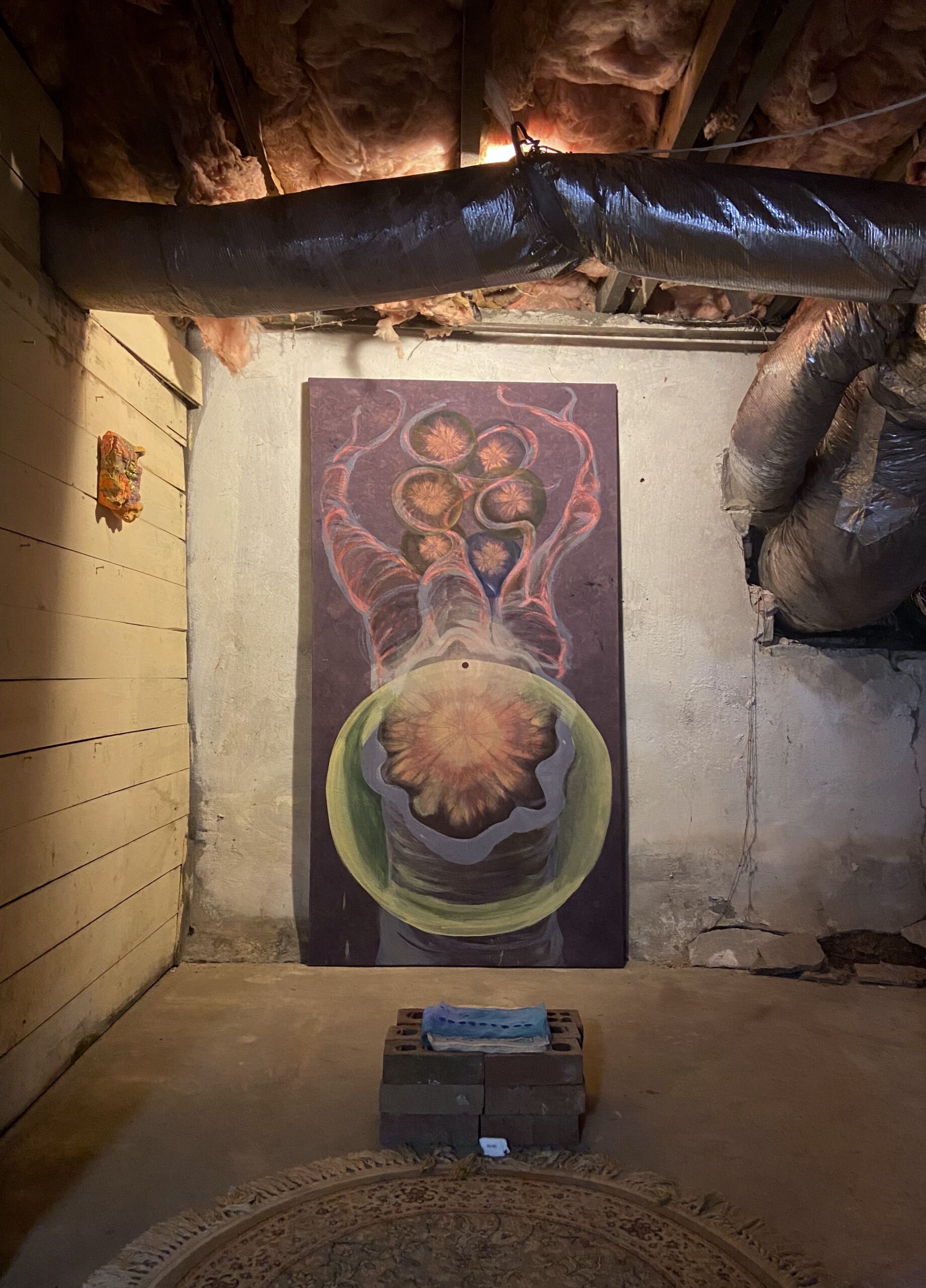
    Ekstrum’s oil paintings accentuate organic forms created through the hand-dyeing process of her canvas with natural and recycled pigments.

    2

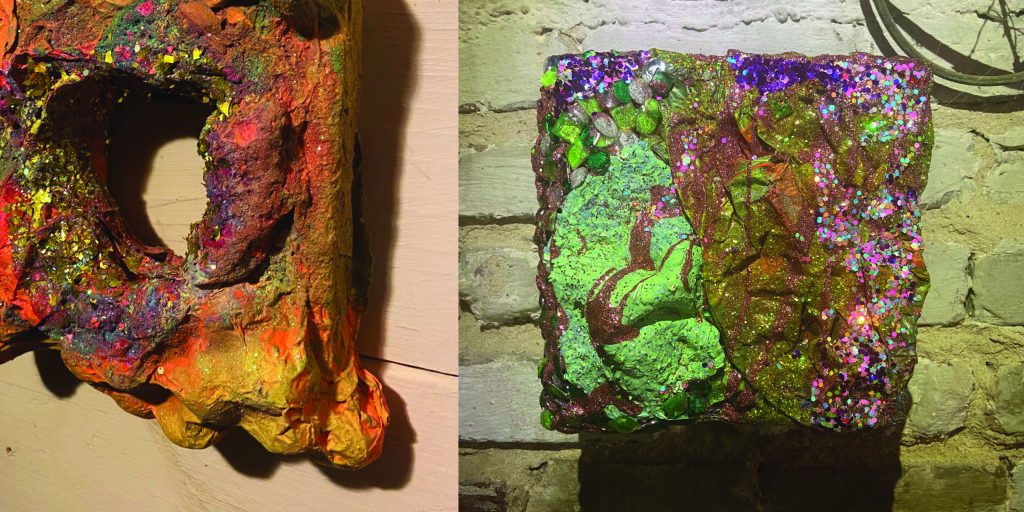
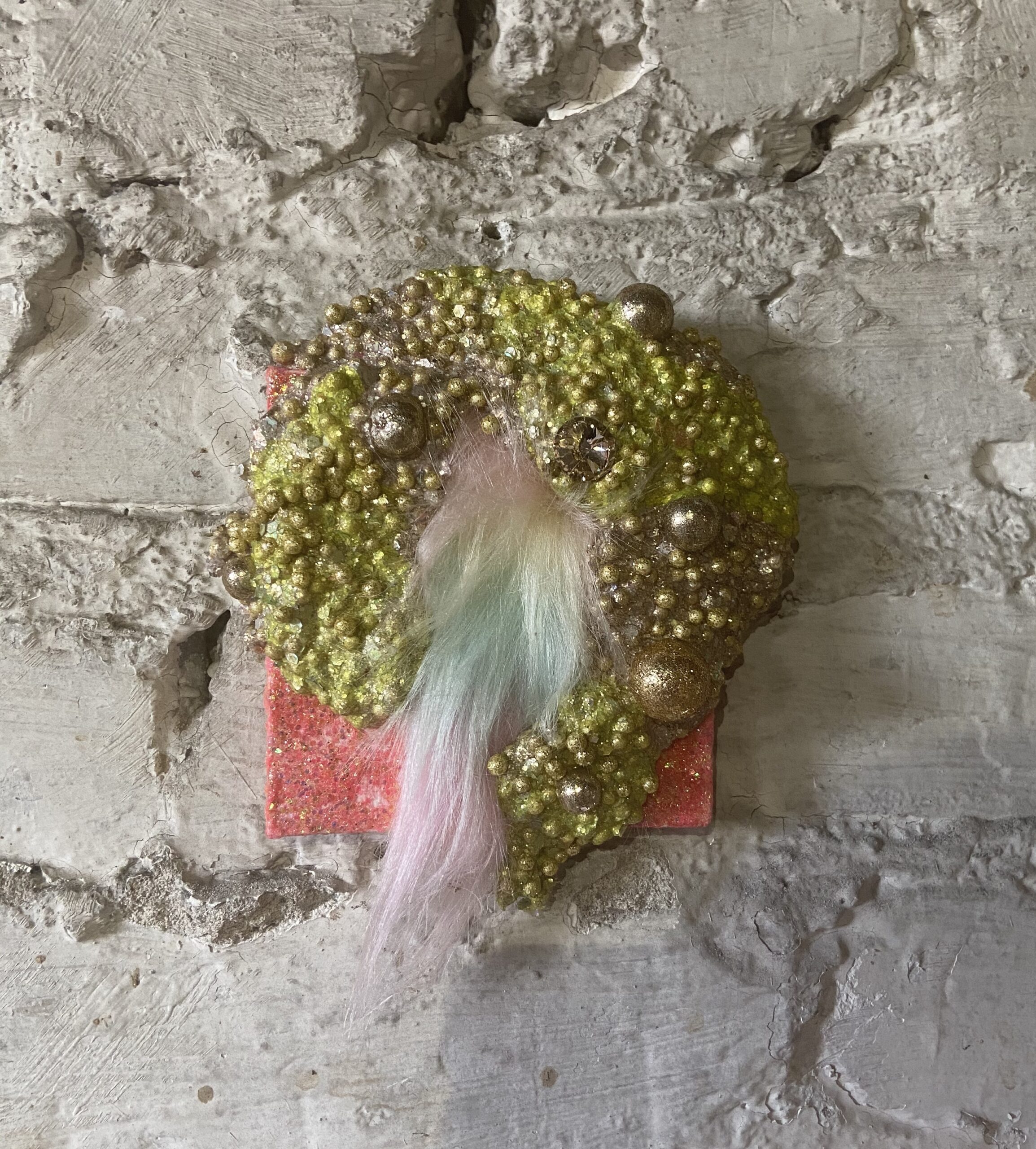
    Mile’s intricate multimedia artwork bridges painting and sculpture by embedding beads, glitter, gems, and other light-catching artifacts into the painting surface.

    3 4

    During Enshrine Room’s opening reception, Markli melded her masseuse practice and performance art through massaging a participant with festival pigments from the local Indian market and natural pigments preserved from Ekstrum’s dye baths.

    5 6 7

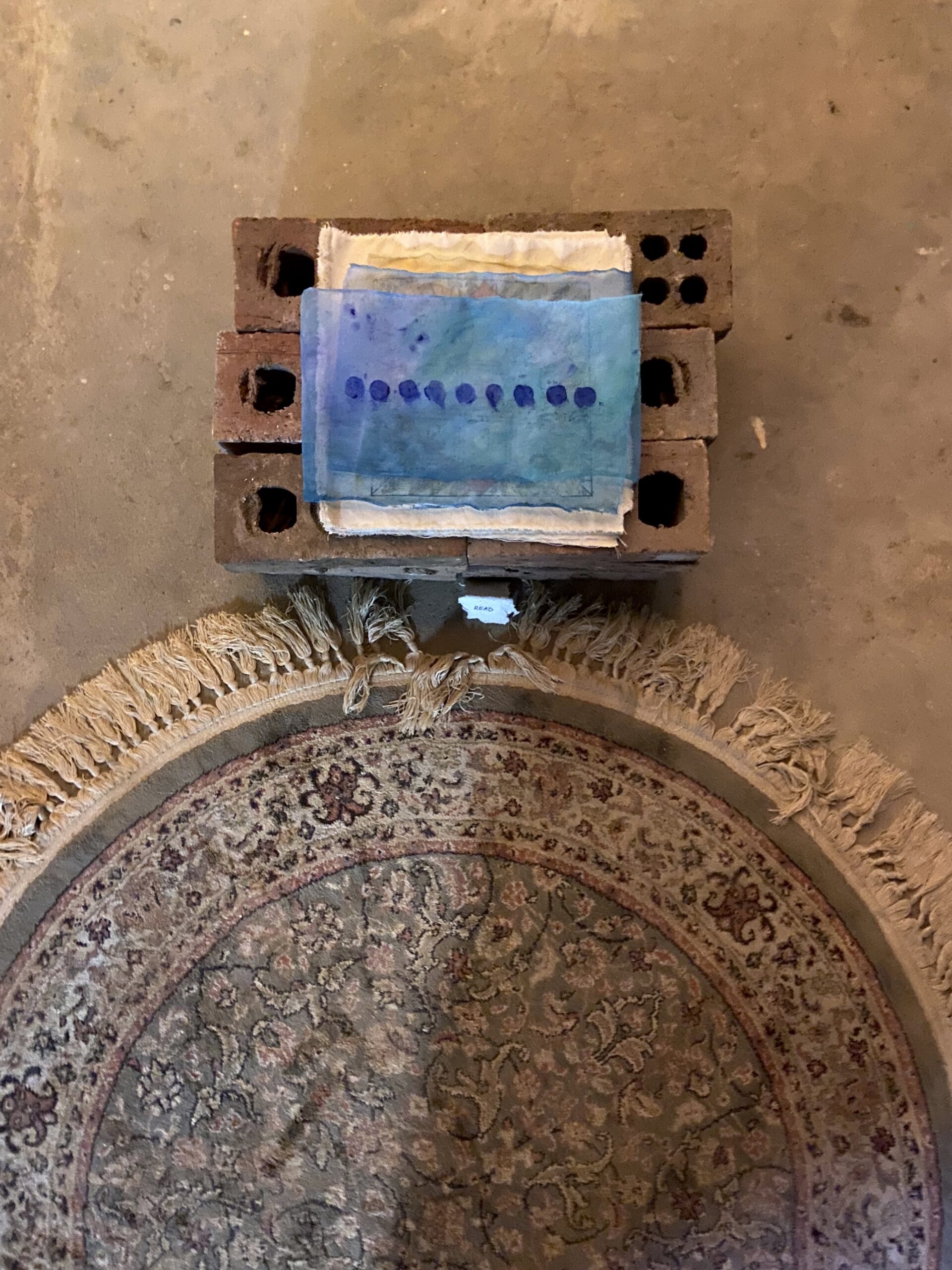
    Parekh’s paintings are presented bound and coax the viewer to the floor.

    8 9 10 11

    Parekh’s work also explores soundscape and interactive musical sculpture.

    Enshrine Room‘s closing reception is celebrated with a communal bonfire on April 9 from 6-9 PM. If you would like to visit Le Swamp, you can direct message their Instagram @le_swampppppppppppppppppp for the location’s address.

    12
  • The Last War Story
    By Michael Knight
    Phoenix: Spring 2004, Inspirations Issue

    My father’s war story is a simple one.

    He shipped out to Vietnam in 1968, an ROTC lieutenant, trained for airborne duty. All blood and balls, to hear him tell it, but I have a difficult time seeing my father in that more dangerous light. He is a small man, maybe five foot eight, the top of his head hardly even with my chin. He jogs twice a week. He wears bifocals and carries a key ring with too many keys. But there he was, twenty-two years old, standing on the tarmac with the other new arrivals, waiting for somebody to tell him which way to go, when four guys pulled up in a truck and started reloading the plane with coffins, dead men to be channeled home. He stopped counting at nineteen. He had a change of heart.

    Much to his relief, he was routed out of airborne two days later and assigned to an officer’s club on the South China Sea. My father spent Vietnam at the beach. He played volleyball and borrowed insect repel- lent. He managed inventory at the club; it would have been a tragedy if the war ran out of booze. He attended hygiene classes and wrote letters to a new wife back in Alabama. He bought a camera, like he was away at summer camp, and mailed the pictures home: palm trees and elephant grass and men whose names he can’t remember now He saw traces of the war, distant blooms of light above the tree line and flickering sound, like thunder and heat lightning. They had resupply choppers moving in and out and sometimes they took mortar fire, a few stray rounds that scattered sand and seawater impressively then tapered off without anybody getting hurt. His commanding officer—a Texan named Bible—maintained a veneer of military discipline, salutes and guard duty and observation posts out on the perimeter, but nothing serious, nothing that could get you killed.

    Once or twice a week, my father would wander down to the nearby village with his camera and his sidearm. He never carried bullets but he always had plenty of film. He took pictures of mud huts and water buffalo and old women washing clothes in the Chu Lai River. This one particular mama San had picked up a few bars of I Wanna be Loved by You from somewhere. Boop boop be doop, she would say when he took her picture. And my father would say it right back, boop boop be doop, like it was part of some secret that they shared.

    If this was a more complicated story, here would come the rising action. My father would be transferred to a combat unit or his old mama San would turn out VC and try to kill him in his sleep. But, as I said, this war story is a simple one. The hero does his rotation and ships home and marries the girl. She bears him two children, four years apart. They build a house on a river and he practices law in the town of his birth. Every morning he wakes and kisses his wife and sees his kids off to school and never once is he called upon to prove his courage in the traditional sense. He never faces down an intruder or rescues his family from a fire. No one gets cancer or has an affair. So where is the dramatic tension? Where is the rush of a narrative line?

    When I was sixteen years old, I gave my father a story that I had written. It was about a kid my age who heard voices and went around starting fires all the time. My father came back to my room in the middle of the night and sat on the edge of the bed. He shook my shoulder to wake me. He wanted to be sure everything was all right. I told him I was fine; it was just a story. I could see a light outside on the end of the wharf, and I knew my father was debating whether or not he needed to haul himself down there and take care of it before he went to bed. My father is the sort of man who will let a thing like that—a burning light or an open window or an unanswered question—keep him awake at night. I could sense him weighing matters in his head, the winter cold and getting dressed all over again versus the effect a light left burning would have on his sleep. He sighed and shifted on the bed.

    “What happened to simple stories?” he said. “Why can’t people ever write stories where everything turns out all right in the end?”

    “That’s not a story,” I said. “You could write about a father and son who go fishing or something and discover they have a lot in common,” he said. “That’s a story I’d like.”

    “Right,” I said. “Sure.”

    After a while he patted me on the back and shuffled off in his bedroom slippers, closing my door behind him. I was big on privacy in those days. I listened to him grumbling to my mother about the light, heard the back door open and close. He appeared in the yard in a parka and winter boots a few seconds later and made his way to the end of the wharf. For a long time, he just stood there, his breath ghostly in the cold. The water was as dark and still as the sky Insects darted against the warm bulb casting extravagant shadows. I watched him shake his head, clearing out the at my window and hit the light switch and I couldn’t see him anymore.

    Here, then, is a story for my father.

    Inspiration: “There’s just enough untruth here to call this piece fiction but it was obviously inspired by my dad, his war story, our so-so relationship. I wanted to write about simple, everyday heroism. Being a good father, a good and decent man in general looks pretty heroic to me, especially given the fact that my dad has me for a son—I had issues, ok, leave me alone—and now that I have a child oh my own.” 


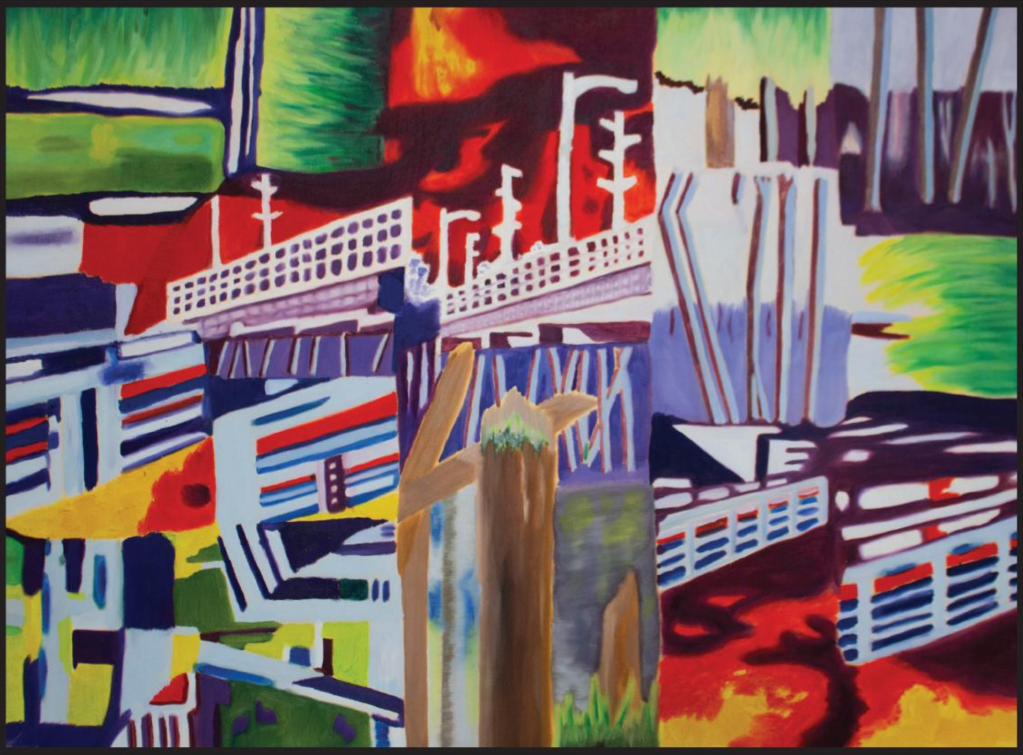
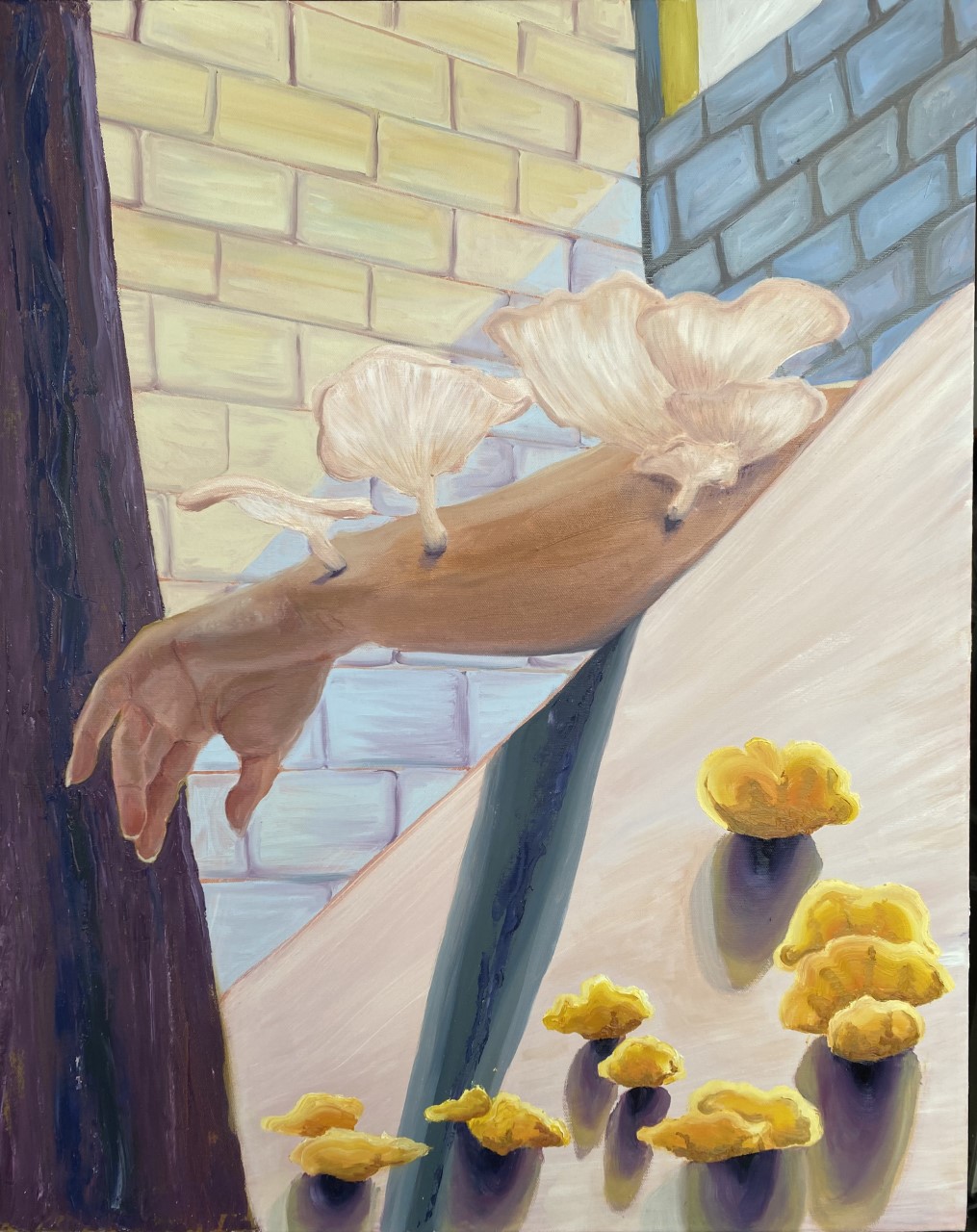
    Artwork: “Young Street Bridge – Aberdeen, Washington” by Jody Lynn

  • Le Swamp: A Colliding Ground for Interdisciplinary Art
    Written by Rose Hamm
    Edited by Josh Strange

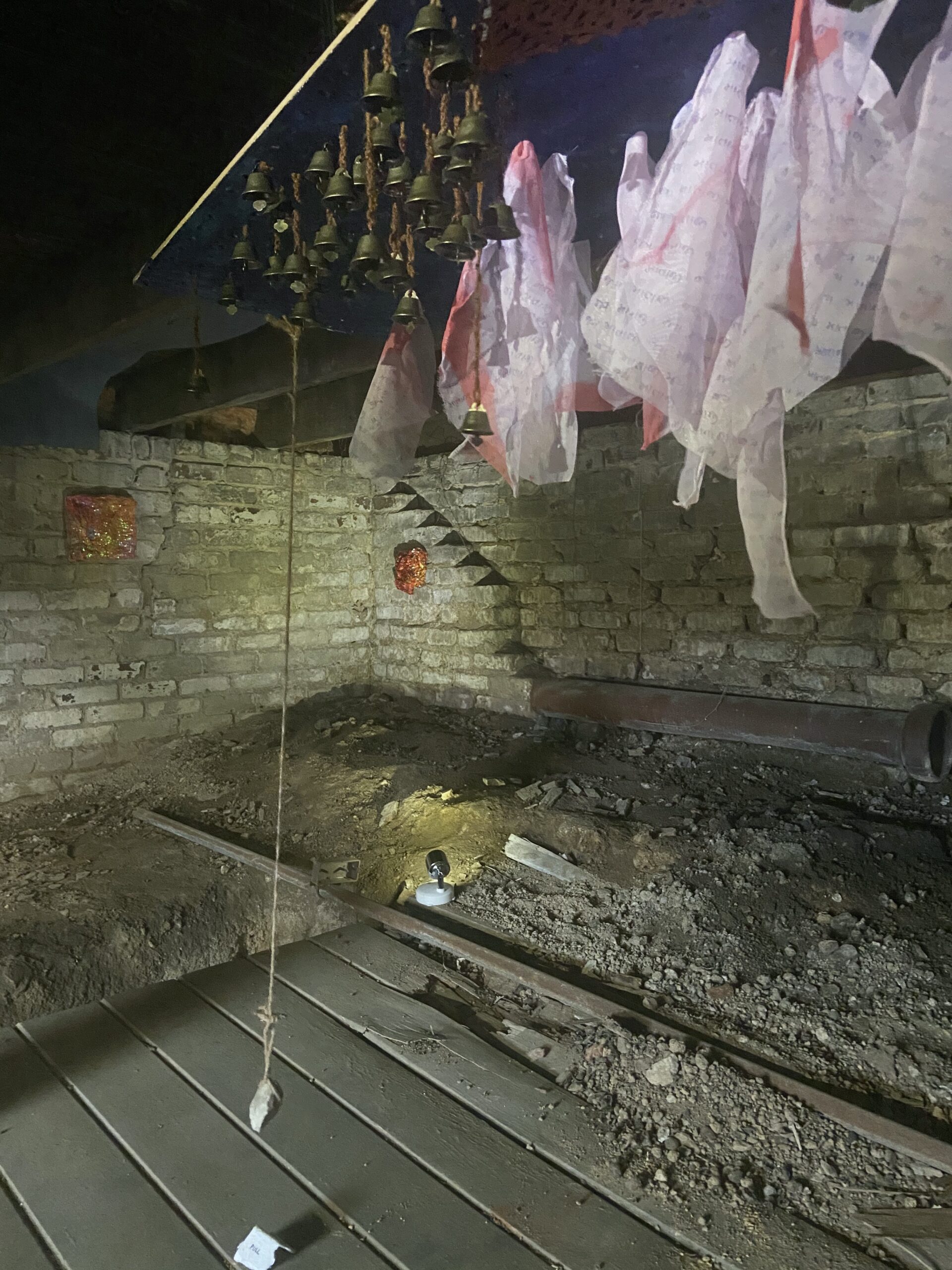
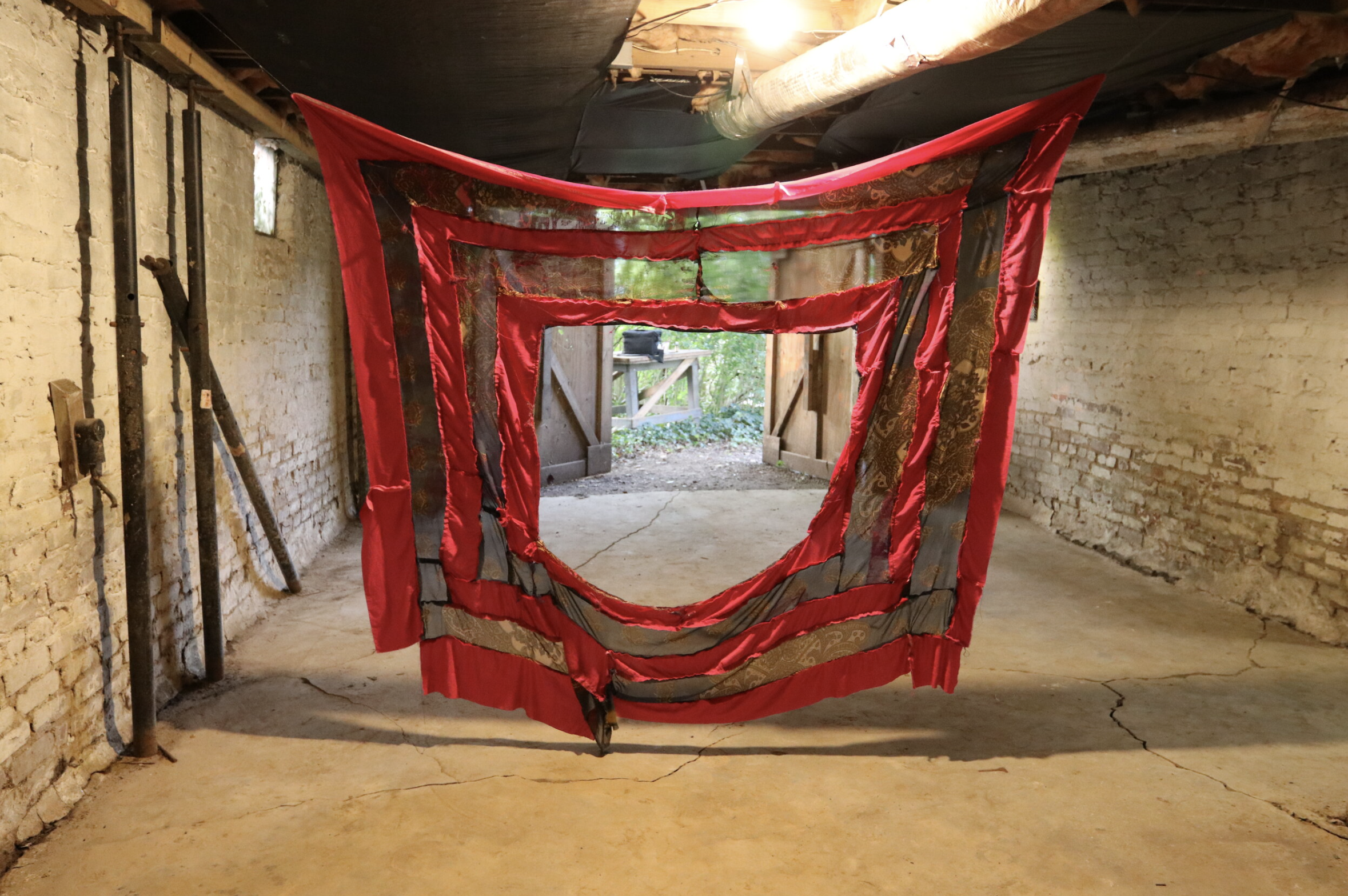
    Le Swamp, an artist-run space in Knoxville, Tennessee, transforms the unfinished basement of its co-directors’, Ashley Ekstrum and Victoria Rexhausen’s, residence into a curatorial art space. 

    Ekstrum, a University of Tennessee graduate student studying painting, co-founded the space in 2020 with Rexhausen, an herbalist and graduate student studying water resources and engineering. Their unique pairing of disciplines reflects Le Swamp’s larger aim to facilitate conversations between artists and visitors of diverse disciplines and media. 

    Ekstrum’s desire to curate and the limitations of the pandemic led her to experiment with installing art in her residential space. 

     “What really started it was during COVID everything shut down, and so I was making— I was painting— in the space that I was living,” Ekstrum said in an interview. “And so we cleared out the space that was the laundry room and cleared out the bathroom and just hung paintings in there to see what they looked like.”

    These first experiments became Kitty Litter Gallery, later evolving into Le Swamp at Ekstrum’s next residence, the new name inspired by the space’s cold, wet environment on a hill that rushes with water everytime it rains. 

    “There’s a domestic feeling to the space, because it’s under where we live. And so, you know, I have all these meanings that I put onto it, because it’s the same floor plan as the house above it. And it has all the same rooms, but instead of floor and drywall, it’s beams and dirt.” Ekstrum noted. “There’s a domestic sense to it that you don’t get in a white wall gallery or something like that, but then there’s the deterioration aspect of it. the two shows I’m thinking of specifically are Nuveen’s show and Emily’s show that were in there.”

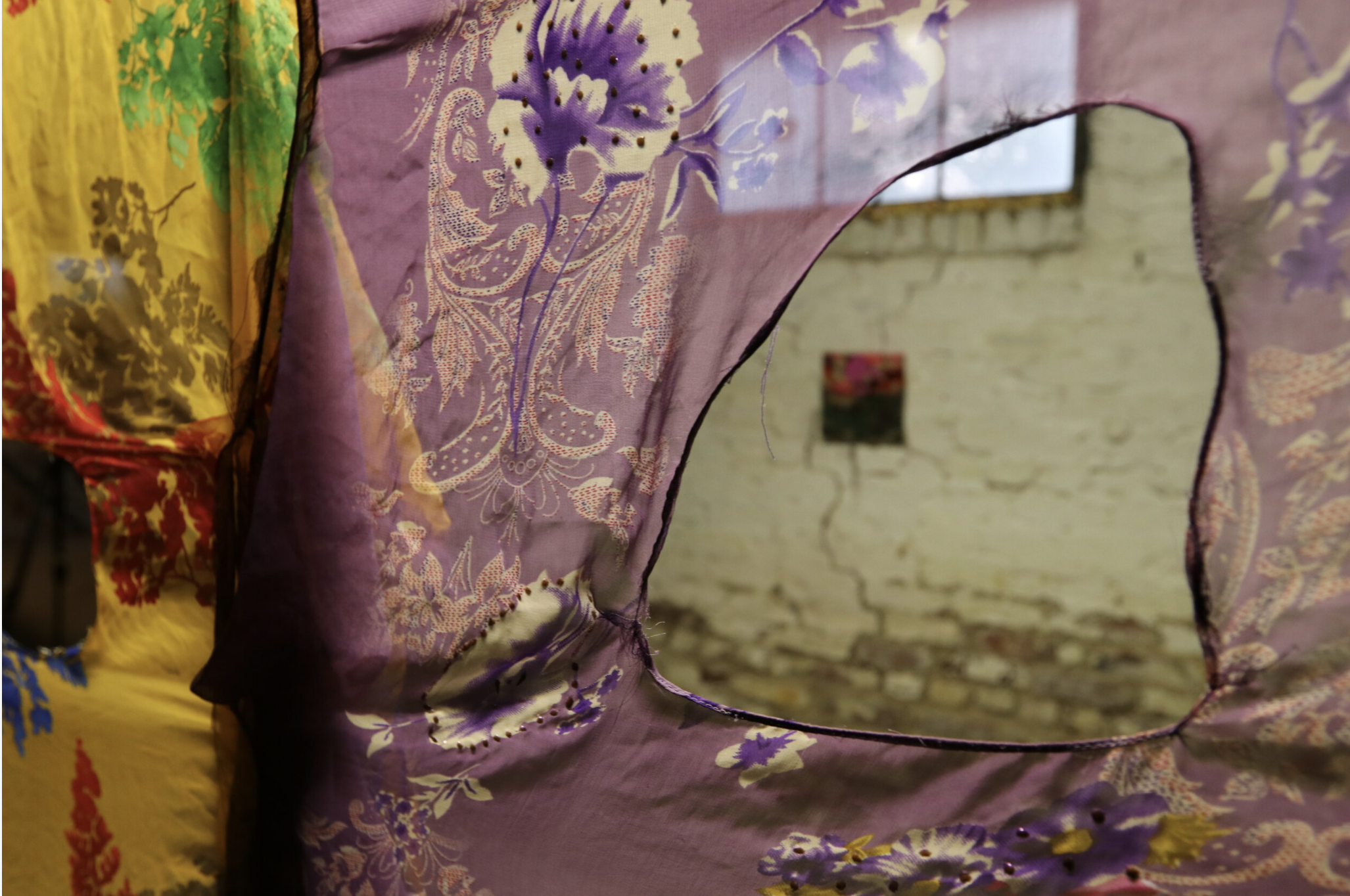
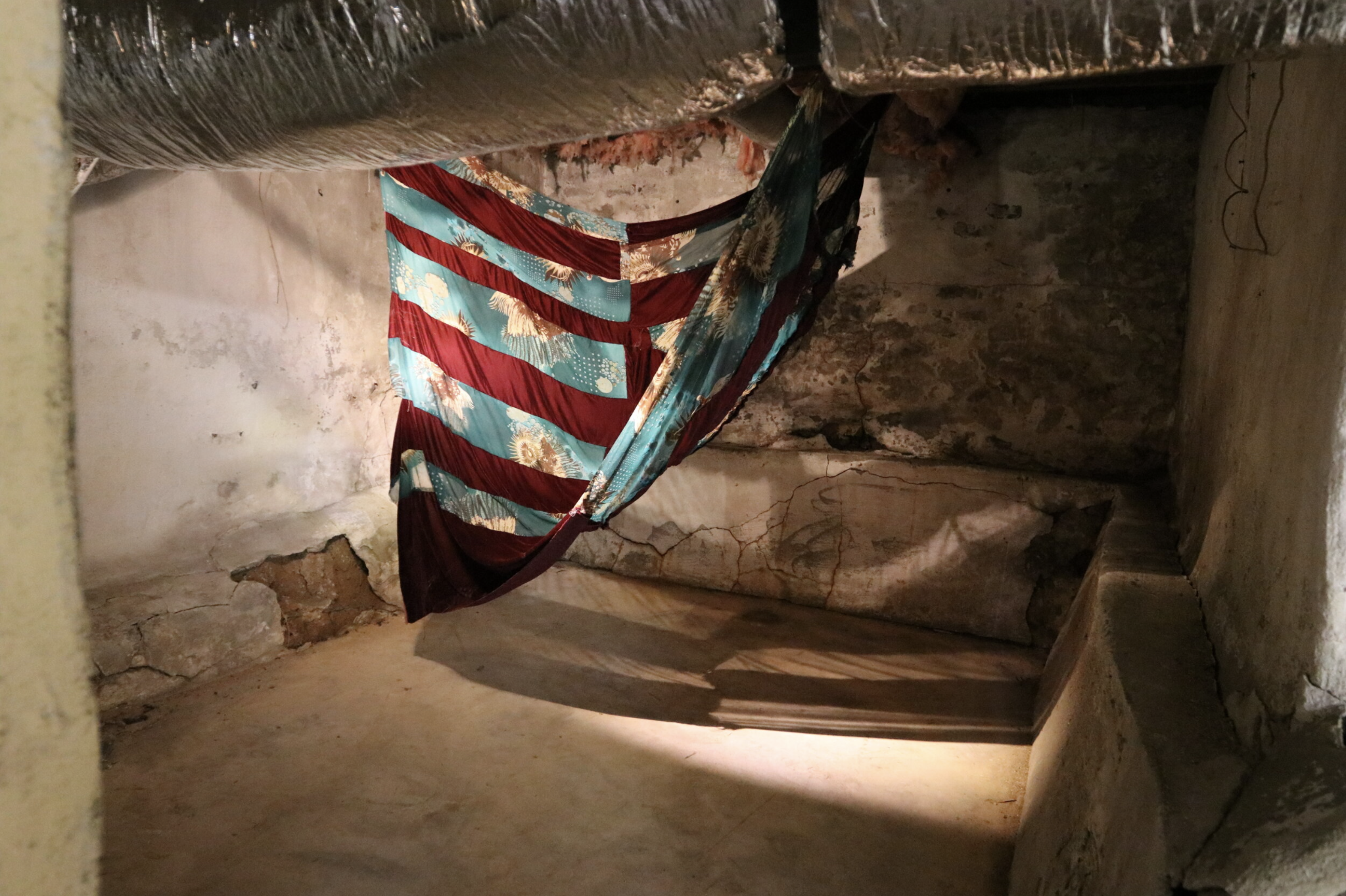
    Nuveen Barwari’s show Evîna Me Bê Sînore, translated from Kurdish to Our Love is Without Borders, was installed at Le Swamp in September, 2021. Barwari’s installations piece together textiles, including Kurdish dresses and found materials.

    “She’s stretched fabric before, Kurdish fabric, into squares and [rectangles], but I saw the work honestly change from when it was free flowing in a white wall and a perfect rectangle to a wall that was like slightly wonky, slightly crooked, and had bricks that were falling out. And it just felt like it was free to be itself there.”

    The environment of Le Swamp differs vastly from a traditional gallery space with all white walls by incorporating darkness, deterioration, and unfinished spaces.

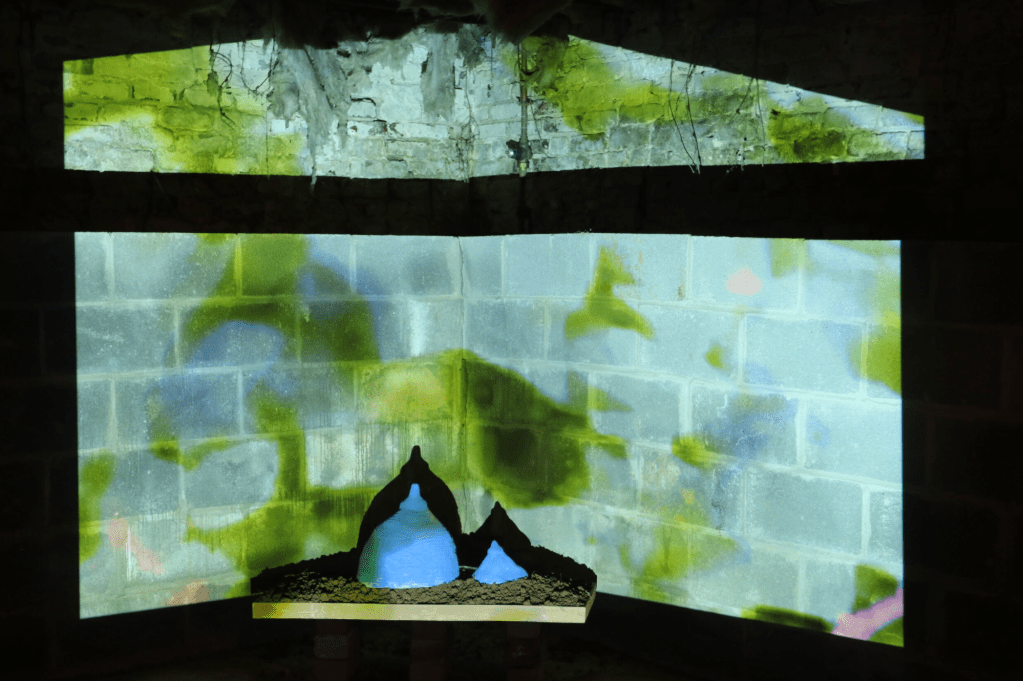
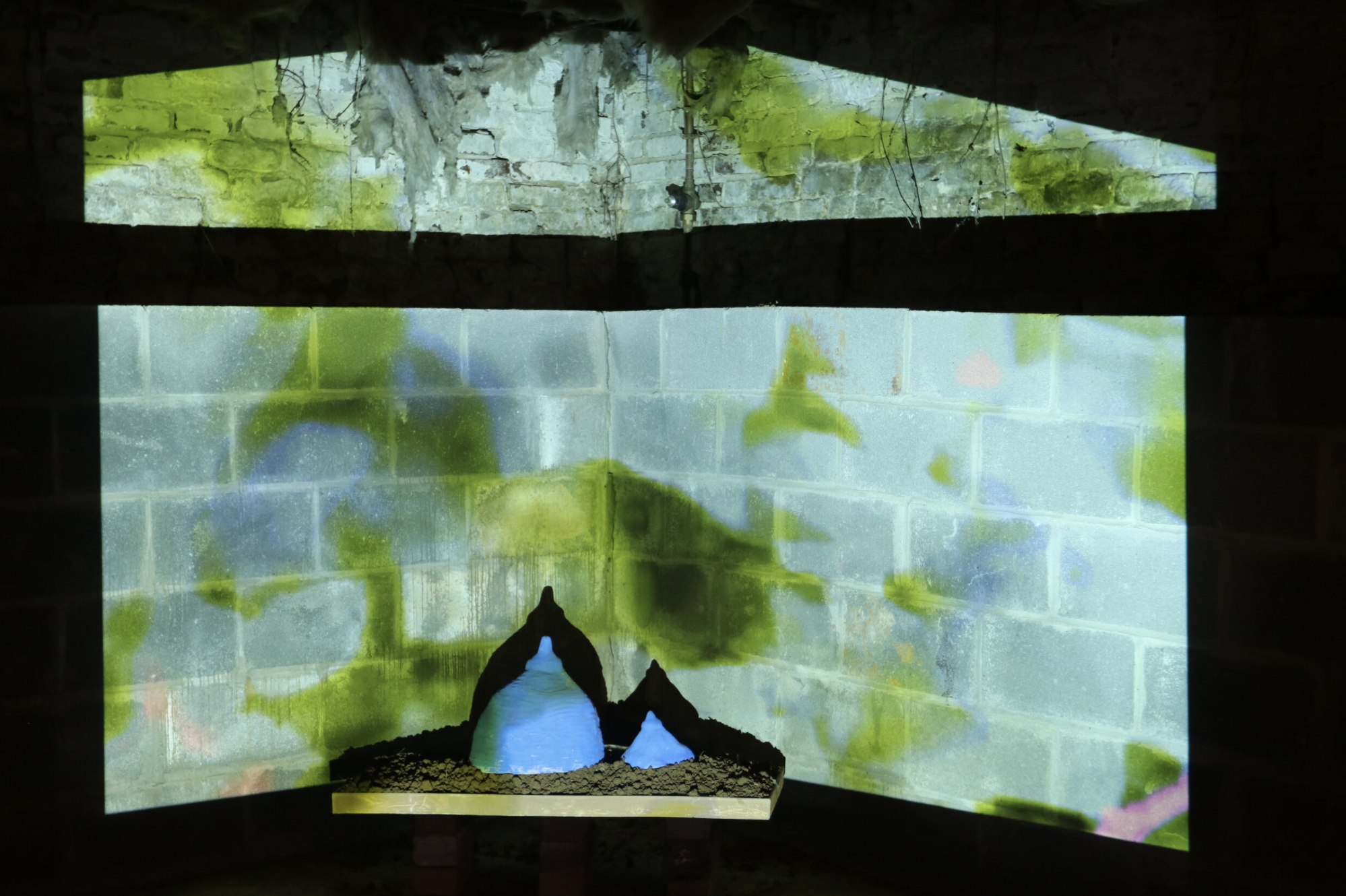
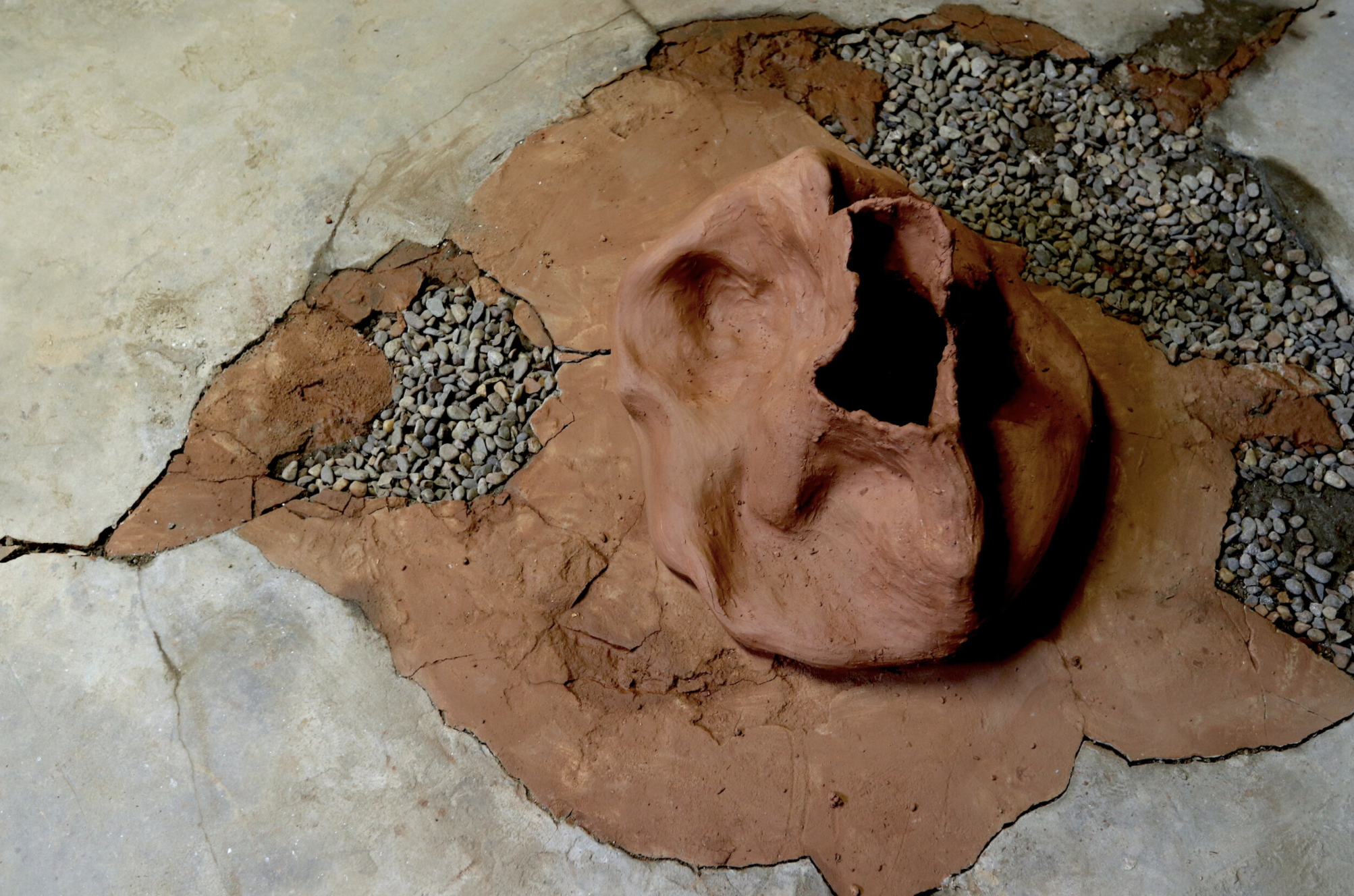
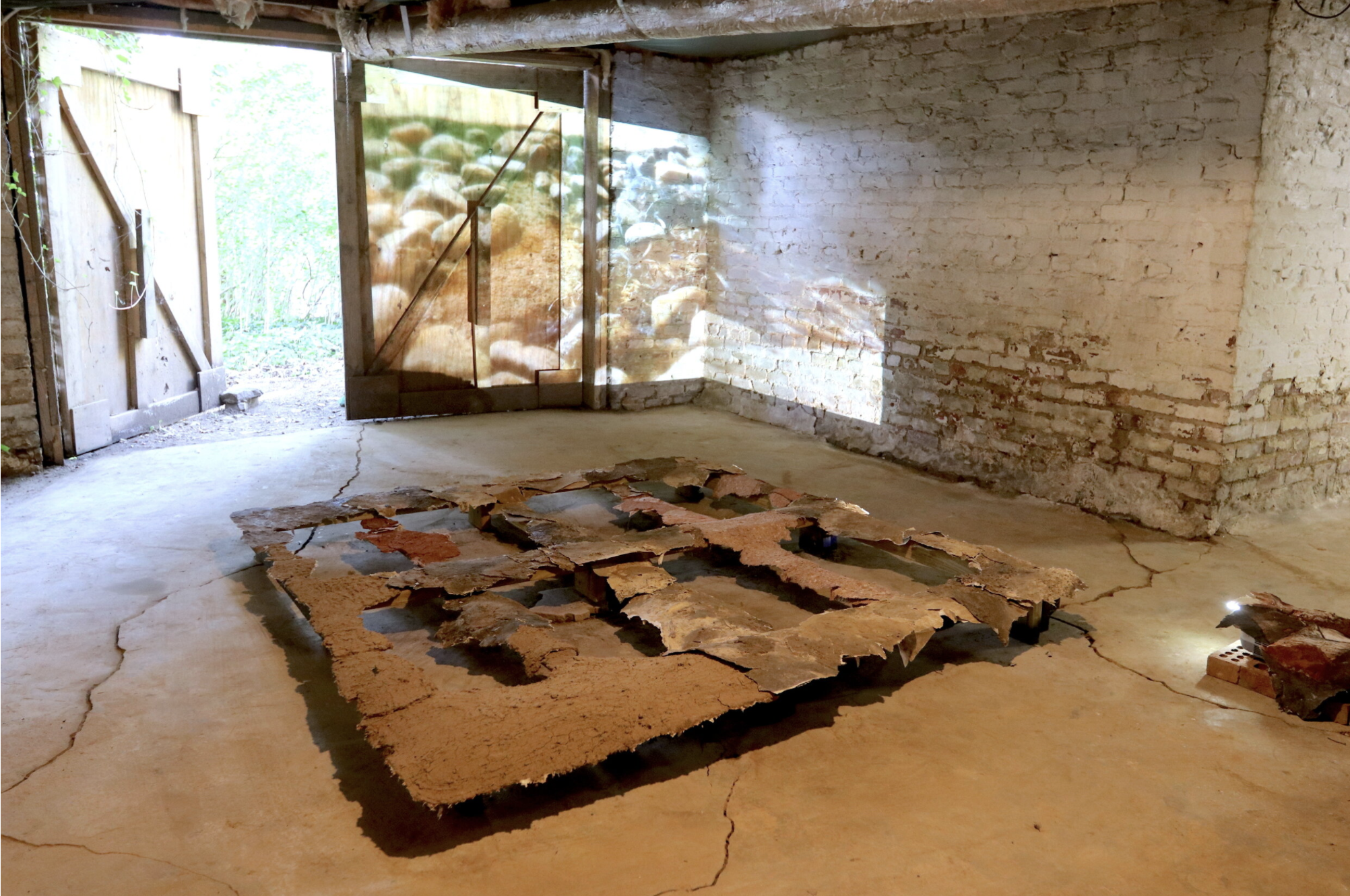
    Emily McCall Roca Rice’s exhibition, Being and Becoming, interacts with the deteriorating environment of Le Swamp through installation of clay, found objects, sculpture, and projection.

    “Seeing it in the Swamp, it felt like it had emerged from the ground, and it felt like the space had almost birthed it.”

    In her curation of Le Swamp, Ekstrum aims to facilitate a creative, interdisciplinary space.

    “Something I’ve been frustrated with in the art world is I think art is way more expansive than just a painting on a wall. And so, I think that connecting the similar processes that happen in different mediums can provide a lot of different connections between humans that have been lost.” 

    “I want the boundaries of all these little boxes that we’ve put ourselves in— like painters, drawers, ceramicists, scientists, you know, digital artist. I want them to open up and have different conversations.”

    Le Swamp brings together a wide variety of artists and spectators, encouraging conversation about the creative processes embedded in any discipline. At Le Swamp Ekstrum continues to co-curate exhibitions with local artists, transforming the space into an experimental ground for interdisciplinary languages to collide.


    Photography by Nuveen Barwari and Ashley Ekstrum

    Nuveen 1 Nuveen 3 Nuveen 4 Emily 1 Emily 2 Emily 5
  • Book of the Month: My Year of Rest and Relaxation
    81ylfA0-9wL-2 Written by Aslan Gossett
    Edited by Josh Strange

    (Mostly Spoiler Free)

    Ottessa Moshfegh’s second book, My Year of Rest and Relaxation, explores its 300-some pages with postmodern monologues and an inverse metamorphosis story for the ages. Set in New York between 2000 and 2001, the book heralds possibly the most hate-able protagonist ever written (who we’ll refer to as the sleeper), although not to the book’s detriment! The sleeper’s attempt to hibernate for an entire year using prescription sedatives produces a surprisingly insightful commentary on self-deception, depression, and addiction out of the sleeper’s catastrophic decision making you can’t help but love.

    The sleeper, from somewhere in the future, describes how she lived alone in her expensive New York apartment after her father died of cancer and her mother overdosed, and she genuinely believed that everything she goes on to do was for her benefit. Within the first few chapters, she establishes herself as gruesomely judgmental, socially detached, and horrifically elitist, while, somehow, remaining fair when making critiques of herself…right? One of the hallmarks of the book’s glacial pace is the reader’s constant, gradual reassessment of whether the sleeper is trying to convince someone of something; the sleeper hates pity, but she seems to elicit pity; the sleeper says she doesn’t want to be understood, and yet she painstakingly explains every facet her life and history to the point of redundancy. She even forgets what she has told the reader on a few occasions and repeats herself many times throughout the book. This is especially true as she progressively increases the payload of her drug cocktail, time and again nudging her the narrative tone towards an uncanny, grotesque arrogance.

    Even though the sleeper knows she has never resolved her trauma, this is not to excuse how she verbally abuses everyone else she sees as vain and beneath her (read: everyone)—it is for the reader to judge her incessant appraisals of others and herself. The reader is the sleeper’s true therapist that is never asked for insight—the reader merely witnesses a slow, medicated death. She is not always consistent, and her ruminations tonally shift sentence to sentence. Moreover, her nihilism and inability to fully rationalize everything that has happened to her invades the novel’s every waking moment, oppressively beating down any expectation for a breath of optimism. There are definitely high points, or moments of mild breakthrough, but they are fleeting. She doesn’t want any sympathy and she doesn’t want to be acknowledged (at least, right up until she flags another cry for help while chastising anyone who dares answer her call). She just wants to rest…whatever that means.

    Of course, as one would imagine with constantly taking heroic doses of Zoloft and Xanax, her apartment quickly descends into squalor, she loses weight, and (surprise!) feels worse. The sleeper escapes the blackened clutter of her living room by reminiscing on how she used to live and besmirching people she used to know over slices of pineapple pizza. Genuinely, her story is equal parts privileged and tragic; her parents were wealthy but did not know how to love her, and she had everything she wanted if it contributed to her image as a perfect prep-school icon, destined to become valedictorian. Herein lies one of Moshfegh’s greatest strengths: as a reader, you fully understand the nuance being presented—things are never black and white—but you are never disillusioned by the crippling brutality of the sleeper’s vanity. She is both reliable and unreliable, depending on her mood, but it is never a chore to figure out how to interpret her cryptic messages. She is surprisingly articulate while never relinquishing her wickedly cruel perception—you’ll love every minute of her judgmental musings.

    In the attempt to remain mostly spoiler free, I’ll just leave off with this: one’s body will only put up with sleep-induced shenanigans for so long, and, going into the books second act, there is a refreshing meditation on what it looks like for one’s body to fight back against the person that inhabits it.

    Whether or not she knows there is nothing at the end of her pill-filled rainbow, the sleeper ardently doesn’t care (or so she says). She declares exactly what’s going to happen and everyone else might as well not exist as she enacts her will. It’s a grimly enjoyable ride, full of gallows-humor and lethal irony…so long as you have the stomach to survive the sleeper’s nauseating, dogmatic fascination with becoming nothing.

  • George Bailey Lassos the Moon
    George Bailey Lassos the Moon
    By Fisher Sexton
                   -For Frank Capra’s It’s A Wonderful Life I never knew you were so beautiful
    until tonight.
    Your bouncy golden thread
    wild chestnut eyes whisper
    take me far away….
    I can see the wonders of the world in those eyes.
    Behind them I can see
    why a man would build a mile-long bridge—
    so he could name it after you. Let’s walk tonight,
    like it’s the last walking we’ll ever do
    and let’s smell the flowers.
    The sweet hydrangeas here,
    across from the Granville House,
    sweet scenery I would’ve given up by tomorrow
    if not for tonight.
    Now, I could never forget it
    or your pale face’s light at the promise
    of pulling down the moon—
    and I swear I’ll do it.
    Like a buffalo wrangling ranch-hand,
    I’ll throw a rope around the moon,
    turn it to a pendant to hang
    around your neck,
    and you will set the tides with your chest
    and the tides will always carry me back to you.


  • A Closer Look at the Gallery 1010 Showcase for Issue 64
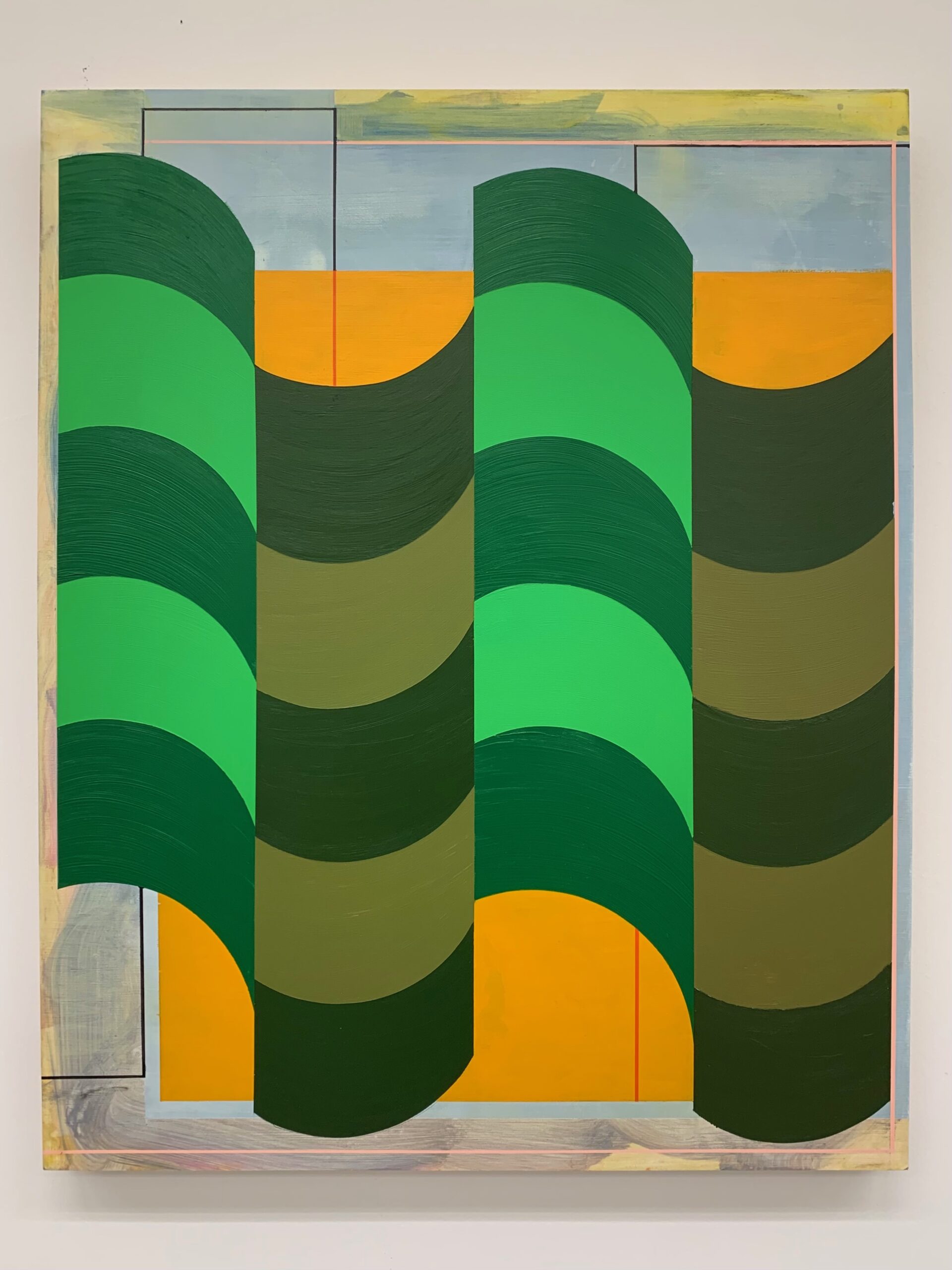
    Kolnick_Drifting - Taylor Kolnick Taylor Kolnick
    Drifting
    35mm
    2021
    Price available upon request


    Griffin Allman
    Maybe if you go to sleep happy, then you’ll wake up happy
    Acrylic and watercolor on canvas
    2021
    $350

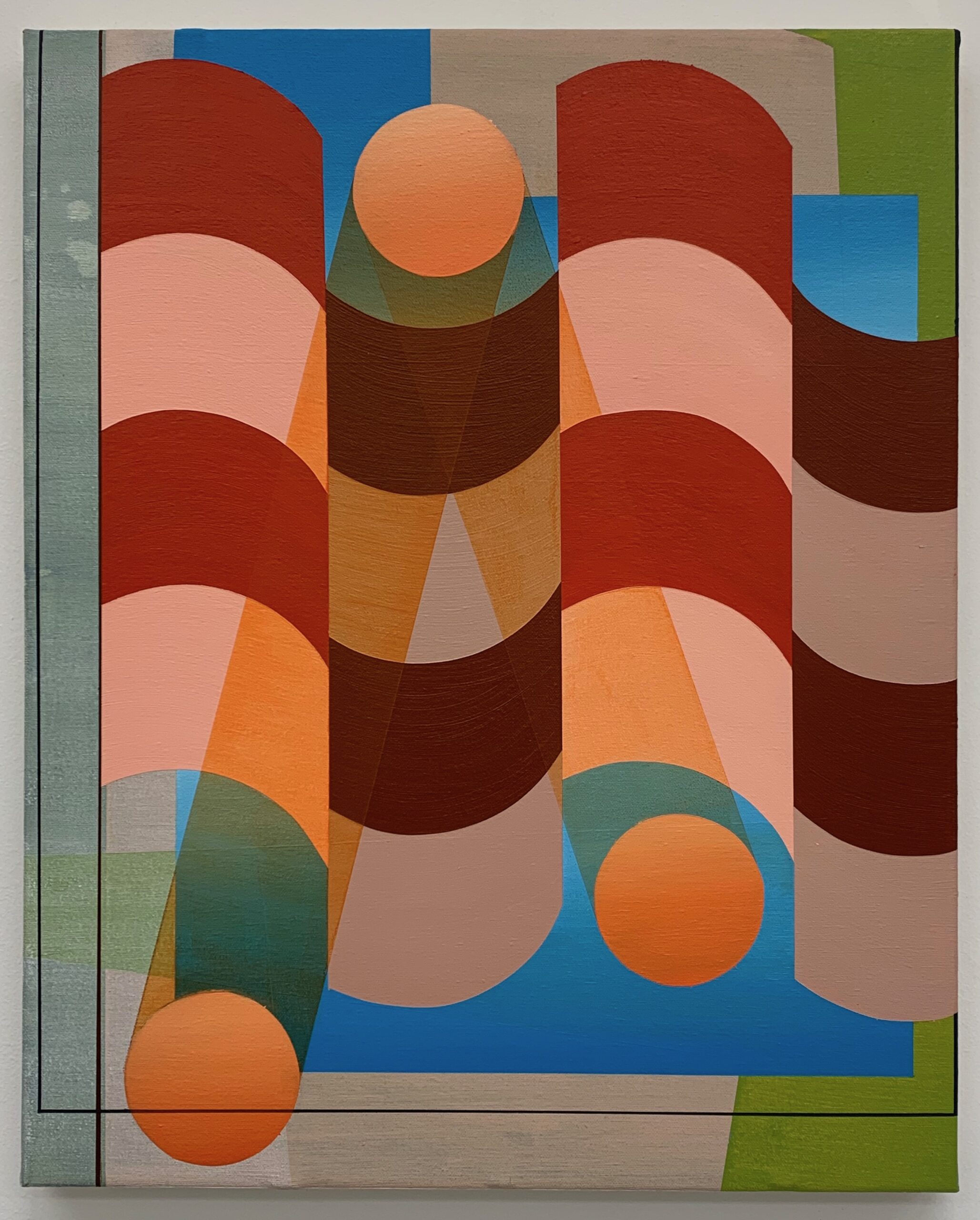
    “My artistic practice consists of abstract paintings and drawings that attempt to embody the fluidity and subjectivity of memory in visual form. Specifically focused on memory recollection, I am concerned with depicting the experience of remembering through lenses or filters, where different moments collide and combine to become something that is simultaneously familiar and foreign. My work is rooted within the history of geometric and hard-edge abstraction, and I am interested in reducing memory down to a visual language that primarily utilizes color, form, and repetition. Through this cycle of compacting moments of the past and repurposing them to create something new, I aim to make abstract work that is seen as both replenishable and renewable.”

    maybe if you go to sleep happy, then you_ll wake up happy_GriffinAllman - Griffin Allman PothosLongingGrowth.MahanNatalia - nmahan Natalia Mahan
    Pothos: Longing Growth
    Oil painting
    2021
    Price available upon request Griffin Allman
    I locked the door and threw away the key
    Acrylic and watercolor on masonite panel
    2021
    $350 I locked the door and threw away the key_GriffinAllman - Griffin Allman The Materials and the People_LaurenFarkas - Lauren Farkas Lauren Farkas
    The Materials and the People
    Colored pencil on paper, buttons, thread
    2021
    Price available upon request

    “We often relegate the process of data visualization to electronic algorithms in the name of efficient objective accuracy. This relegation strips data of the susceptible record of the human witness. I am interested in the slow embodied move to manually sculpt patterns from a raw collection of signs and signifiers as an exploratory act of reclaiming the humanity of data.  

    The Materials and the People is a patient delve into a single sample of our collective cultural lives–namely, a rack of used clothing. This sample consisted of over 200 shirts in the women’s medium section of Ladies of Charity thrift store in Knoxville. From this succession of clothing hung between homes, I extracted and isolated information like location on the rack, country of origin, material, and washing instructions to coalesce patterns and trace histories of the garments. This information became my data set for a practice in data visualization. 

    I photographed the tags of each item in sequence, and these photos became collage elements for a poem that traces a cotton garment from tufty seed to human body (this poem was published January 2022 in Pigeon Parade, a local literary arts publication). I then organized the information from the tags into colors and concentric shapes to represent the proportions of material in each article. I added overlays to these drawings to show the country in which each material [blend] was crafted into clothing, and how the fiber components of the part relates to the whole of each garment and the entire sample. 

    The narrative of materiality and the people who make, use, and discard it matter to me in fashion as well as in art. The thrift shop sample and the (inherited) paper and colored pencils used in this work are reflections of my insistence on using and reusing materials that are already in circulation.”


    Jackson Jalomo
    L’impuissance de l’individu
    Oil and dioxazine pigment on canvas
    2021
    $650

    “L’impuissance de l’individu is an expression of discontent with the incessant impact that large corporations have on Co2 emissions and consequently climate change, as well as the disheartening recognition of the futility of the choices of the individual in the face of the unfaltering environmentalist nightmare that is the oil industry.”

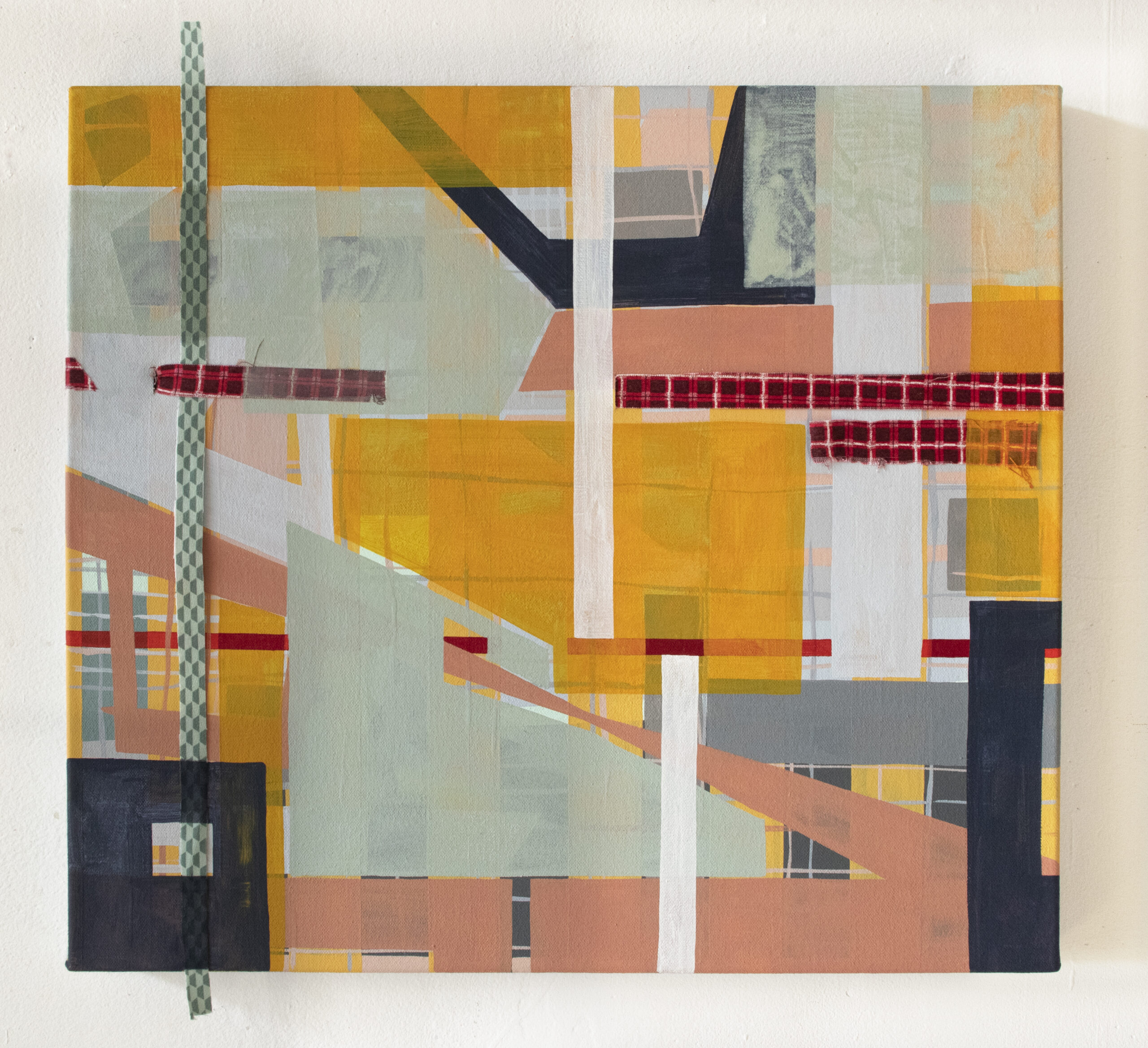
    L'impuissance de l'individu-JacksonJalomo - Jackson Jalomo New Photo of Window Obstruction, Megan Wolfkil, 2021 Megan Wolfkill
    Window/Obstruction
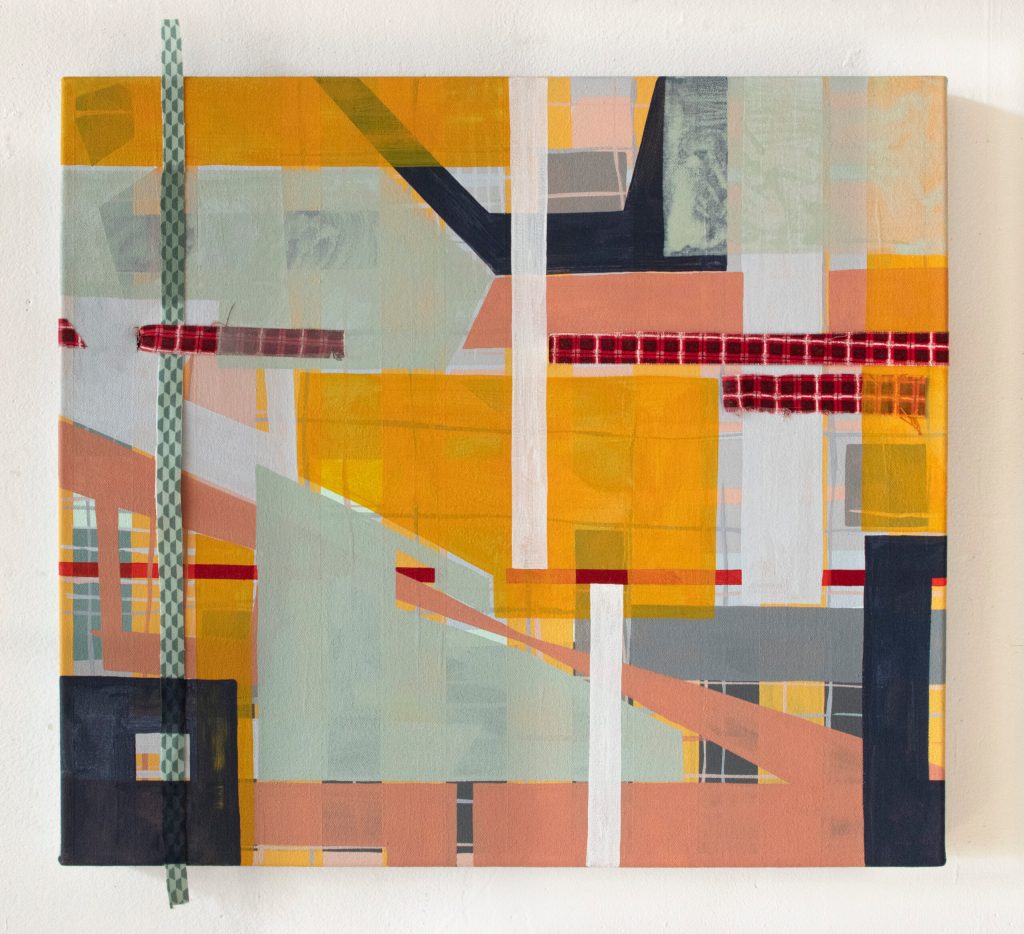
    Flashe and cotton fabric on canvas
    2021
    Price available upon request

    “I make my work on the floor, which requires me to hover over the surface on which I’m painting. I sit on my knees, crisscross, or take a half kneel if I’m reaching far across the surface of the work. I move around the surface while it remains stationary, providing myself with a skewed aerial view of the work as it progresses. This top-down view feels most natural to me due to my history as a dancer and choreographer. When learning to dance, you look down on your body, which is simultaneously you and your instrument. My neck often hurts from looking down. 

    I allow my hand to feel what it’s making, while it’s making. I follow its lead, and analyze what it has created after the fact. Trusting in my hand is new to my studio practice, which comes as a surprise to me since I have long trusted in my body in the dance studio. I remain in the world of geometry, but allow the edges of my shapes to wander across the canvas, rather than predetermining them with ruler and pencil. The translucency of some shapes allow the visual information below to shine through, while the opacity of others blocks previous layers. 

    My shapes are containers for color. The colors live inside the edges, sloshing up against the sides of their confinement. Just like our bodies are the places we live, so are the edges of my shapes to my colors. The outer boundary of each shape is like the space where your forearm ends and air begins. The edges of my shapes are the edges of the color’s body. I use my choreographic instinct to determine how these bodies arrange themselves in space. I make my work on the floor so I can see it like I see my body. When there is no mirror to look in, you must look down.”

    Katie Seal
    Disconnected
    Digital photograph
    2021
    Price available upon request

    Katie Seal is an artist and graduate of the University of Tennessee, Knoxville. With a BA in Art and Psychology, she enjoys the experimental as well as simple documentation. Katie creates work that touches on an array of topics such as psychology, identity, and our relationship between the natural world and modern-day technology. 


    AfterlightImage - Katherine Seal SwimSpaceStadium_JanaGhezawi Jana Ghewazi
    Swim Space Stadium
    Acrylic and china marker on frosted mylar
    2021
    Price available upon request

    “I make paintings, drawings, stories, and experimental performances driven by my interest in corporeal presence, ambiguity, and interactive art. I am inspired by novels, cartoons, manga, comic books, and board games as well as comfortability, perception, sentiment, social practice, and interaction. I am fascinated by deviations of realistic representation, different variations of bodily forms and movement, and the process of building a narrative within a painting. There is a play between familiarity and obscurity within my work as I use coded imagery, comical word play, and abstract colors to depict recognizable forms and references.

    My work explores audience engagement with different readings and interpretations of a painted image by inviting audience members to consider my work as a game of searching and guessing. Viewers participate as storytellers, decoding imagery, allegories, and meanings. Writing, painting, and drawing is an active conversation between medium and message, and between myself, the art, and the audience. Like tennis, air hockey, checkers, and many more games that revolve around the back-and-forth motion of players, my work engages in the push and pull of dialogue, conversation, discussion, and contemplation to form an engaging plot of discussion and storytelling.”

    Rae Taylor
    Bigger Than Me
    Mixed media
    2021
    Price available upon request

    “Through my work, I depict people existing in peculiar and ambiguous worlds. My pieces frequently include figures that are distorted but recognizable. I depict the relationship between bodies and the space they exist in using pattern, line, material texture, and flat color to unite and divide the subject from the setting of my work.”

    biggerthanmeDIG - Rae Taylor HotRamen - Rae Taylor Rae Taylor
    Hot Ramen
    Paint on wooden panel
    2021
    $215 Susan Feinberg
    Magnolia Leaves
    Mixed media on canvas
    2021
    Price available upon request Magnolia Leaves Banned Blood-JacksonJalomo - Jackson Jalomo Jackson Jalomo
    Banned Blood
    Mixed media
    2021
    $750 Faith Belt
    Volume 1
    Shadow puppetry film
    2021
    NFS


    In Moonlight Black Boys Look Blue_AdarianJohnson - Adarian Johnson Adarian Johnson
    In Moonlight Black Boys Look Blue
    Digital photograph
    2021
    Price available upon request Natalia Mahan
    Growing from the Shadows
    Oil painting
    2021
    Price available upon request

    “My painting captures women rising up after near-deaths of their souls.”

    GrowingfromtheShadows.MahanNatalia - nmahan Antithesis to Lomography_DianaDalton - Diana Dalton Diana Dalton

    Antithesis to Lomography
    Digital photograph
    2021
    NFS


  • The History of “Euphoria Makeup,” Beyond Glitter Tears
    maddy bowie d29df22c312296e1fcf88a5122a61eb3 940d5112c474fb009c55ba1ced831f5b hunter Written by Sadie Kimbrough
    Edited by Josh Strange

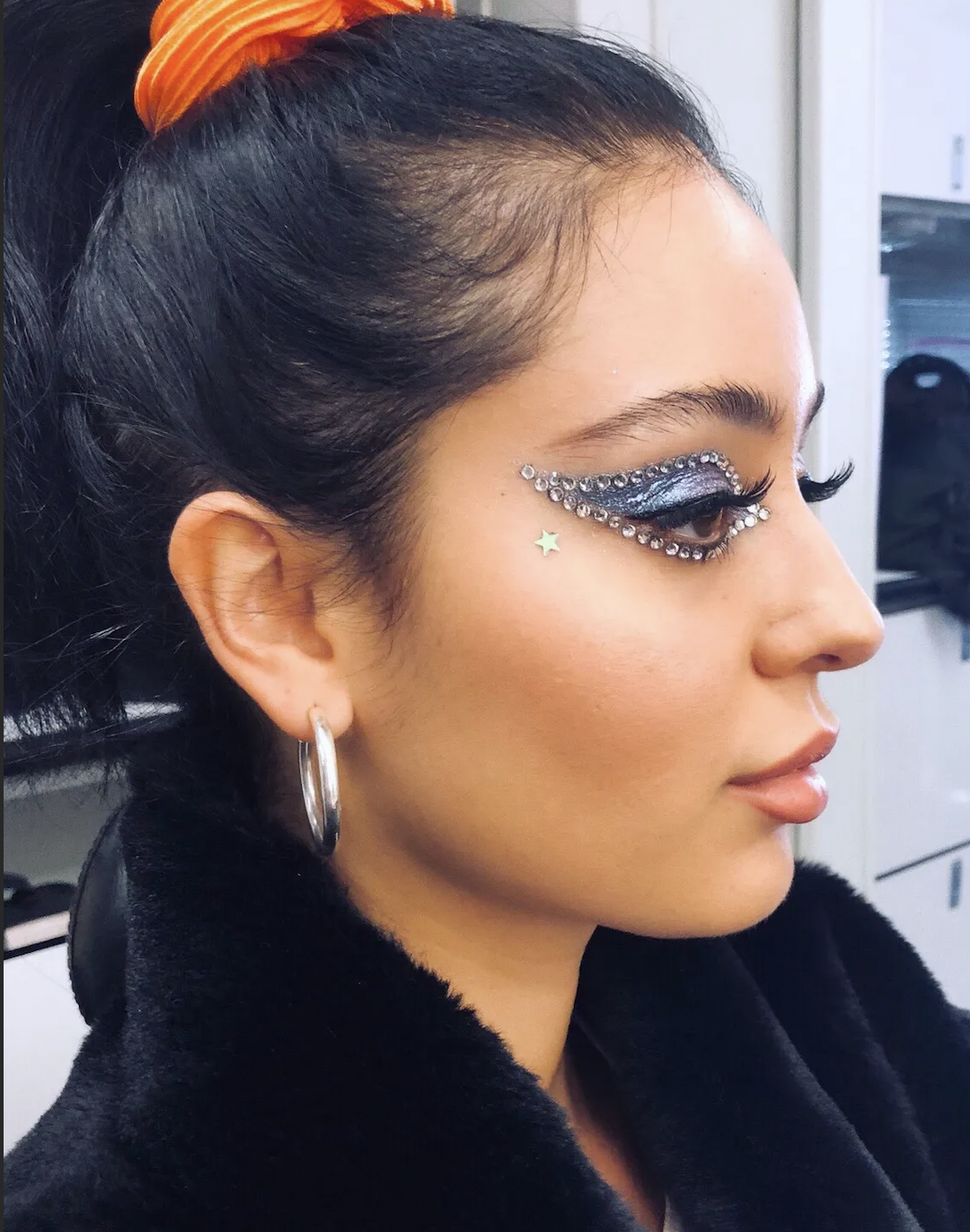
    The never ending commotion surrounding HBO’s Euphoria is not without controversy, but its meticulous creative direction allows the coming of age series stylistic recognizability unlike any other. While the newest season seems to take a more subdued approach, “Euphoria makeup” had Instagram in a chokehold in 2019, characterized by colorful eyeliner and rhinestones under purple LEDs.

    In Euphoria, teenagers played by adult actors indulge in drug abuse and raunchy sex scenes. The show is uncomfortable and sometimes downright unpleasant, but somehow critics and wide audience still tune in, likely due to its celebrity cast, stellar production, and exceptional styling and makeup.

    In 2019 the show’s makeup artist Doniella Davy told Vogue that “teenagers are switching things up constantly,” using makeup “not only to portray who they are, but who they want to be that day.” She references glam rock of the 60s and 70s, when icons of self expression like David Bowie and Marc Bolan sported dimensional, glittery makeup looks. Taking direct inspiration from Nina Simone, Davy created a studded gem look for one of her Euphoria characters.

    Glam rock emerged in the late 60s from the English psychedelic scene. Like Bowie’s Ziggy Stardust persona, the look was androgynous and vibrant, inspiring later movements like Hair Metal and images of Lady Gaga. Prince, who experimented with a variety of genres in his career, gained attention for his defiance of gender and racial stereotypes through audacious makeup and heeled boots. Today glam rock might be called “camp” for its almost parodic extravagance.

    Platform shoes, sharp contour, cut crease eyes, and other dramatic beauty trends can more notably be traced to mid-century drag queens. While drag balls existed as early as 1867 and drag itself since ancient Greece, it was not established as an art form and accepted as commonplace in gay bars until the 1950s. While Prince mesmerized millions with his cat eyes, the influence of drag on Euphoria-esque makeup cannot be overstated.

    Both drag and glam rock existed non exclusionary to women, which is not just a contemporary practice. Men have sported cosmetics for thousands of years. Archeologists discovered makeup boxes used by men from East Asian societies in 3000 BC. Ancient Egyptians sported cat eyes and red cheeks to flaunt their wealth and masculinity.

    Think Marie Antoinette– big wigs, red lips, exaggeratedly white skin. Despite high rates of lead poisoning in Versailles, courtiers of 18th century France sported lead-based makeup until deemed inappropriate by the polite morality of the Enlightenment period. Both men and women wore “rouge” pomades on their lips and cheeks, made from animal fat and beet roots for color.

    Face paint as self expression was sometimes thought to be appropriate only for men. Patricia Phillippy, English professor at Coventry University, asserts that “the painted woman was threatening, because she claimed a creative and self-creative authority ordinarily reserved for men.” It wasn’t until the 1760s that the overuse of makeup among the French court was associated with effeminacy and homosexuality, thanks to the British elite.

    What was once a hallmark of patriarchal status quickly became intertwined with beauty standards for women and women only. Around the 19th century, Western societies began expecting a tailored “manliness,” forbidding men from wearing white powder and rouge. For women, makeup was a must.

    Rock stars like Grace Jones and David Bowie gained notoriety for their androgenous glam because there hadn’t been a place for atypical gender expression in pop culture for over 200 years. These celebrities catalyzed the rapid turn-around of what’s in vogue throughout the late 20th and early 21st century.

    Euphoria challenges the status quo with each episode, tackling topics such as queer relationships, substance abuse, and body image. The show pushes boundaries and encourages self expression, so it’s curious that apart from one or two dream sequences, the men rarely sport makeup. However, many of the Euphoria men have little personality apart from “toxic masculinity.” Since the avant garde makeup helps to romanticize the myriad of disturbing obstacles that the characters encounter, maybe the lack emphasizes their malice.

    Even so, considering the profound influence on fashion and beauty trends, allowing glam for male characters could open up a range of creative possibilities for the show’s impressionable audience. Sitting at the cutting edge of pop culture, the show’s creators have a unique opportunity to extend what’s acceptable in the Euphoria universe into the real world. Perhaps by the time Euphoria prepares its third season, the makeup choices will fully reflect the efforts of Prince and the queen of France.

  • Enmeshed

    By Gracie Somich

    I recently, within the past 2 years, learned that Hell does not exist. This information was particularly troubling to me, given I started worrying about the permanent condition of my soul right around the time I started developing a personality of my own. Something (many someone’s) told me, around the mighty age of 6 or 7, that eventually my natural mischief would run me dry of The Good Lord’s Graces. I feared taunting that miscreant spirit of Human Nature inside me with even the smallest measurement of sin, anticipating he might wake up hungry and run me off the Straight & Narrow, deep into his lair of Liberalism & Homosexuality. That’s how it happens – you start stealing cookies when your granny isn’t looking & before you know it you’ve got blue hair and pronouns. Southern Evangelicalism lets you know early on that there’s something inside you, or maybe all around you, actively working hard against you (& it just so often happens to be the same force that drives those damn leftists). Maybe being taught that my most carnal human desires actually belonged to the only angel to ever test God (the loser of the universal battle) wasn’t the best for developing healthy emotional regulation.

    At some point during my elementary studies in Catholic school, daydreams of “making out” with my Wednesday-night youth-group crush started taking a heavy toll on my moral conscience. These were not even tactically functional fantasies – “Sex” was not even a word in my vocabulary at this point. “Kiss” was, though, and although I hadn’t had my first, what I could loosely imagine the experience to be was enough to keep me occupied for hours. I started feeling guilty when I realized other girls my age were repulsed by the thought of kissing boys and I had to write my teacher a paragraph about why the word sexy was inappropriate to use at school. I knew that kissing and boys were two things that I was not supposed to be into, I also knew that one day I was supposed to be really into it and it would be fine, but I, at this point, had absolutely no intrinsic motivation to stop thinking about kissing. I also knew that God was probably looking down on me with shame & that some penance was probably in order for many repeat offenses. In efforts to lessen the blow of my potential punishment, I developed a “Disclaimer Prayer” that I always ran through before I set the scene. In summation, it went, “Hey God, what you’re about to witness is all under the hypothetical condition that we be married…which, honestly, would be pretty awesome, so, if you’re feeling generous…anyways. Thank you for my mom and my dad. And my sister. And my dog. Aaand my bed and my clothes…and my food. And everything else that I have, it’s so awesome. And please keep us safe. And please don’t take anything away from me because I’m allegedly thinking about kissing boys. Because I’m thinking about it if we were married, and people in the Bible got married at my age so it is not a sin. Amen.” What disturbs me most about this is that I felt like I needed to absolve myself or altogether erase the urge to have my first kiss. To combat potentially losing God’s favor, in elementary school, before I even knew what sex was, I was already thinking of ways to justify and explain and erase my sexuality and attraction to men.

    Once, my church friend’s mom caught her sending less than lady-like pictures to a boy in the group a year older than us, and she had to have a meeting with the youth pastor and the head pastor (both males). Of course, she just had to tuck her tail between her legs and go along with it – repent and do a workbook on controlling your urges and all that. And yes, the girls were vicious about it. Nothing more sinister than the tight-lipped gossip of five 12-year-old adolescent evangelicals on a Sunday – “I’m not supposed to say this but my mom said she’s… Can’t believe she sent it to a person from church. And he’s…Totally not what I expected from her. Well, you know, she’s. So. I’d never. No, you seriously think I would? Never. I don’t even want to.” We would never admit that we were at least curious and maybe even a little jealous, only that we, dutiful daughters of the King, renounce such immorality and rebuke the sin of sexual indulgence. Me and the girl worked together later on in high school and she thanked me for being so kind during that time and told me how humiliating it was for her. She reached out to me a lot more after that, on the principle that I had been kind years ago when really, I had not been so kind. And by that time, I had permanently ruined my internet footprint as well, so when her eyes got teary at the cash register of the trampoline park where we worked I couldn’t do anything but look at the floor. I think it’s watered down to suggest that Evangelicalism breeds competition between women growing up – it breeds extremely selfish tendencies that do not stop at the sign of another woman’s pain.

    The high school I went to was not a religious school, but it was in upper East Tennessee, and the people there are mostly white, rich, southern, and love the Lord. If you didn’t go to YoungLife, you were just weird. My parents thought it was too liberal an approach, but after some mild persuasion, they let me start attending. The weekend retreats and summer camps were my favorite, and after two days of sleep deprivation, the adolescent rush of pseudo-freedom, and the hormones from being released in an open environment with the opposite sex, I bet it wasn’t hard for our leaders to get us to voice our darkest struggles. And they would offer their mentorship, in the most saccharine voice, “Your transformation will be beautiful. I was a slave to perfection, then I let go and let God.” And it’s really not to doubt their conviction, I remember my leaders fondly and am sure they believed everything they were saying, but looking back it was laughable how they’d always finish with a promotion for the newest daily devotions textbook and an invitation to start going to yet another small group night per week. On the night prior to our departure, the camp preacher stood in front of us all and said with conviction, “One out of every four women in this room will be pregnant before they graduate.” They sent us off into the dark night of the campgrounds and instructed us to not speak to one another, to find a spot, and listen to God. I listened for about 5 minutes, secretly bitching at God the whole time for how He’d probably give the other girls a sign but not me, and I so desperately just wanted to have something noteworthy to say at small group later.  I tried to convince myself that a frog croak was my sign, and I’ve never figured out what it might have meant.

    The largest challenge in leaving Evangelicalism was in coming to terms with the ways in which my upbringing reared me to function in an environment that is exclusive to Evangelical communities. These southern networks are some of the most anxiety- and fear-ridden places – a quick Google search of “anxiety and depression rates by state” and “bible belt usa” can vouch for that. Perhaps it’s because everyone there stays on high alert for any incoming threat to the sanctity of their own or their family’s souls. In a community that breeds anger out of fear, it’s no wonder the population is deeply unsatisfied. It’s hard to entirely remove yourself from a space where everyone functions like a pseudo-narcissist. When you finally learn how to navigate it, you’re already very good at existing in that realm. Although I’ve consciously done a lot to undo the tendencies, I carried from being in that environment, I’m certain there’s a lot more subconsciously I’m not even aware of yet. I am still an evangelical mean girl in recovery, and when I go back home sometimes, I am her again. It’s so easy to slip back into roles we know and adapted to for the most developmental stages of our lives – Evangelicalism creates a network of fear and ruthless judgement that severely impacts the social ability and general happiness of those who grow up in its clutches.


    Artwork: “Cherub” by Hanna Dice