• Art from Spring 1986
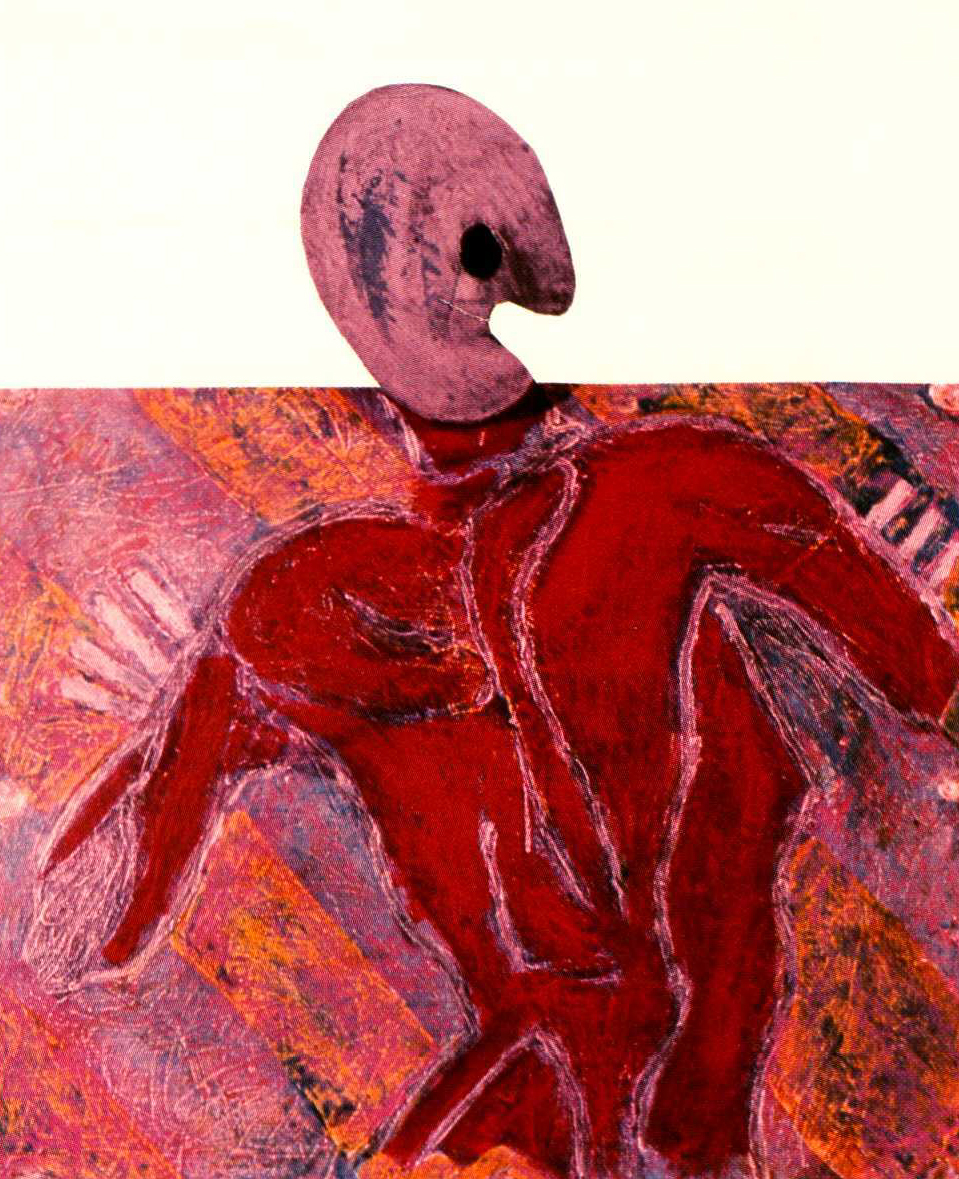
    Scanned using Book ScanCenter 5131 Scanned using Book ScanCenter 5131 Scanned using Book ScanCenter 5131 Scanned using Book ScanCenter 5131 Scanned using Book ScanCenter 5131 Scanned using Book ScanCenter 5131 Pallet Head / Kirk Smith / acrylic on canvas and styrofoam / 35″ x 40″
    Philosophy Even the Hollowest Nut Wants To Be Cracked / David Wilson / 26″ x 40″
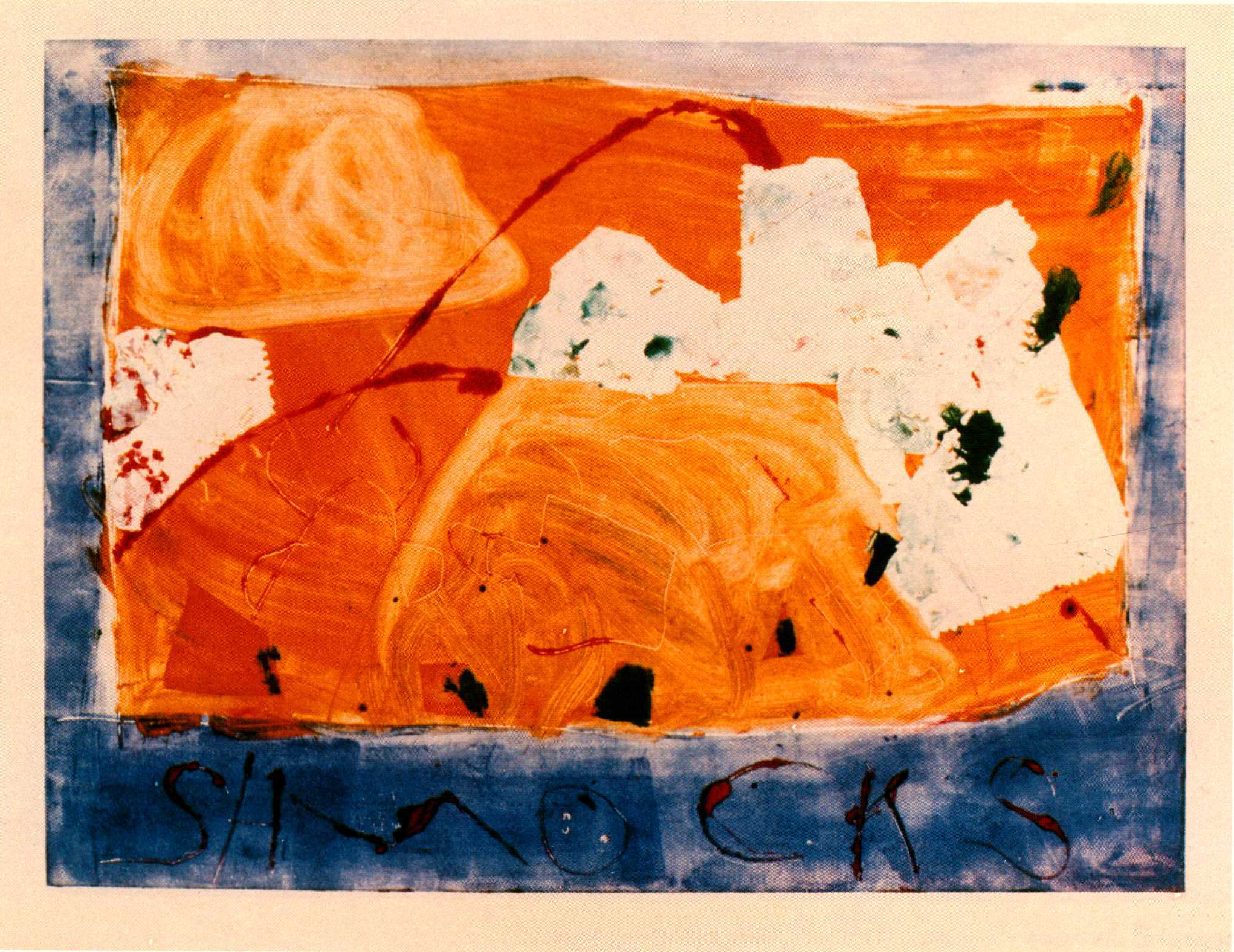
    Schmocks / Cynthia Roth Leatherwood / monotype / 12″ x 8″
    Myself Before the Mirror / David Harvey / acrylic on canvas / 8″ x 10″
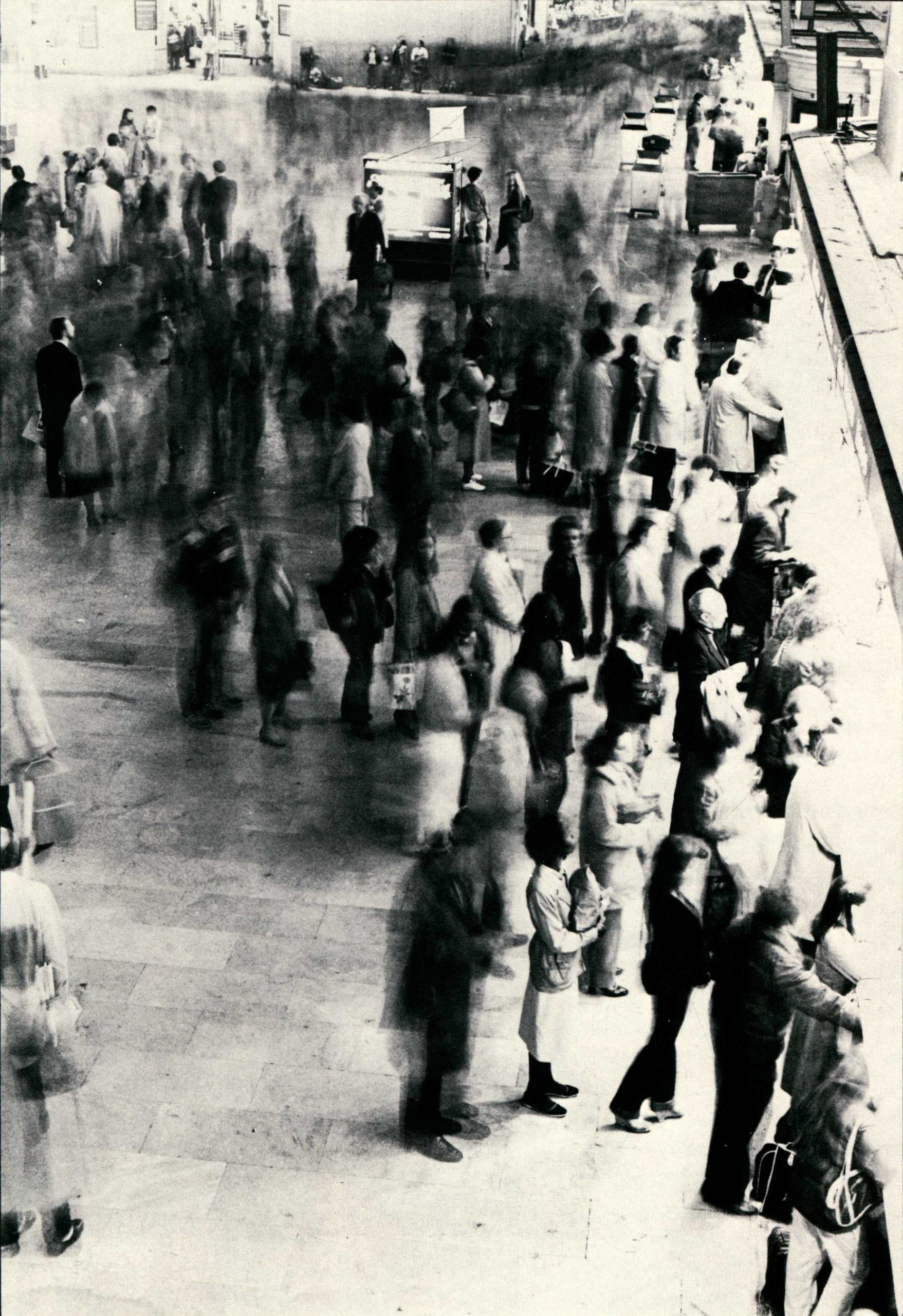
    Still Man’s Rush Hour / William S. Collins / black and white photograph
    Uncle / Charlie Mantooth / new gold / 4″ x 6″ x 4″
  • Premature Canities
    Premature Canities
    by Alexa White Twelve months, countless little gray hairs
    pulled from some cave of my scalp.
    I’ve studied each one, twirling it white
    against a background out of focus.
    How do I hold them? Three fingers pinched?
    I’m twenty-two years old. I keep count but I don’t feel old
    when I wake in search through my pillow for hair,
    for silver reminders of my prime. I pinch
    them into a box and hope my scalp
    won’t remember that color while I focus
    on the reckless curl of each white strand, measure their length, sprinkle white
    dandruff across the floor along with old
    corpses of pigmented threads. I shed focus
    into the shower drain with loose hair;
    how many pallid weeks escape my scalp
    which go unseen? Just a pinch compared to the ones I’ve pinched
    or brushed from the back of my head with white
    knuckles, I sift through seasons of my scalp
    in sinks or clinging to shirt fibers. I’m old
    enough to know how fast my own hair
    grows but I’m not able to focus I must keep telling myself to focus
    on living. My eyes should shine, I keep pinching
    my bloodless cheeks to see a hair
    of color beside my purple under-eyes, white
    teeth I won’t keep into old
    age, the coily black transition to my scalp. Time will scalp what’s left, after I’m numb from cheek pinch
    pains endured to keep from focusing on the white
    of old dust and adulteration. Until then, I’ll keep counting hairs.


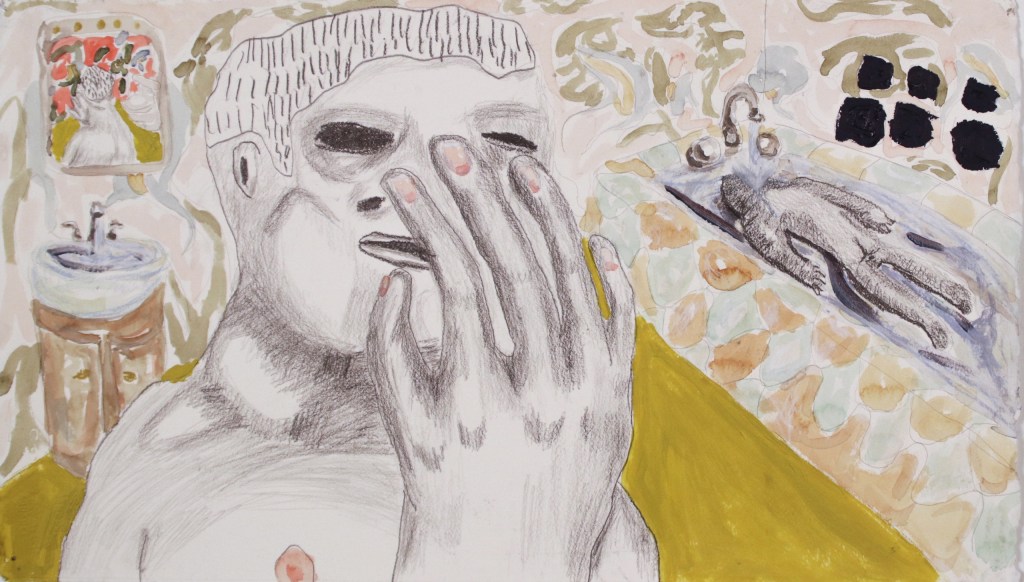
    Artwork: “That Night in the Bathroom” by Grant Barbour

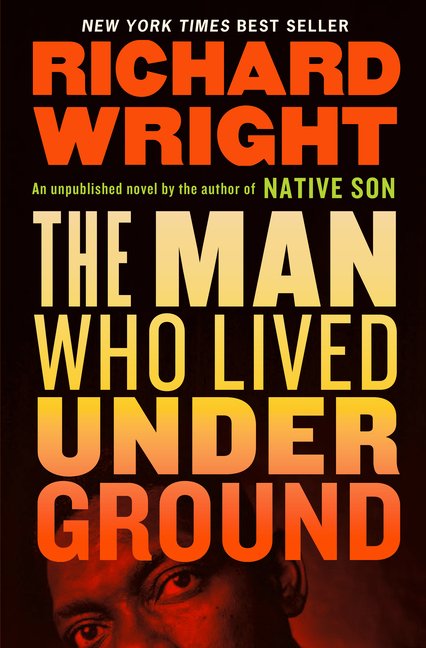
  • Book of the Month: The Man Who Lived Underground
    9781598536768 Written by Lynda D. Sleeter
    Edited by Sadie Kimbrough

    The release of a previously unpublished novel by Richard Wright (1908-1960), legendary author of Native Son (1940) and Black Boy (1945) is possibly the major literary event of the summer. The Man Who Lived Underground (1961) is a masterpiece that Wright was not able to publish during his lifetime. By special arrangement with his estate, this work that meant more to Wright than any of his others (“I have never written anything in my life that stemmed more from sheer inspiration”) has been published in its entirety along with a companion essay, “Memories of My Grandmother” and an afterword by his grandson Malcom Wright.

    The Man Who Lived Underground is Wright’s best single piece of imaginative writing.  This work represents Wright’s ingenious attempt at creating a more fluid and ambiguous universe.  One where crimes were once determined by social conditions as in Native Son, and were sometimes rationalized, they are now presented as acts of accidental impulse.

    It is a gripping and explosive novel about race and police violence that chronicles the experience of Fred Daniels, a Black man who is picked up by police and is tortured into confessing to a brutal double murder that he never committed. After signing his forced confession, Daniels flees and disappears into the city’s sewer system via a loose manhole cover to become a resident of the underground.  While living in the sewer system, Daniels grapples with his own sense of guilt and innocence.  His journey through the dark underground leads to enlightenment, a sense of self-maturity, and eventually his death.  Thematically, the story explores guilt, innocence, freedom, imprisonment, racial prejudice, materialism, and what it means to be an African-American man in 1940s America.

    As Daniels travels through the underground tunnels, he makes many discoveries. His first find is the basement of a Black church.  While listening to the singing congregation he cannot understand people’s collective need to state their innocence when they are guilty of nothing.  In juxtaposition, by the story’s end Daniels sheds his own sense of guilt, realizing that it is an innate human emotion regardless of a person’s innocence or not.  While journeying through the sewer, Daniels also discovers a dead infant floating in the water which he shoves aside and then stumbles upon an undertaker’s embalming room in a funeral home. While peering through a hole in the wall, he sees a dead white man on a table.  These two experiences make Daniels laugh at the realization that the racial and sexual prejudices of aboveground society do not exist in death, thus providing him a sense of justice.

    Daniels steals a multitude of items while underground: a toolbox from the funeral home, sandwiches from an elderly coal-bin worker, a typewriter, and a radio. He steals items from a jewelry store, money from a safe, and a gun from a night-watchman.  He finds no intrinsic value in the items he steals and uses them to adorn the cave that he has carved out for himself, thus showing his devalued view of material things.

    Fundamentally, The Man Who Lived Underground is about the perils of the sociopolitical choice of living in complete isolation.  Wright meticulously illustrates how separation from the above ground world slowly debilitates Daniel’s moral character, and eventually his human essence.  The protagonist slowly loses the realization of how his actions are related to others, his sense of moral values, and the pragmatic awareness of actual effects.

    The novel ends with Daniels going directly to the police to confess to the crimes he actually did commit while living underground, but they dismiss him as being crazy.  He insists that the police arrest him and asks that they accompany him down into the sewer to the cave he carved out for himself while living underground. The officers follow him to the manhole covering the sewer. After Daniels descends the ladder, they shoot and kill him.  Just like the dead floating baby that Daniels saw early on in the story, his own corpse is washed away by the rapid current of the sewer water.

    The metamorphosis that Daniels undergoes while being a dweller of the underground reveals that once man becomes the sole and ultimate judge of his own actions, he also becomes his own God, and anyone so completely emancipated from outside authority is capable of crime without guilt and honesty without discretion.  The man who lived underground loses his human identity.  A final point made by Wright’s piece is that escape into total isolation, while attractive at first, inevitably condemns the escapee to qualities that are not wholly human. The Man Who Lived Underground is the kind of literary work that will remain with you for years after you have read it.

  • Room 1012
    Room 1012
    by Kat White

    Content Warning: This piece has elements of a murder mystery, mentions of suicide/death, violence, and elements of domestic abuse.

    Exhaustion colored the edges of her vision gray and Rue swallowed against the dryness in her mouth with a slight grimace. Mindy hovered behind her at the hotel’s front desk, nervous and unsure, Rue’s own flickering shadow. The large, arching windows in the lobby showed a dark and silent Moorwich outside, nestled between evergreen forests and a silver, spiteful sea. All was quiet and the soft whirring of the golden elevators made Rue’s eyes glance up. Someone was calling the elevator.

    “Had a good shift, Rue? Not too busy I hope?” Mindy said, beginning to tie her hair up high into a ponytail as she began to settle her expanse across the front desk: nail polish, books, and study notes began to crawl across the rich wood, and Rue had to avert her eyes. It was late, and the larger battle awaited in her office. Not with Mindy. Rue began to stand up, stretching out a bit, and feeling the ache in her feet from her heels. Mindy wordlessly handed her a bottle of ibuprofen, and Rue flashed her a weak smile.

    She has no idea that I’ve been popping this like candy. The familiar weight of the pill slid down her throat, almost in the way a snake swallows an egg, straining against the concave weight of it. It made her feel slimy. Rue didn’t like the fact that she had been taking over-the-counter medications so frequently as of late, but it was the only thing that seemed to help, and Mindy briefly rested her hand on her elbow as she became unsteady. Rue blinked against the bright lights of the lamps that warmed the front desk.

    “I hate to do this, Rue, but…this envelope,” Mindy said, and Rue watched her eyes stare past her to the front desk computer, and the thin, lily-white envelope that slept by the keyboard. “Is it overdue?”

    Mindy’s voice had dropped to something of a whisper, and Rue gently disentangled her hand from her elbow. “Toss it,” she whispered. “For me. Please.”

    Rue could see Mindy’s good nature and her own loyalty to her wrestle behind those glassy, hazel eyes, but the loyalty won out: she could tell by the way her gaze darkened with the burden of it, and Rue knew that she would never see that overdue bill again, until another copy of it arrived in the mail the next time (and, by that point, Mindy would know to just throw it out). Rue flashed her a bright smile, toothy and tired, and dismissed herself from behind the front desk. She never did see that hotel resident come off the elevator.

    The walk to her office, adjoined to her gaudy living quarters, was cloaked in shadow and dread, as if the night outside had pressed itself inside and lounged across her armchairs. Harvey will be here any minute now. The familiar sight of a letter from the coroner’s office littered the glazed surface of her desk as she waltzed over to it, slightly disinterested. The wood was imbued with the scent of polyurethane and lemon, and a glossy nail filed to a point slowly scratched the surface, trailing across the gaudy shine until the letter fluttered into a drawer stuffed with torn cream envelopes from the medical examiner’s office. These, at least, she could afford to forget. Her eyes grazed over the envelopes in the drawer that shrouded years’ worth of the Rousure Hotel without a flicker of recognition. It was better that way.

    Rue lowered herself into her jewel-toned office chair, pushing back on the desk far enough that it creaked with a protest under her weight. The chain of pearls she wore felt heavy around her neck. Her fingertips brushed against the cool, white surface of them idly, as if she were stroking and rolling little white stars in between her fingers. The vintage shades of her lamp dampened the light in her office enough that the corners of the room were covered in shadow. It was nights like these where the past often came to her in strange ways but, with the Rousure, the hotel wore it as a veil. Rue snorted in amusement as she stared at the linen curtains by the window. My mother never liked curtains. She didn’t like the idea of domesticity.

    10:34 pm. She had to squint to read it off the clock, but the time made sense enough. From where her office sat, nestled in the gaudy and ornate folds of the Rousure Hotel, the faint sounds of the hotel breathing and sighing bled through the walls. Most things were quiet. As the hotel proprietor, she was used to this. The delicate waking and sleeping of the hotel was a routine she had mostly perfected, and even Harvey’s arrivals became synchronized with the Rousure’s heartbeat: but, tonight, Rue dreaded it. Her head had begun to pound again, collecting with a heavy pressure behind her forehead, and distant shadows in her office seemed to move and pulsate. She just wanted to get this meeting with him over and done with.

    Rue slowly peeled her rings off of her swollen fingers, only looking up to brush a stray piece of platinum blonde hair behind her ear when Harvey knocked, allowing himself into her domain with a flushed look dancing across his pale features. She glanced at the time. 10:36.

    “You’re a minute late,” Rue said. With all of her rings off, her hands found the familiar silver of her delicate pen. She needed a drag from it. Anything to lessen her own rough edges, sharpened by the pain and confusion that had begun to hail her. Harvey approached her with downcast eyes, but his gaze was steady.

    “Do you do that because it gives you a bit of a dragon quality, like you’re breathing smoke? It’s not good for your health.” He said, lowering himself to the chair opposite to her. Harvey stretched out his long legs, propping them up on the edge of her desk. It was clearly mocking.

    “That was just varnished, Harvey.”

    He gave her an unimpressed look, and didn’t move.

    Rue leaned back in her chair, letting it slide in the dismissive slope of her shoulder as she popped her ankles. “What do you have for me?” And make it quick, please.

    “A question.” Harvey’s voice held the soft, diminutive quality of an accent from somewhere European. It took Rue a moment to remember it might be German. “You haven’t read it, have you?”

    “The letter? No. Why would I? Don’t you do that for me?”

    “This one is different, Rue,” he said, removing his feet so he could lean toward her with insistence. “It is a most unusual case. You’re going to have to comply this time.”

    “A most unusual case for a most unusual place,” Rue agreed, aiming Harvey a pointed look. “The Rousure Hotel has a worse reputation than the Cecil. But we have worked together for 15 years, at least, Harvey…and when have I ever been noncompliant?” A sickeningly sweet inflection took to her voice, but the detective–a friend, a touchstone, an adversary–appeared unamused.

    Rue felt herself deflate, and she shifted her weight in her chair. “…Let me dissuade you by first saying that I approach this with the best intentions,” she said, picking each word carefully. “However…what is it that you find of note, Harvey, that persuades you to speak to me this late at night?”

    His gaze was locked on to hers with an unusual intensity, as if he were searching for deception in the curves of her face. “First of all, you ignored my calls all day. Secondly, you have to ask yourself. Why come to the Rousure to–”

    “That’s not entirely unusual,” she interrupted. “People come to the remoteness of the Rousure Forest to vanish all the time. And, besides, the medical examiner–”

    “Will try to identify her? That could take weeks: months, even,” Harvey protested. Rue grimaced against the growing edge of defensiveness that sharpened the undertone of his words, and she took another hit. “Didn’t you see what she left behind?”

    Rue remembered. Walking the police chief, Todd, up to one of the rooms on the penthouse floor was a walk she had grown accustomed to. Death was as much a resident of the Rousure as the ones he chose to take, and the air had reeked of lavender and soap when they had opened the door. She could almost feel it curling inside her nose. They had found her lying on the crisp, white sheets of the bed like she had fallen asleep, and the room was as if not even a little mouse had stirred during the dark hours of February 12th: nothing looked like it had been touched, and the cold, bright snow that turned the balcony outside white made the room glow with a ghostly luminosity. Soon, Rue imagined, she would forget this one, as well. They always faded from her memory, sooner or later.

    “No store tags on her clothes: no brand names on anything she owns, except a Burberry bag,” Harvey said. “That–”

    “Now, I remember that Burberry bag,” Rue mused, swiveling around in her chair rather childishly. “That could sell for a pretty penny. You did take it before I entered the room, didn’t you?”

    “Yes, but–”

    “Perhaps there’s money or some priceless, fairly heirloom in it,” Rue said, rolling the idea over in her mind the way she rolled smoke out of her mouth and off of her tongue. “What do you think? Have you looked in it yet?”

    “As evidence. I took it as evidence, Rue,” he snapped, and the venom that came from him slapped her in the face enough to pay attention. She felt a little cautious after taking that misstep, like she had just stepped on the loudest floorboard Harvey had in the well-worn house they had built through these meetings. Looking through the thin veil of vapor that swam in front of her face, it looked like he had swelled up a bit like a pufferfish. Rue knew better than to jab at him further, for a while. He could pop.

    “…Look,” he said. “I’m trying to tell you that this is a case with odd, extenuating circumstances that makes the Rousure all but certain to be devoured by the press. Again.”

    “What?” Rue startled at that, her momentary spark of guilt gone. “When? How much time do we have?”

    You have sixteen hours,” Harvey said, and there was a cold detachment to his voice that made something inside her chill. His grizzled face was half-shadowed by the dimness of her office, but the part of it that was illuminated by the dirty tinge of the lamp was cold. The sight of that scared Rue more than any death she had seen in the Rousure.

    Rue didn’t respond, at first. Sixteen hours? The silence was oppressive. It weighed on her skin like a gown made of stone, and reached beyond her to fill and expand against the cracked windowsill behind her, the creaky floorboards, the velvet armchairs and plastered walls. His eyes bored into her like two burning coals, as if he could burn an answer out of her. 

    “S-sixteen hours?” She finally said. Her mouth was dry, and she tried to move past the uncomfortable thickness of her own tongue. “That’s, that’s not enough time for us, Harvey, I mean–the guests will want an explanation or added security at the doors, and I–”

    “There’s something you’re not telling me.” It fell out of his mouth as a statement rather than a question. She imagined the weight of it crashing through the floorboards. “You know what’s interesting, Rue? There was a two hour gap between Mindy discovering Selene, and you calling me at some ungodly hour of the night. Why was that?”

    “….I–”

    “Not even a 911 call, Rue,” he pressured.

    “We’re behind. Financially,” she finally said, spitting out the phrase like it was glass that had slashed the inside of her mouth. “On everything. We’re getting less and less guests each season. We’re behind on our bills. I mean, Harvey,” she laughed, an almost hysteric note underlying her tone. “Like the Rousure needs another publicized murder! That two hour gap meant nothing!”

    “So, what? Did you want to hide the body before I found out?” She wasn’t used to being on the accusing end of Harvey’s theatrics. Even when they had first met, in the police station, he had been gentler than this. “I don’t think you had anything to do with Selene’s death, Rue, but…you didn’t take anything, did you?” he said. Rue found her anger rise against his steady morality, and that familiar bird of panic had taken to whistling inside her ribcage.

    “I called you, didn’t I? You know me,” she said. She even sounded weak to her own ears, and Harvey leaned forward, pleading. The way his face stitched together reminded her of an exclamatory I. She only ever really noticed it up and along the bridge of his nose, when his eyebrows furrowed together. Rue tried to appear unmoved by it, but she wanted to talk more to Harvey her friend, than Harvey the police detective. She wanted to tell him that she was sick: that, even if she had stolen in the past, it had been out of desperation, and never for herself: and that she had saved his life, once, and that he could always trust her.

    That memory, of blood steaming,  tires screeching and metal groaning, seemed to rekindle in his own eyes. Harvey’s frosty demeanor warmed. “You know I’m just trying to keep you safe,” he reassured her, speaking softly. “But it’s difficult when you put yourself in these complicated situations, Rueby. Tell me you didn’t do it.”

    Rueby. She pretended to ignore the pet name, and Rue inclined her head toward him. “I did not,” she murmured. “And I would not. I make your life hard enough, Harvey.”

    “Oh? You’d consider making it easier, then?” The cold, icy bridge that had formed between them thawed as quickly as it had frozen over, and Rue felt an uncanny feeling of relief wash over her. His voice sounded distant because of it. “Make it even easier, and shut this place down.”

    She whipped her head up at that, already opening her mouth up to retaliate. 

    “Think about it?” His words wavered with the high, sing-song uncertainty of a beg.

    She wouldn’t, but Rue inclined her head slightly to humor him. Harvey smiled, nearly leaping out of his chair with triumph at the idea of a Rousure-free Moorwich. It settled on his skin in the same way the tinge from the lamp did, but, this time, it was golden and brighter and without the touch of darkness she had come to expect. It was hope lacquered with fool’s gold. Rue had no intention of giving up the Rousure.


    Lying to Harvey was never easy, but Rue had perfected the craft.

    It had been carefully sculpted out of the mud of their relationship of 15 odd years, until it was a perfected blade of conciseness that she handled as skillfully as anything. Sleep that night had been uneasy, though. She didn’t like doing it. Without Harvey, Rue had down to nothing that kept her in check: except the Rousure, of course. Except the Rousure.

    The Rousure knew her even more intimately than Harvey did, in part because it got to see her stumble and stagger each morning as her sickness grew worse and worse. Rue could feel its dark, lacquered eyes watching her in her moments of weakness, when she either pressed her hands desperately against the countertop in the kitchen to remain steady, or braced herself against the wall as her vision slurred into incomprehensible shapes. Sometimes, she still thought that she could hear her mother’s sharp, dark heels galavanting down the corridors, coiled and black as a scaled whip. The Rousure had thrived under her mother’s smooth, stable hand, but her memory stung and nipped at her heels like a viper that snaked under her feet. She always liked the Rousure better than me. If she could see what I had done to it now…

    Rue started her morning in the hotel lobby with its grand, ornate arches and pillars, watching the dawn light filter through the large windows that faced the lake and snow-tipped mountains outside. Her head pounded, but it was a dull ache that felt manageable (for now). This morning light was as silver as dew, casting gray, watery pools of light on the marble floor that rippled and snaked together like twists of fate. Feeling coffee slide down her throat, Rue was reminded of what this glossy hotel lobby really was. It was lacquered in decadence, but she knew she was standing in the stomach of the Rousure: where guests were tugged in deeper, toward the heart and brain and bones, and where the Rousure first got a taste–no, a bite–of whoever it chose next. It was not a nice place, per say, but it was hers, and maybe that was why she stayed. Or maybe it was because it reminded her of her mother (and, maybe, it was because she wanted to prove her wrong).

    Rue likened the Rousure to a breathing thing that only she could walk safely in. Not even Harvey knew all of its temperaments and moods, though he had been strolling its halls as long as she had. That was precisely why Rue would be going up to Room 1012: it called to her, and she had to answer.

    The key was familiar enough to find in the key box behind the front desk, brassy and unassuming as she turned it between her fingers. The last time this had happened was only two years ago: she had given the key to Room 1012 to a man who she last saw embalmed in the glow of red and blue flashing lights. Pressing it firmly into the palm of her hand, Rue walked down the high-ceiling corridor that flowed toward the elevator lobby like capillaries. The reflection of her teal blazer swam in the gold of the elevator doors, but they peeled open for her like a hand, beckoning her inside. It was comforting. The 10th Floor button lit up with a soft, golden glow, and the familiar momentum of rising higher, higher, and higher still seemed to distract her from what she was about to do.

    The Rousure was a demanding thing, and it often pushed Rue to the bounds of what she was willing to do. Today, that took the form of sneaking back into the room Selene had passed in, and finding the things she had hidden and stowed away from the clutches of Harvey and the Moorwich Police Department. That two hour block of time had let her become more familiar with Selene than she had ever wanted to. She wasn’t proud of it, but it had worked before. The walk to the glossy door was familiar. Sliding the key into place, the familiar click of the lock settled across her nerves, and the door creaked open on weary hinges. Rue pushed further inside, instinctually turning on the light. Otherwise, the room was cloaked in shadow.


    To continue reading, please go here.

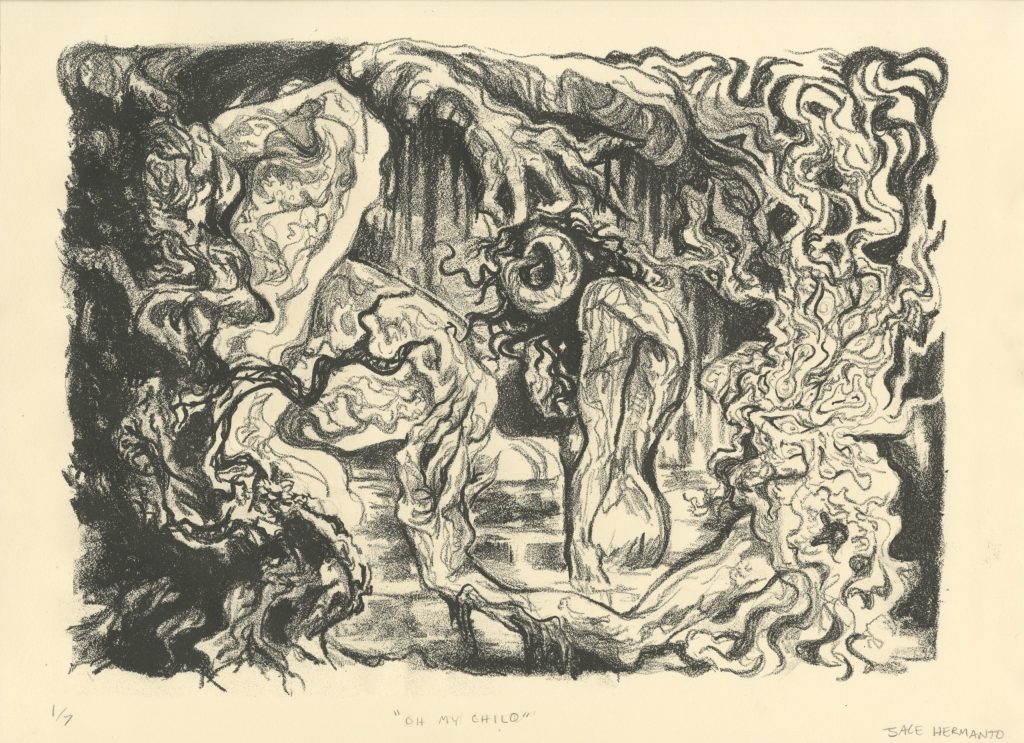
    Artwork: “Oh My Child” by Jace Hermanto

  • People of Knoxville: Georgia Vogel of Honey Mouth
    Written by Clint Liles
    Edited by Sadie Kimbrough

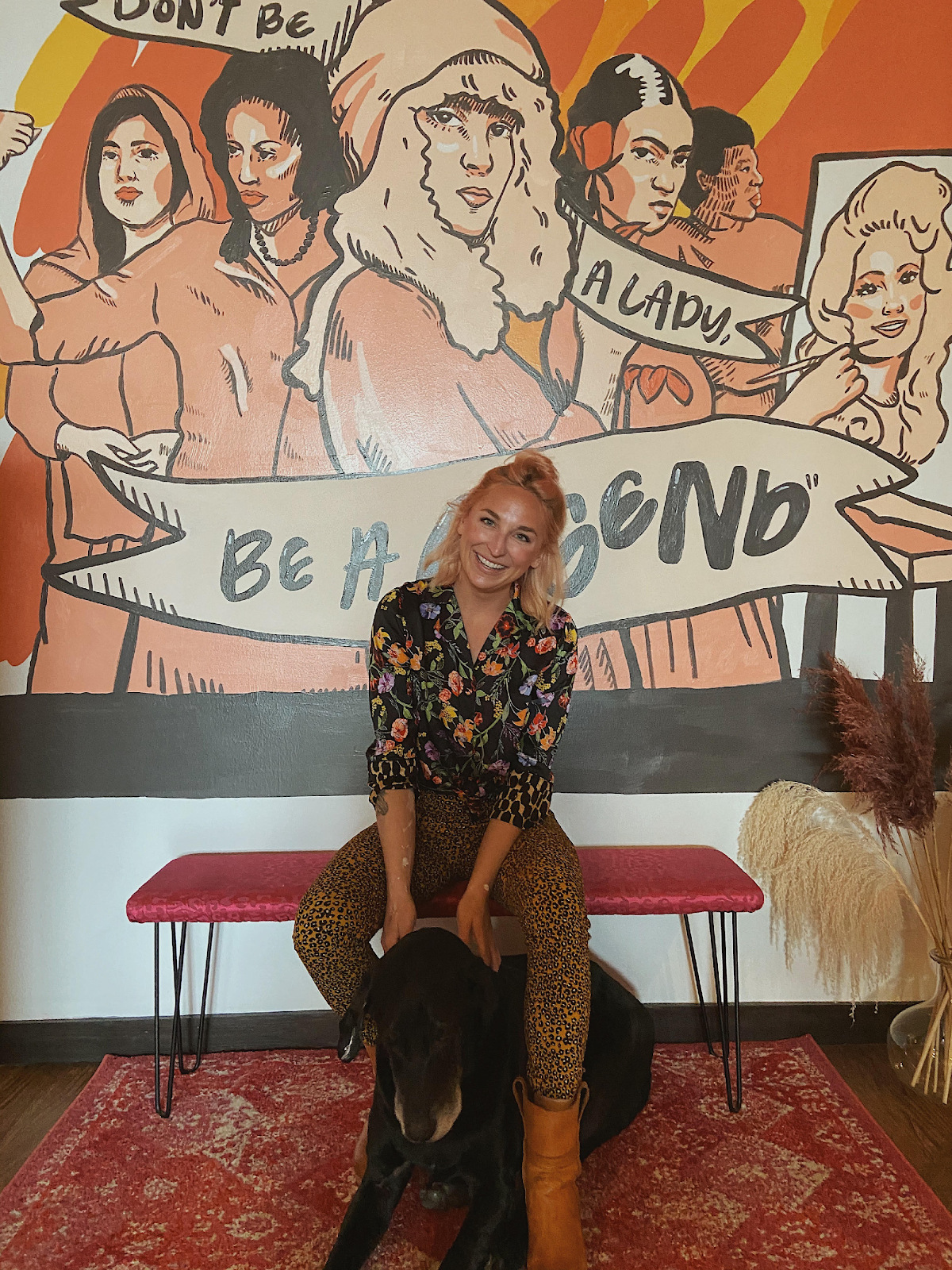
    Last March an unforgettable hot-pink shop popped up in the Old City of downtown Knoxville. Honey Mouth is a leather goods store focused on empowering women through fashionable accessories and local artwork. Georgia Vogel, an alumna from the University of Tennessee, talks about her experience of opening the shop in March 2020 and the challenges she has since faced.

    Vogel remarked that opening her shop at the beginning of the pandemic was a challenge.

    “It has been a journey. Each day, I feel like there was a curveball for everyone,” she said. “I have been incredibly fortunate because I work for myself. I have the flexibility to hustle when I need to, and not everyone has that job security.”

    However, Vogel remained strong this past year, noting the relationships she has formed have made opening the store worth it.

    “I think just the sense of community that we’ve created within this space and the people that keep coming back time and time again— even if they are not buying something, they keep coming back to say hi or pet Dozer. We’ve developed our own community inside of our larger community, and I think that’s invaluable.”

    Vogel acknowledged it certainly takes a community to run a small business and that she could not pull this off alone.

    “My mom works the front, and my dad helped me build the table. My sister helped decorate, and we are a really close knit group of people as it is. So having them support me is incredible. And then the people who sell here, I was really intentional about who I reached out to and who I wanted to be part of this space.”

    She notes, “I got here because of so many other brilliant and talented artists, makers, and friends. Maybe for some people, they would say it was themselves who helped them get to this point, but that certainly has not been the case for me.”

    Prior to opening Honey Mouth, Vogel was a high school art teacher. She opened up to me about her experience. 

    “I would say that being a teacher was one of the most valuable times of my life. I taught high school kids. There is so much to learn from everyone of any age, but high school kids are at that age where they are just beginning to not care what anyone thinks of them while simultaneously caring a lot of what people think of them. They are at this really weird crux in their life where they so desperately want to find themselves while still being involved in that culture to constantly care what others think. So, there were a lot of moments of brutal honesty and self-reflection and really raw conversations that kept me constantly thinking and questioning the same things about myself.”

    Just like many other artists, Vogel faces burnout, so she shared with me how she overcomes these obstacles. 

    “My creative block usually happens after a really crazy period around the holidays, like Christmas or Mother’s Day, where I’m turning and burning this consistent making. Or, if I do the same piece over and over again, I kind of lose my creative energy. So, I just have to stop myself and make whatever I want to make whether it is a success or a failure. I just have to play and see what comes from that and get inspired and motivated again.”

    Vogel also talked to me about her motivation for opening Honey Mouth.

    “I wanted it to be diverse. It is all females and minorities, which is really important to me in a patriarchal, white male society. So it was really important for me that I held a space for non white males.”

    While leather working is traditionally a more male dominated field, Vogel works against this stereotype, forming artwork that everyone can enjoy. 

    “It is interesting how people will sometimes come in and walk right out the door saying, ‘oh, it’s girl stuff.’ I think people hear ‘leather goods,’ and they think knife sheets and gun holsters, and for me, it’s more about empowerment, encouragement, and holding a space for people to be authentically themselves.”

    Vogel notes that much of her inspiration today comes from her family as a young girl.

    “I was raised to be a strong, independent female, and I spent a lot of time as an educator reaching out and helping young girls find that in themselves. And I think, especially in fashion, that entire culture can be pretty toxic, and I just want everybody to love who they are.”

    She opened up about her experience of working in a male dominated field like leather making, noting there is a common motif that shows up in her work from this challenge.

    “I tend to focus a lot on self-empowerment in everything I make. I think being a female business owner is tough. I think being a female business owner in a male dominated filed is really tough. And people can be critical. For me, I think it is a reminder to myself and other people when I’m stamping a quote like ‘mega babe’ into a bag, like, you can do this. You got this. I need this encouragement just as much as everyone else. Life is tough, and everyone is struggling. I think I am always working on overcoming, proving something, and it is underlined in everything that I do.”

    Vogel is dedicated to creating a space for females and minorities to feel included, welcomed, and confident. That mission is no doubt a success, as her shop is filled with empowering and positive messages throughout.

    Honey Mouth is located at 125 S Central Avenue, open from 11AM to 6PM Wednesday through Sunday. 

    hm1 Vogel hm3
  • Narrative Medicine Breaks Barriers Between Art and Science
    Written by Sadie Kimbrough
    Edited by Lynda Sleeter

    As early as the application process, college students are encouraged to commit to a major that will define their postsecondary experience.

    But as recent UT graduate Maddie Mae Sasse may tell you, a college education cannot be contained within a singular department. When binaries to learning are removed, the connections between various disciplines reveal themselves.

    Working under the Director of Equity, Inclusion, and Trauma-informed care at a Minnesota hospital, Sasse combined her diverse passions of medicine and filmmaking. She compiled interviews with patients throughout their medical journey and presented them with the finished product once they were discharged from the hospital.

    “You could really see the arc of healing both actually physically and emotionally. I remember the postpartum depressive mother who I made the video for. She was just so grateful, because she had, on film, her getting better. It’s such a great feeling to watch yourself become lighter with every clip.”

    The amelioration produced by Sasse’s ability to blend science with creativity can be traced to high school, when she was actively involved in TV production and started her YouTube channel.

    “I felt like I was very easily balancing science and art in high school and absolutely putting everything into science in college,” the alumna reflects on her early college days as a neuroscience student. “There was no time for me to do anything artistic. I was trying to keep up with my classes. I had lab work. I needed to get a job.”

    This dilemma is not uncommon to the typical college student. Financial, academic, and time-related constraints can greatly hinder expressive endeavors.

    However, after her mother brought her attention to an unusual program at Columbia University, Sasse discovered a solution for her lacking creative outlet.

    “I didn’t start Narrative Medicine,” she says of the program coined by Rita Charon, professor of Medical Humanities and Ethics at Columbia. “I’m just helping bring it to UT.”

    According to Sasse, Narrative Medicine approaches medicine with “courses that instill narrative competence,” ensuring that healthcare professionals are equipped with skills such as active listening and empathizing.

    “Really breaking that boundary between a patient’s experience and a physician’s interpretation of that experience.”

    While founder Charon focuses on literature courses for narrative proficiency, Sasse is interested in film.

    Because a program like this didn’t exist at UT, she decided to apply to the College Scholars Program, where students create their own interdisciplinary majors to accommodate their particular interests. Sasse titled her program Narrative Medicine with a concentration in Film. Suddenly, the boundary between her pre-med classes and interest in film production ceased to exist.

    “I sat down on the first day of my screenplay writing class, and I was actually giddy. I was like, ‘You guys have no idea how excited I am to be here!’ And everyone was like, ‘Who is that weird girl?’”

    Sasse incorporated her new skills from her film classes into her YouTube videos. In addition to her weekly vlogs, she creates short films set either to music or narration of personal poetry.

    “I always created videos on my YouTube channel, but they never existed on paper. Nothing was ever planned, just on the whim. That class really taught me the quantitative more technique-based side of film.”

    While her new courses taught her a more systematic approach to filmmaking, she explored creative methods in tackling chemistry.

    “I was associating colors with different molecules, making up ways to remember names,” recalls Sasse. “I was flying through my problems and wondering why is creativity not more encouraged in these quantitative courses?”

    As she immersed herself in Narrative Medicine, she found herself comfortably blending the orderliness of science with the imaginativeness of art.

    “It was like the two parts of my brain, while contrasting, were really trying hard to work together,” explains Sasse. “It’s a muscle you have to keep working, and eventually, the two work in sync and with each other. It benefited me, more than harmed me, bouncing between the two.”

    This mental collaboration is the core of Narrative Medicine. An artistic perspective helps to elicit emoiton, and therefore empathize with and understand the human experience. Sasse believes in viewing patients as people, not just illnesses.

    “The goal is not to make people excited to go to the hospital, but to make them comfortable going to the hospital. People aren’t necessarily being treated, but they’re part of their treatment.”

    Sasse’s studies are more relevant than ever. The COVID-19 pandemic brought about overcrowded hospitals, overworked healthcare workers, and overwhelming fear across the world. Narrative Medicine establishes an evidently needed avenue for medicine: an inclusive route aiming to dilute anxiety toward healing.

    The profile for Sasse’s College Scholars program can be found here.

  • People Watching at Café Du Monde
    People Watching at Café Du Monde
    by Kassidy Zartman I remember the saxophone player
    That stood just on the corner by Café Du Monde—
    His experienced black hands that skipped over the brass pearl keys
    And his face that swallowed in the jazz,
    While I drank my dark coffee and people watched. The taste of the beignet I ate slowly
    Was sweeter than the linger of whiskey
    On the mouth of the green-eyed boy
    I had kissed just the evening before in a dark bar on Bourbon Street—
    A navy officer built on southern charm and old money. I had a distasteful habit back then
    Of finding French Quarter men
    That liked music and liquor and dancing
    And the “you-only-live-once” type combination of each
    That I hoped for but never quite achieved, on my own at least. Some walked past, slow and habitual
    In that hungover haze that hangs over New Orleans mornings
    While the trucks deliver orders and that cat in the creaky book store
    Somewhere near Canal Street ducks between the cases,
    Hiding among leather and yellow papers and old voodoo and ink. A mother shuffled by, her child’s hand clasped in her larger one,
    Then a man with a scuffed trumpet case
    And a rattling carriage pulled by a thick, sweaty bay
    I had spotted on my earlier walk, drinking from a full trough—
    Just a perpetual sea of people and noise and life, churning like the Mississippi. I was alone, but not, in my memory—
    The dream-like atmosphere of being young
    But not in love . . . with a boy that doesn’t have a name anymore—
    Maybe just in lust with jazz music and chicory coffee,
    Preoccupied with ghosts and Creole-style buildings and other things of the past.
  • You Can’t Make it Without A College Education Or, Stuck In Knoxville Without Nixon
    By Robert Dominic
    Phoenix: Spring 1971

    EDITOR’S NOTE: New and unusual experiences await the college graduate these days. He either steps into extreme affluence or into abject poverty; his days are either spent in frantic occupational activity or in boring unemployment; he indulges either in nights of riotous social affairs, or he closets himself in some gloomy garret to dejectedly pursue his proverbial navel. Or, if none of these experiences come his way, he either becomes a part of the United States Military, or he dies, or both. The following pages give a first-hand example of a recent UT alumnus who has already served his time in the Military. His is a special case! Poor guy. 

    It’s a pretty nice day outside today—clear, sunny, and the temperature is about 85 degrees. Now, isn’t that just about the most interesting heard you’ve heard all day long? Sure it is. Let me tell you a little more. Have you ever sat in a stuffy trailer on a clear and sunny day when the temperature was about 85 degrees with no air-conditioner or fan? Nice? Try it sometime; you’ll really be impressed. But hold on, let’s carry this thing a little further. How about a nice stuffy trailer sitting in the scorching sun on a clear day in KNOXVILLE, TENNESSEE? Now baby, we’re getting somewhere. A question: what the hell are you doing in a a trailer in Knoxville on such a nice day? Well, what the hell are you doing reading this absurd, purely existential tale in Knoxville?

    Once upon a time I was a happy middle-class boy (remember when middle-class meant that one was from a blue-collared background). My father worked as a laborer for the plutocrats of General Motors, and my mother hung around the house and ate Italian food all day. Momma did, however, work as an indentured servant for many years in a bookbinding firm. But that was long ago in a quaint, corrupt, little town in northern New Jersey (for the uncultured, it’s pronounced “Joisey”). I grew up there, in Nutley, New Jersey (or Joisey), which was a town of approximately 30,000 souls, situated between Newark and New York City on the beautiful Passaic River. If I remember correctly, Nutley was a cross between a large metropolitan city and a small hick town. It was cosmopolitan in the sense that some of its leading vegetables read the Wall Street Journal, or Esquire. But Nutley was rural in the sense that… that …well, let’s just forget about Nutley and get back to Knoxville.

    We’ve all heard the line that goes, “without a college education you’ll never get anywhere.” Take it from someone who knows — it’s the damndest truth! I mean, if I hadn’t received a University degree, I would have never made it to Knoxville. And that’s a fact! So, you see, I got somewhere (even if it is only about 45 miles from Bull’s Gap). The plain fact is that I’m here and am in the process of hibernation — in the summertime, no less. Actually it’s only spring, but it might as well be summer with this damn heat.

    Presently, the local yokels are celebrating the “Knoxville Dogwood Arts Festival.” Yes, every spring the dogwoods burst into bloom and the city of Knoxville goes into festive fits of adoration. Nice? These are parades and picnics, and social gatherings, and arrests (on the UT campus, anyway), and open hearth fires, and wild Romanesque orgies, and for parties, and human sacrifices, and much much more besides. But, I’m not here solely for the festival. I’m here because I’m stuck. Yes, my dear friends, stuck s-t-u-c-k, STUCK!!!! You see, I was in search of the answers which have been plaguing mankind since the beginning of time. Yes, I sought and I found. Where? At the University of Tennessee in Knoxville. Yep, that’s the place. And, a few months ago I graduated — just like Benjamin — and now I’m unemployed, underfed, sexually deprived, broke, and sitting in a hot f-ing trailer in Knoxville, Tennessee! Oh me! Help me. Albert!!! And whom do you think I should call? Richard Nixon, meybee?

    A few weeks ago I decided to go into agriculture. I went down to the corner hardware store and bought a package of flower seeds (believe me, they were MERELY flower seeds). Because I’m a college graduate — a symbol of power and knowledge — I didn’t have to consult the county agent for information on how to grow my crop. I just inherently knew. I took the package of seeds out to the back of my extravagant trailer and put a few holes into the ground. Then I gently dropped a few seeds into each hole and covered them up with the fertile red soil. When that was done, I dropped to my knees, bent over, and placed my palms on the earth and prayed: “Five fools their gold, and knaves their power; let fortune’s bubbles rise and fall; who sows a field, or trains a flower, or plants a tree, is more than all.” I didn’t realize it at the time, but throughout the whole ritual my 90-year old landlady had been skeptically watching me.

    “Mornin’ Bob. Watcha doin’ down thar?”

    “Oh! Hi, Mrs. Landlady. I’m just making my contribution to the Dogwood Art Festival.”

    Have you ever thought about blowing up a trailer? I mean really becoming radical and buying some gasoline and making a few Molotov Cocktails? Sure, why not? It’s done almost every day. When I woke up this morning, I remembered a story about some students out in California who had blown up a bank. They used Molotov Cocktails and did a pretty good job on the bank. Wouldn’t it be fantastic to blow up my trailer? Just imagine the headlines in the Knoxville Urinal. “Unemployed Red Pinko UT Graduate Launches Dastardly Communist Attack Against Knoxville And Unresisting Trailer.” Wow! I’d be famous. Maybe as famous as the Bottom Strangler, or Joey Stalin, or Hilda the Hun (who, in case you’ve forgotten, was the wife of Atilla).

    Let me tell you about an up-and-coming literary artist who I predict will make it bigger than the great Erich Segal. His name is Babs Gonzales and his book is I Paid My Dues, Or Good Times …No Bread.  I was very fortunate to come across Babs’ book while loitering in a Washington, D.C., drugstore last month. As I was paying the cashier for a small box of Ex-Lax, I saw I Paid My Dues, slightly covered with dust, resting on a bookshelf. I asked the cashier, “Have you read the book?”

    “Which one?” she replied questioningly.

    “The one with the picture of the guy in the ‘zoot’ suit on the cover.”

    “Oh, yes,” she answered. “It’s a great book. You should buy it and take it home with you.”

    “I don’t have a home. I’m a lonely rambler.”

    She was startled. So startled, in fact, that she dropped by box of Ex-Lax on the floor and accidentally stepped on it. With tears beginning to gather in her eyes, she leaned over the counter and touched my trembling, rambling hand. “You are alone, aren’t you?”

    “Yes, lady, I’m very alone and hungry too.”

    “So was he,” she said.

    “Who?” I asked.

    She pointed to the book. “Babs Gonzales. He was very lost and alone.” She let go of my hand and began to stare at the ceiling. Then in a hard voice she said, “But that didn’t stop him. No, he searched on. Yes, he searched far and wide.” She paused and adjusted her bra strap. “Yes, Babs did it. He found his home.”

    “Where?! Where?!” I was frantic — desperate!

    “Buy the book and you’ll find out,” she said. “Believe me, Mac, you won’t regret it.”

    So I bought the book, and I didn’t regret it. Hell, it’s a masterpiece. I Paid My Dues is Babs’ autobiography; it’s all about the rough life he had, beginning with his birth in Newark, New Jersey. And believe me, anyone born in Newark is bound and determined to have a rough life. Just ask LeRoi Jones.

    Well anyway, the simple fact behind all of the preceding bull is that I’m stuck in Knoxville, living in a trailer, climbing the walls, and listening to the birds. Have you ever listened to the birds? I swear to God there’s this one bird that sounds like he’s saying, “Birdie! Birdie! Birdie!” Isn’t that amazing? Sure. I’m living in a jungle. I’ve got rabbits and dogs and pet bees and ants and wild, tropical plants, and quicksand — and sometimes I imagine that I have a 23 year old half naked woman who swings around on the vines outside — and I even have a fierce herd of crabgrass thundering through my tiny yard. Did you ever realize that quicksand was a living organism? Stick around Knoxville for awhile and you’ll come to realize that (1) telephone poles talk to each other, (2) magic rugs and carpets exist, and (3) Nixon is a good president.

    Isn’t this whole damn story absurd? Of course it is — especially to all of you undergraduate intellectual genius’. I bet they never taught you about Bucky Bukowski in American History. They never taught me. You see, you don’t learn about Bucky Bukowski until after you graduate. Bucky is a famous twin-spoon player who was brought up in the Halsey Street district of Detroit. Because he was poor and couldn’t afford a set of drums, he began to play the twin-spoons, which consists of slapping two spoons against your body in time to music— at an early age — say, twenty-one. Bucky rose to unbelievable heights. In 1932 he toured every Greyhound bus terminal in the south, and on the following year he did his act in Knoxville, where, incidentally, he died of an overdose of ramps complicated by cancer, brain tumor, a heart attack, two broken legs, all aggravated by the fact that the bus in which he was riding attempted to cross the L&N railroad tracks on Sutherland Avenue while a fast freight was rumbling by.

    Now, do you see all like stories with surprise O’Henry endings? Good. You see, I’ve got to get back to my meditations. Thus, I will leave you with a quote from Milton (which is a remnant of the education I received at the University): “Who brought me hither will bring me hence; no other guide I seek.” Ha! What a joke! I love Knoxville in the springtime, I love Knoxville in the…

  • South Press Welcomes Artists, Coffee Lovers, and the Queer Community
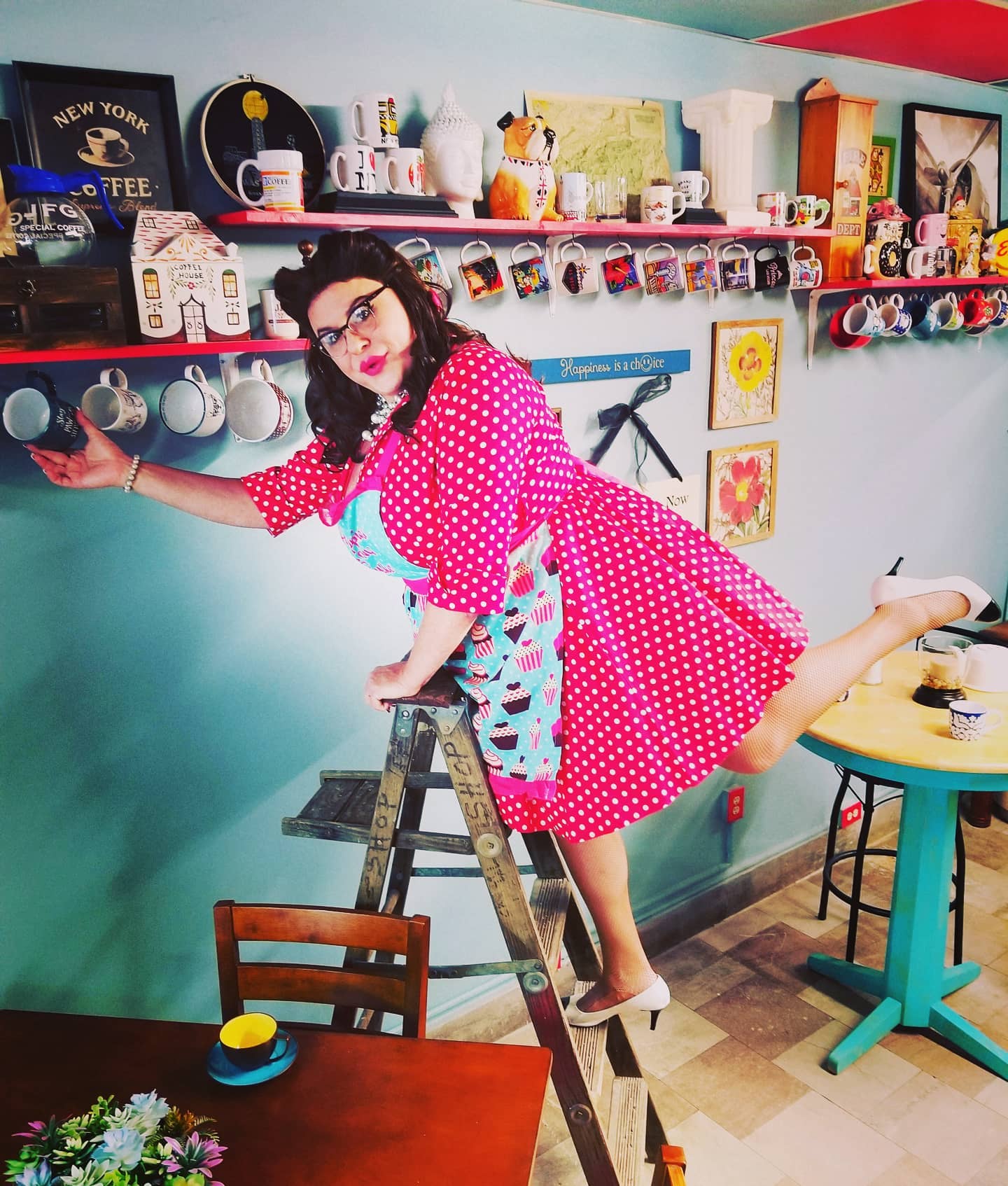
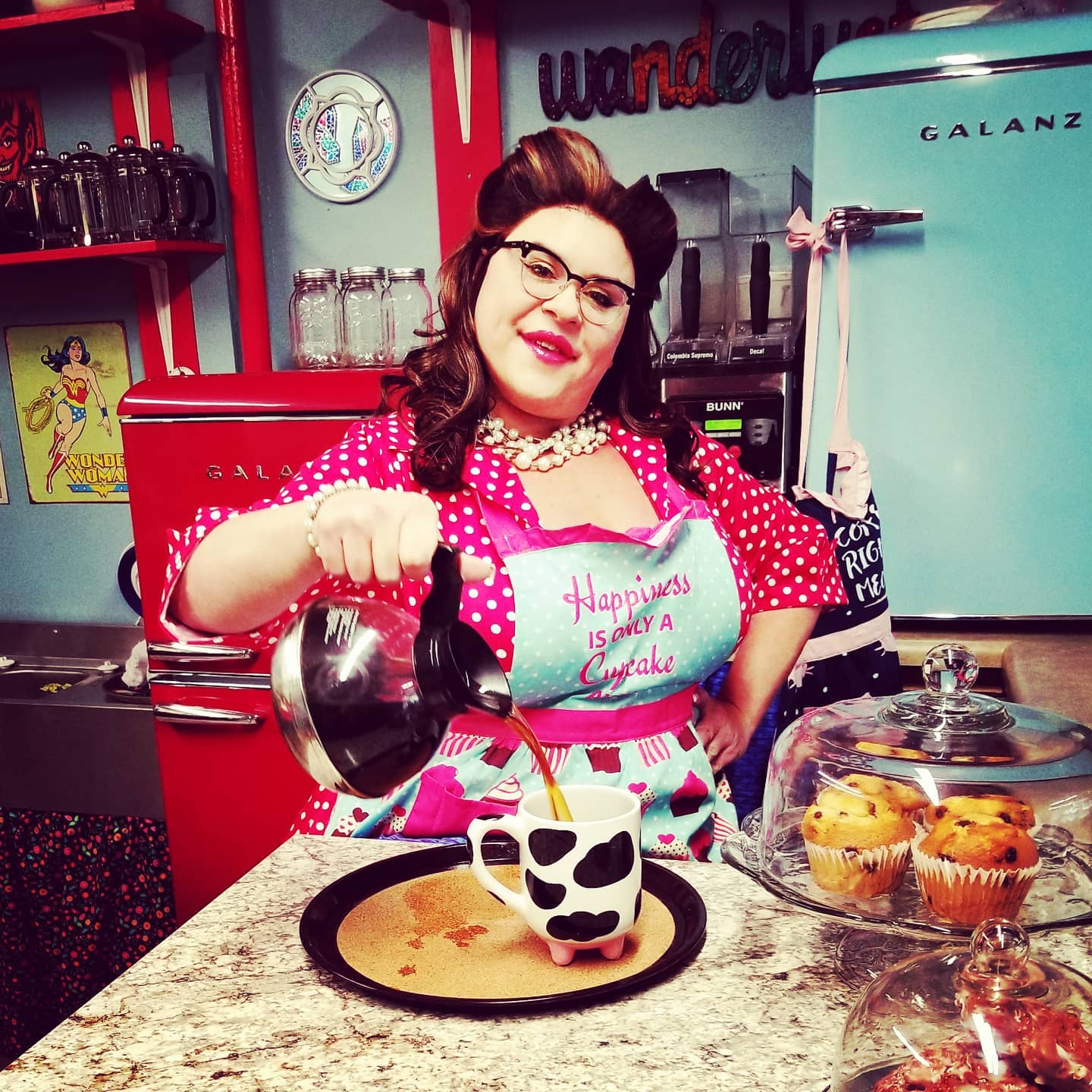
    161398567_223724442773119_2576995188542889883_n 173880395_242520324226864_5812741392017631427_n 170061888_237117614767135_5443610813595374598_n Written by Sadie Kimbrough
    Edited by Lynda Sleeter and Ben Hurst

    My handcrafted latte sits on a coaster decorated with an image of the woman sitting to my left. The coaster’s not the only portrait of Joslynn Fish in the room, as she motions to a lively bulletin board of fan art. 

    Fish didn’t create South Press to be adored. Her loyal customers return because of the safety and belongingness that her shop offers.

    “I always say that we sell coffee to keep the lights on here,” she jokes, greeting each customer that arrives. “What we’re really providing here is community.”

    Fish’s queer, rural roots brought her to Knoxville at a young age, seeking anonymity and the freedom to be authentic. She has called the city home for the past 25 years. 

    “I found community here in Knoxville, and been a part of that community and pretty plugged in. I have been through the evolution of Knoxville queer history.”

    Upon her arrival to the city, the queer community gave sanctuary to Fish, who at the time was working for $2.13 an hour serving tables at Cracker Barrel. 

    Although she was too young to enter Knoxville’s former dance club, the Carousel, elder queers often noticed her lingering outside. 

    “By the end of the night, they would buy me a basket of french fries. I don’t think they knew at the time that was perhaps the only sustenance I had that day.”

    Despite finding companionship in Knoxville, Fish and the queer community were still met with intolerance and prejudice. She witnessed the police target young gay men, and she experienced discriminatory violence first-hand.

    “I remember when they first built that high rise off White Avenue. The first semester that students moved in there, they threw full cans of soda at us out the window,” recalls Fish. “When they hit the pavement, they just exploded.”

    Her experiences fueled her desire to eventually build a safe space for queer people in Knoxville, particularly one that does not center around alcohol. 

    “I guess I could have said, ‘Wow! The Knoxville community really deserves a social, sober, queer space. Somebody should do that.’ Instead, I said, ‘Knoxville is really deserving of a social, sober, queer space. What can I do with my pool of retirement?’”

    Seventeen years of Cracker Barrel retirement transformed an old tax office on Chapman Highway into the vibrantly embellished coffee shop that is South Press.

    After losing her job at the start of the pandemic, Fish took a risk and gave the 800 square foot space a face lift. She completed much of the construction herself. 

    “Every time I did something that I didn’t know I knew how to do, I found a little bit more worth in myself. I learned that I am capable of so much more than anyone else has ever given me credit for.”

    With a supportive partner and community in her corner, Fish became the first trans person in East Tennessee to own a business and publicly be open about her identity.

    “What we’re doing here is revolutionary, literally. But somebody had to do it. It was absurd to me that no trans woman had claimed a seat at the table that we helped to create. I wanted to change that and empower other people to do the same.”

    Not only does Fish empower fellow trans people in the region to become public entrepreneurs, but she also inspires young LGBTQ people across the country, having established a following of over 45,000 on TikTok. 

    “I think it’s good for young queer and trans people to see an adult trans person who’s happy, healthy and well-adjusted who is not privileged already,” she says. “I’m not apologetically trans. I don’t try to go stealth. I maintain a very public trans image because that’s who I am. I cannot change that, and I wouldn’t.”

    Fish’s pioneering and inclusive nature are not the only qualities that make her business successful. 

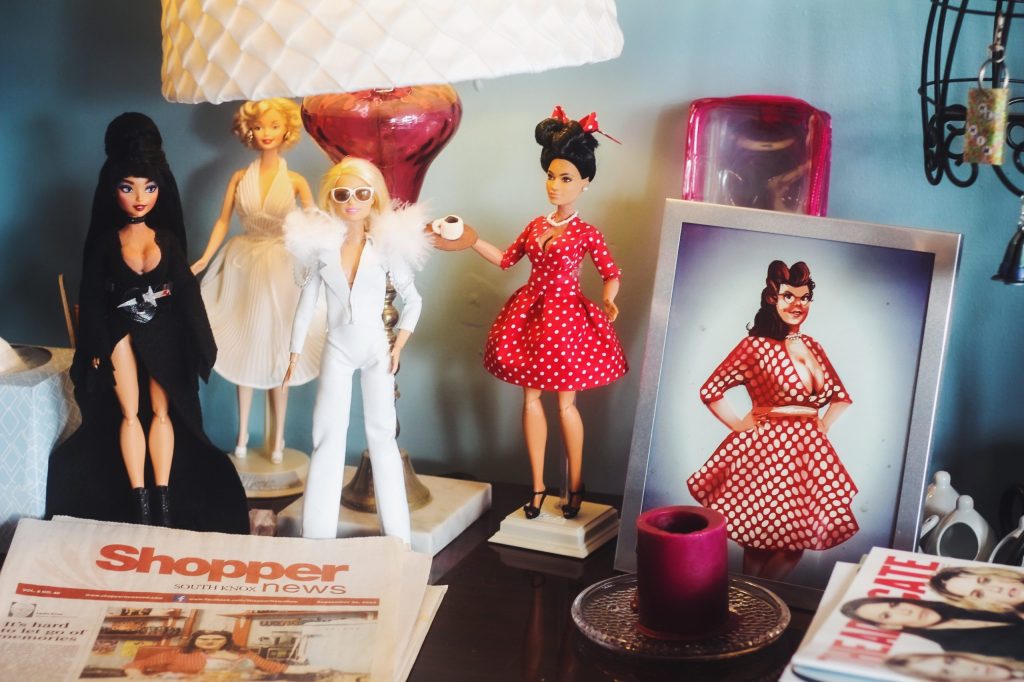
    The physical hodgepodge that is her shop sparks wonder and intrigue in her customers. South Press is covered in pre-loved furniture, board games, Barbie dolls, an expansive mug collection, and tons of local art.

    Local queer artists receive forefront and physical space to showcase their work. 

    “We celebrate queer artistry here, whatever that looks like, whatever the medium.” 

    When South Press showcases artists, Fish considers her benefit to be gaining new decorations on her walls and therefore takes zero commission from the artist. 

    “That’s their way of making a living. I sell coffee for a living, and I’m pretty okay at it. If you were a starving artist, and you need that painting to sell to pay your light bill, or buy more paint or canvas, you are the creator; you deserve your money.”

    The art is locally sourced, and so are the food and drinks. From the artisan coffee to the apple butter, Fish works with 8 different small businesses to nourish her customers. 

    “You’re getting the best that your local community has to offer,” Fish triumphs. “It allowed us, for this small 800 square foot room, to send an echo or reverberation out into the community. Yes, we sell coffee, but there are all these other businesses that stimulate our heartbeat.”

    Fish believes in supporting her local community as well as serving the planet. South Press keeps its carbon footprint low by composting and recycling nearly all of its waste. 

    “Is it an additional cost to source things locally? Absolutely yes. Is it worth it? Absolutely yes. Is it more work and more cost to compost and provide sustainable to-go containers? Absolutely yes. But, is it worth it? Also, absolutely yes.”

    Within the next few months, South Press will move to a larger location a few doors down. The sizable 2500 square foot space will accommodate more patrons, performances, artist showcases, and hopefully more Barbie dolls. 

    There is an additional 300 square foot room that Fish hopes to set aside for social justice organization and community classes.

    “You start your dream where you can afford, and you go from there,” she reflects. “Who expects opening a business in the middle of the pandemic, outgrowing your space, and needing more?”

    The success of South Press demonstrates the profound impact an inclusive space can have on a community, particularly when someone proves its possibility and blazes the trail.

    In her new space, Fish aims to maintain the celebration of art, encouragement of camaraderie, and freedom of expression that exists within her coffee shop.

    South Press is currently located at 3715 Chapman Highway, open Tuesday through Saturday from 8 to 5pm. Masks are required upon entry.


  • A Video on our Gallery and the Phoenix During 2020

    Ben Hurst, our Editor in Chief, discusses our first gallery in the New Student Union titled “A Walk Through the Magazine.” He discusses the adversity the magazine during the pandemic, the emphasis on growing amidst that diversity, and the importance of the arts during such a monumental time in our life.