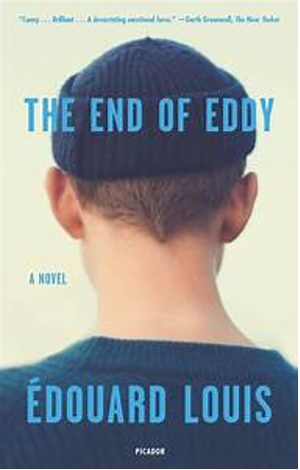
• Book of the Month: The End of Eddy
    Picture1 By Clint Liles
    Edited by Ben Hurst

    When I first read The End of Eddy all I could find was its problems, yet one year later the message of the book still resonates with me. French author and commentator, Edouard Louis shares how he comes to terms with his sexuality in an impoverished village in Northern France. He opens with the observation that “from my childhood I have no happy memories,” which may seem bleak, but he qualifies this statement by adding, “I don’t mean to say that I never, in all those years, felt happiness or joy. But suffering is all consuming: it somehow gets rid of anything that doesn’t fit into the system.” Although Louis writes on his experience in a country halfway across the world, many young individuals within the LGBTQIA+ community, myself included, will understand his story as their own: making it an unforgettable and personal read.

    From the beginning, the book spoke to me because I grew up in a small town in rural Appalachia, and I identified with the author’s struggles. Louis, who is called Eddy, as a young boy is considered an effeminate and odd boy throughout grade school which results in him getting bullied from an early age. His father, who dropped out of school to work at the local factory, insists on him to take up soccer to “toughen him up,” however it results in more bullying for his lack of understanding and skill in the sport. The town I lived in was a blue-collar community where the majority of the population worked in factories. My connection with young Eddy was heightened because my dad was a football coach and like Louis, I did not have much concern for the sport and much preferred reading or shopping with my mom. Eddy connected with me from the beginning, bringing to mind my small hometown and the struggles I faced with coming to terms with my sexuality.

    Louis notes that he comes from a family of violence, that his grandfather beat his grandmother and that his father has uncontrollable anger issues as well. He continues to note how this cycle is continued as his sister marries early to a young man who struggles with anger issues as well. Louis states that this violence is not uncommon in his village as several other families struggle with the same thing and as a result several children around him grow to be violent as well. Louis relays that this correlates with an issue of alcoholism in the village, speaking of the many times his brothers and father would be at the bar getting drunk. An article recently published by the University of Michigan notes that alcohol is the most widely used substance abuse in Appalachia, surpassing dug abuse. Alcohol abuse has long been a problem here correlating with the poverty in the region. Just like how Eddy’s family struggles to live their day to day lives, thousands of Appalachian families face the same thing.

    Louis does not spare details of the poverty of his family: stating they lived in a small home that leaked often and oozed with dust in the spring coming in from the rural fields. Eddy had severe asthma, yet his parents preferred that he lied about it because they could not afford the medications to control it. While his family faced an incredible amount of poverty, he notes that they were still proud since they did not rely on government assistance. Coming from a small town in rural Appalachia, it seemed that the people who needed the assistance the most refused it the harshest. In this moment it felt as though Eddy’s family was a part of Appalachia as well, refusing assistance and seeking to work things out themselves.

    Louis notes later in the book that he and his male cousins watched pornography while their parents were not at home. Eventually, this progressed to them experimenting with homosexuality until Eddy’s mother discovered them in the woodshed. Eddy notes that his mother did not say anything but instead quietly walked away. Eddy’s cousins quickly turn the story and said that it was Eddy who started the idea which resulted in more severe bullying by his peers. To solve this issue, Eddy decided he needed to appear more masculine and began dating a couple girls. I remember when I was growing up and feeling the need to fit in with others to survive my small high school. The constant fear of someone figuring out that I was gay lingered with me everywhere I went. Eddy’s futile attempt to date women is a common occurrence to every young gay kid coming to terms with their sexuality. Just like for Eddy, this is a moment I knew that I was gay and had to give up on the visage I worked so hard to put on for my community.

    Overall, Louis writes a piece that will resonate most deeply with young LGBTQIA+ individuals who struggled or are struggling to come to terms with their sexuality, but his story is also a story that all Appalachian readers will recognize and appreciate. For me, the memoir felt personal and intimate as Louis revealed areas of his life that many, myself included, would prefer to cut out and hide from others. The End of Eddy is certainly not an easy read, but it is worth it for readers willing to take the time to consider the larger forces shaping life both here in Appalachia as well as in France.
  • A Parley with Charlie
    Charlie picture

    Written by Javen Calhoun
    Edited by Lynda Sleeter

    Artist. Student. Resident assistant. Tik Tok star. These are just some of the positions that Charlie Utley holds while he is enrolled at the University of Tennessee. He is a man of many talents, and a man of many more facets. As a sophomore at UT he is studying neuroscience, a major that is equally challenging and interesting to him. Walking around downtown Knoxville is one of his favorite pastimes, especially at night when the strip is all lit up and the city is alive. He is also an avid music listener, enjoying artists across practically every genre such as Tyler, the Creator, Playboi Carti, Frank Ocean, Kendrick Lamar, and Lil Uzi Vert just to name a few. Anime is yet another one of his hobbies, Hunter x Hunter, Tokyo Ghoul, and Pyscho-Pass being some of his favorites. 

    He’s got a diverse collection of inspirations in the back of his mind too. People like Tyler, the Creator, Damon Alborán, Jamey Hewellet, Alfred Hitchcock, and Rei Kawakubo are some of the modern day artists that inspire him and the aesthetic he has worked to build. These artists each operate in their own frame of beauty; some specializing in music, some in physical art like drawings and such, others in fashion. But they each have their own unique style of presenting their ideas in a way that is not only appealing but also fascinating. 

    I first met Charlie when we were both taking a leadership class the semester that everything went wrong because of COVID. We were both on track to become RAs on campus, and the class allowed us to get to know each other. Even in class he spent time either working on or talking about the various art pieces he had done over the course of his art career. He is a very genuine person, and as a result, I had the pleasure of talking with him recently about his art. 

    He’s been in the art game for some time now, and he let me know that even in art, music is one of his greatest inspirations. 

    “I think I began really getting into art early during middle school. The Gorillaz music group. I really enjoyed the art style of their album covers and stuff, and that was what pushed me to start like making art and drawing.”

    I told him I envied him for his artistic talent, and he told me that anyone can do it. This led to an energetic and non-sponsored promotion about Procreate, which is the app he uses when he draws on his iPad. We talked about what makes a good artist, and he had this to say: 

    “People who tell white lies are good to keep around, like for inspiration purposes. Sometimes I make art, and I feel like it’s crap you know, and I’ll have a friend or someone say ‘Wow, that’s so good, you’re so talented.’ And I’ll be like ‘Huh, maybe it’s not so bad.’ The thing about art is knowing that your first or even your 101st draft isn’t going to be good. But you just have to keep at it.”

    Perseverance and patience. That’s what really makes a good artist, and they are a part of the reason why Charlie is on his way to becoming an icon now. 

    Music is more than what jump-started his art career initially, it’s what helps to steer him even now. Music is one of the largest parts of his creative process. It almost seems to guide his mind as he guides his pen to bring his ideas to life. 

    “Whenever I want to sit down and draw, I usually sit down, put on some good music, like some nice chill music, some vibes, and I try to focus on the composition and the idea I have and how I want to present it. I start with the colors and think ‘How can I make this look visually appealing?’”  

    He let me know that he’s not much of a sketcher. He doesn’t do much planning when it comes to art, once he gets his thoughts together he just dives in and takes it piece by piece. This process is one that is pretty much uniform for all his pieces. He doesn’t spend much time stressing during the creative process, in fact he does the opposite. 

    “Art is peaceful. I do it for mental health, to give myself that break. I think it’s important that I do, that all we do, to sort of decompress you know?” 

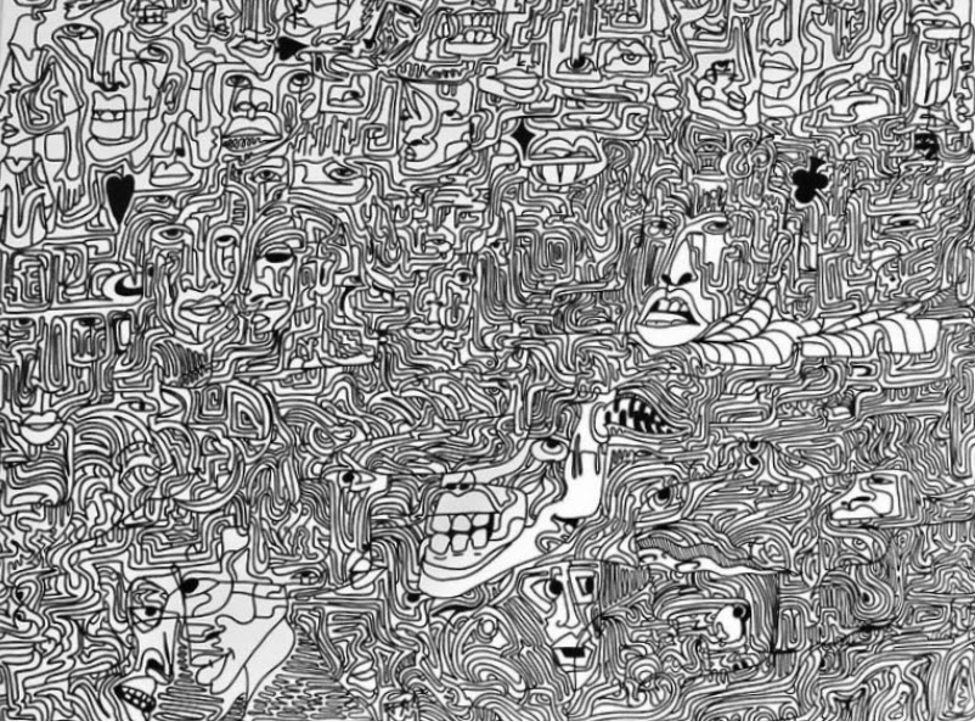
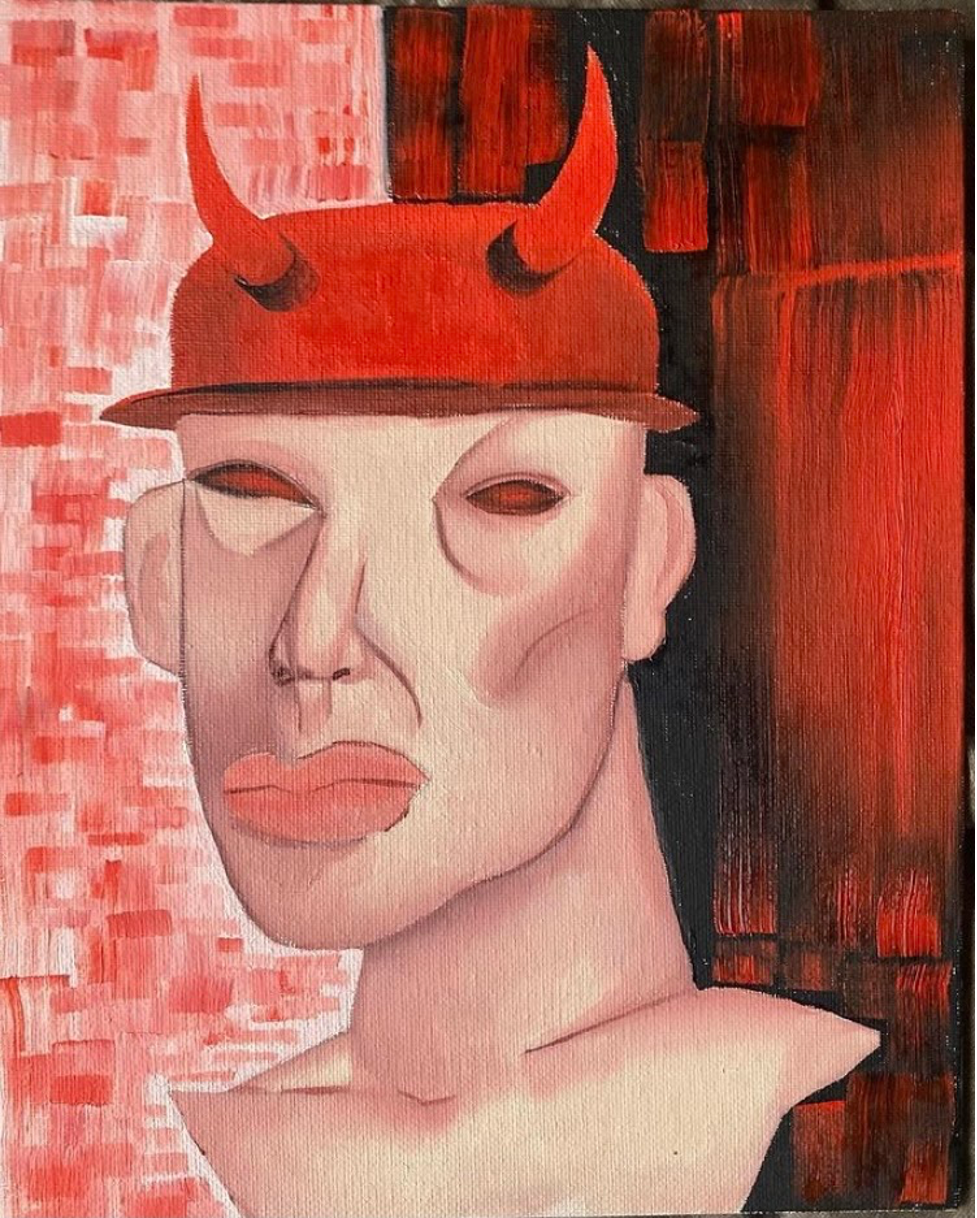
    Since most of his pieces originate from a place of emotional release, that is what inspires them. The first piece he picked for me to show off is titled “Madrugada,” which translates to “early morning” from Spanish. The other two pieces were untitled. He showed each piece to me on his art page: cstudio_online. For the second piece the caption is simply “Oil on canvas 2021.” And the third piece is captioned “Some lines on yupo paper.” The natural and almost dismissive titling that he uses on some of his art only alludes to the raw emotion that he used to make his pieces. When we talked about the significance of his art, he just reiterated that he does it for mental health. It helps him to clear his mind. We talked about the similarity of writing and journaling to what he does, and he made the comment:

    “Just like with writing, it’s hard to sort of be super open and intimate with art styles sometimes.” 

    A brilliant artist, and an even more brilliant person, Charlie proves that above all, your own self is the greatest muse you can have when it comes to making art. It just takes patience and perseverance. With yourself and with your art. And it is this mindset that makes him iconic.

    Charley Art 3 Charley Art
  • An Interview with Harrison Young and Allison Crye of the Tennessee Stage Company
    Written by Ben Hurst

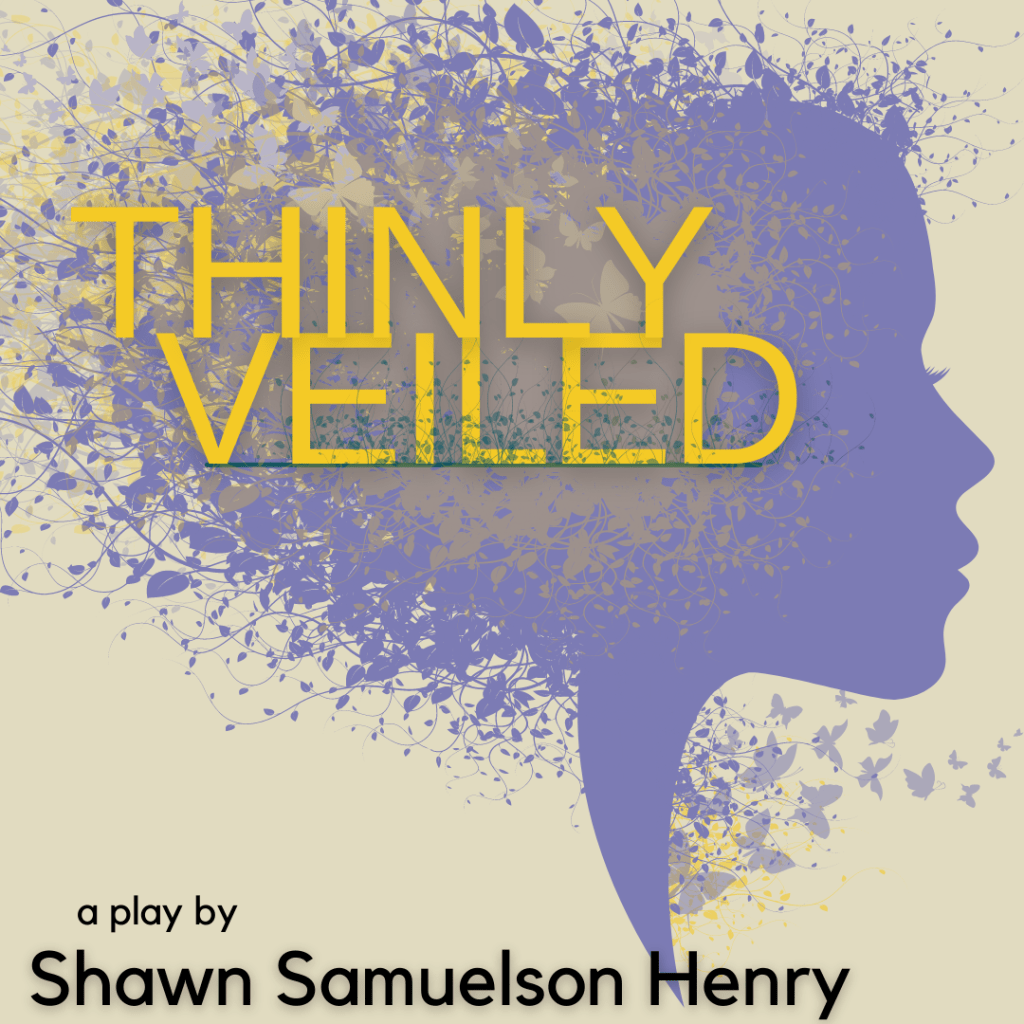
    The definition of “essential” and “nonessential” businesses came to the forefront of our minds during COVID 19 as some closed while others remained open. The Tennessee Stage Company has since reopened and began its New Play Festival. UT Alumni Harrison Young, the Literary Manager for the New Play Festival, and Allison Crye, the director of the upcoming play Thinly Veiled, talked about the experience of running a theater in the midst of a pandemic.

    The Tennessee Stage Company is a nonprofit stage company that has been located in Knoxville for over thirty years. They offer a few different play festivals for the people in Knoxville like “Shakespeare in the Square,” “Shakespeare in the Park,” and “The New Play Festival.” They also do outreach programs for the surrounding Knoxville area.

    Harrison talked about his experience of joining the Company.

    “In a way, Tennessee Stage Company chose me,” he said, “I was writing my very first play in 2008 called Online Fighting and I met the artistic director at that time, and it was 3 months later when I was cast in the headlining show of the New Play Festival that year called Hoppy’s Trunk.”

    Allison then noted the different ways of joining the theater.

    “You can join the Tennessee Stage Company in a myriad of ways,” she noted “I started out as a stage manager and I have for about six or seven years, but you can also be cast in a show, volunteer, join the Buddies of the Bard, or come talk to people backstage after a show to know how to get involved.”

    Harrison and Allison both highlighted the importance of the Tennessee Stage Company’s impact on Knoxville as its most important role.

    “First of all, I’m biased and secondly, I’m torn,” Harrison said, “I work so much with the New Play Festival, but “Shakespeare on the Square” has been less of a performance and more of an event. Being on the square, you have so many surrounding businesses where people can come and go.”

    “It has also helped a lot of people find the art inside of themselves as well” Harrison said.

    Allison focused on “Shakespeare in the Park” as the event which had the most impact.

    “Shakespeare gets the most exposure, and I personally love the ‘New Play Festival’ because it’s something that nobody else has seen before,” she noted, “its characters that actors can originate.”

    “We have also worked with other theaters in town like Tiger Lily and 7030, so we try to stay active, and we do not close ourselves off from other companies.”

    In talking about the essentiality of the Tennessee Stage Company, Harrison talked about the beginning of the pandemic of where Allison was directing Amazing Graces which had its final week cancelled.

    “It was impacting us, and we had to think about how we would be as a company,” he said, “we all know that food and shelter are important but so are stories. So, we are starting this all-online ‘New Play Festival’ to give people a chance to share their stories.”

    “Stories are the way we learn to empathize with people: it’s how we broaden our experiences without traveling to faraway places” Allison added.

    Allison talked about her experience at the beginning of the pandemic.

    “I stayed really busy, but I also had a lot of time to reflect and rear. Honestly, COVID has given me a chance to slow down and be.”

    Allison also talked about how COVID 19 impacted the production of plays as well.

    “It is very different, but the chat feature is really good because it gives the cast a chance to see what the audience is thinking” she said, “we had to all become more online content than we were before,” she said, “I try to make the actors look at their cameras more directly and interact with the audience because they can’t interact with the actor, they are playing the scene with.”

    Harrison highlighted the unknown of preparing for an online theater behind the scenes.

    “Sometimes the show feels like a rehearsal, but the chat function is 5% distraction and 95% of audience engagement” he said, “the actors were encouraged to stand up and use any props they had around their house.”

    “This is a newfound space for us.”

    “At first, I didn’t much care for zoom audition, but I realized I liked a live audition more than a recording because they haven’t edited it together—it’s much more like seeing them in person,” Allison added.

    “It also has their name under it so you don’t have to shuffle through paperwork to know who they are,” Harrison added, “overall, it is nice to see that it can work with that.”

    Harrison also pointed out that they had more auditions than they had originally planned.

    “We even had to open out an extra day for auditions because we had over 75 people audition” he notes, “it has given us access to more talent and expand our footprint.”

    The Tennessee Stage Company gives a chance for playwrights to submit their work and present them at the New Play Festival every year. This year, they will be presenting the plays as a reading over zoom where audiences can join for free.

    Harrison talks about the importance of the “New Play Festival.”

    “The “New Play Festival” is where the magic happens” Harrison said, “it gives people a chance to find their voices and their futures.”

    “For me the “New Play Festival,” from a director’s standpoint, lets you workshop a play,” Allison said, “usually we workshop a play for three years, going through table readings, staged reading, then a full production, changing the pieces around throughout.”

    Harrison highlighted that people could expect a PowerPoint about their upcoming shows, actors’ bios, the outreach programs and more when they first enter the play on zoom. The plays are completely free, but they encourage donations if possible. Harrison will introduce the show, and the audience will have a chance to talk to the directors, cast, and play-wrights after the show.

    “A lot of audiences do not know what to expect when you tell them you are having a show on zoom” he said, “but I think the Tennessee Stage Company has a great casual format in the past, and we have been trying to keep that feeling.”

    Allison then highlighted that the audition process has actually evolved during the pandemic due to the breadth of talent that they have access to because it is completely online.

    Allison is directing Thinly Veiled and both she and Harrison talked about the play’s impact.

    Harrison talks about the process of choosing the play for this year’s festival.

    “We go through the process of picking plays for a year before the festival,” he said “when this script came, it felt personal: it had a gravitas to it,” he said, “we had a small panel of a few men and women. The men understood some of the themes, but the women highlighted some things that the men had missed, so I thought that realization would be valuable to our community.”

    Allison talks about some of the important lessons that Harrison touched on when they chose the play.

    Thinly Veiled deals with grief which all of us will experience at one point,” she said, “and it involves how people around us deal with it or don’t deal with it. As a society, we do not talk about death a lot, so when somebody loses somebody—especially a child—do not know how to act.”

    She then talked about the play’s confrontation with deeper topics.

    “Anorexia causes the death of one of the characters, and it is hard to understand. The play talks about how some people deal with it and some people can’t,” she said “it focuses on how little girls are told that their worth is based on their appearance. There is a culture that really does depend on female appearance.”

    They then talked about the characters that each of them connected with the most even though neither of them has children personally.

    “I connect with Holly more than any of the other characters,” Allison said, “Holly is horribly lost, and she wants somebody else to fix her.”

    “It takes a while before Holly realizes that she is the only one who can fix herself.”

    Harrison also connected with Holly.

    “I find myself in those times of heartbreak that when I have those times of heartbreak, I find it hard to let go and focus on other things,” he said, “I find it is always difficult to represent the profound impact it has on a person, and this play resonated with me.”

    The Tennessee Stage Company, and many theater companies like them, has overcome an array of obstacles over the last year. However, they have overcome them by coming up with innovative ways of presenting theater to Knoxville audiences. Their commitment to theater highlights their love for their art, and it highlights the essentiality of theater/art during a pandemic.

    You can see Thinly Veiled over zoom on April 2nd at 7 pm eastern time. You can register for a spot at the performance at tinyurl.com/REGISTERNewPlayFest. If you miss it or want to watch the other play White Dress/Red Bandana, then you can check their Facebook page where you can watch it for free a week after the performance.

  • MFA Candidate Gary White Visually Archives the History of the “Southern Other” in Current Gallery 1010 Showcase
    Written by Rose Hamm
    Edited by Ben Hurst

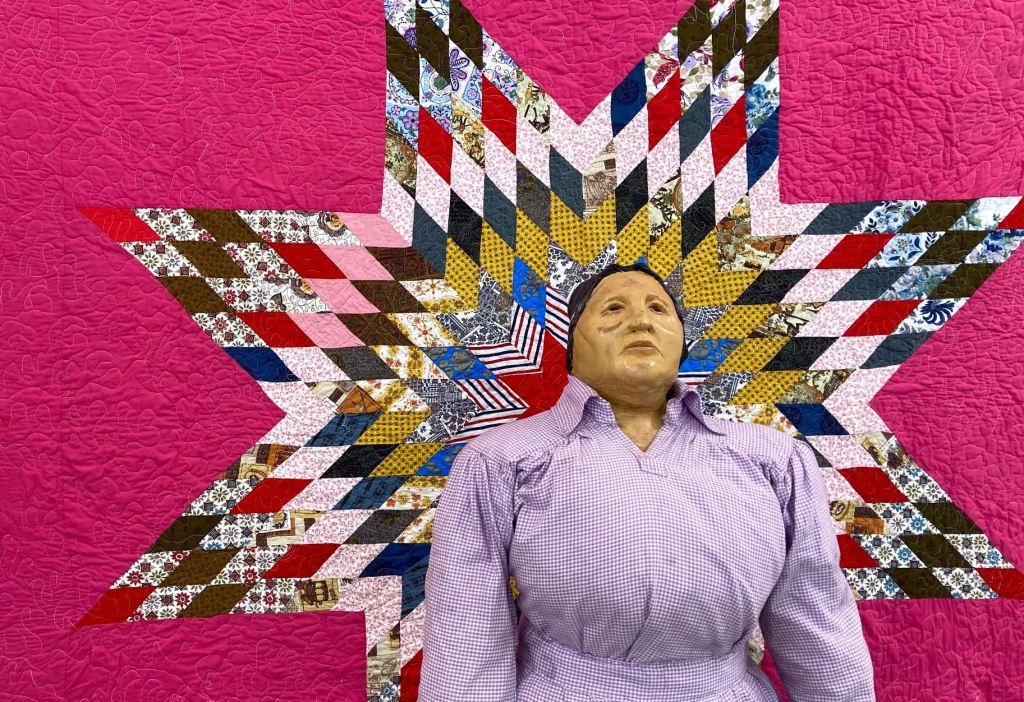
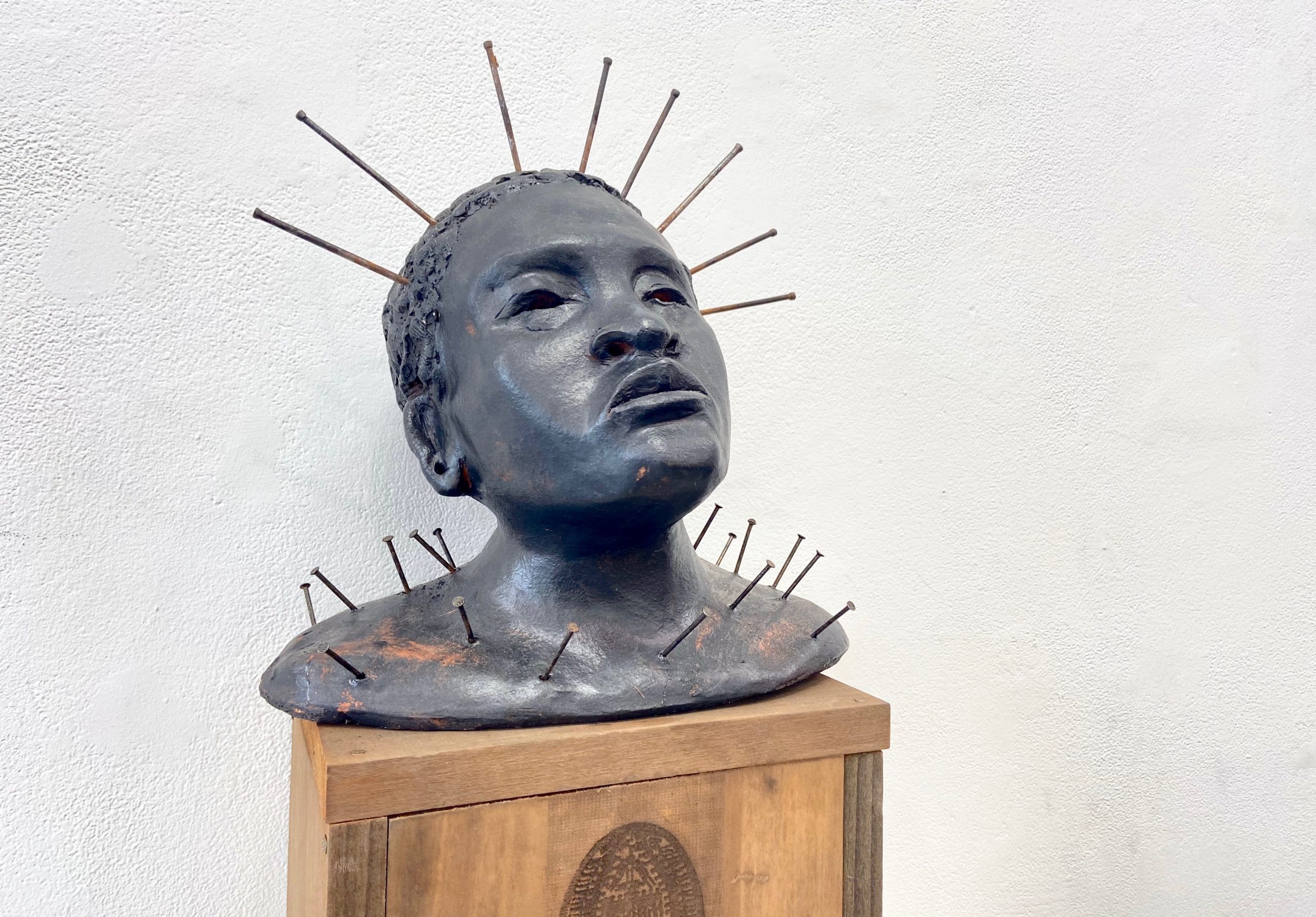
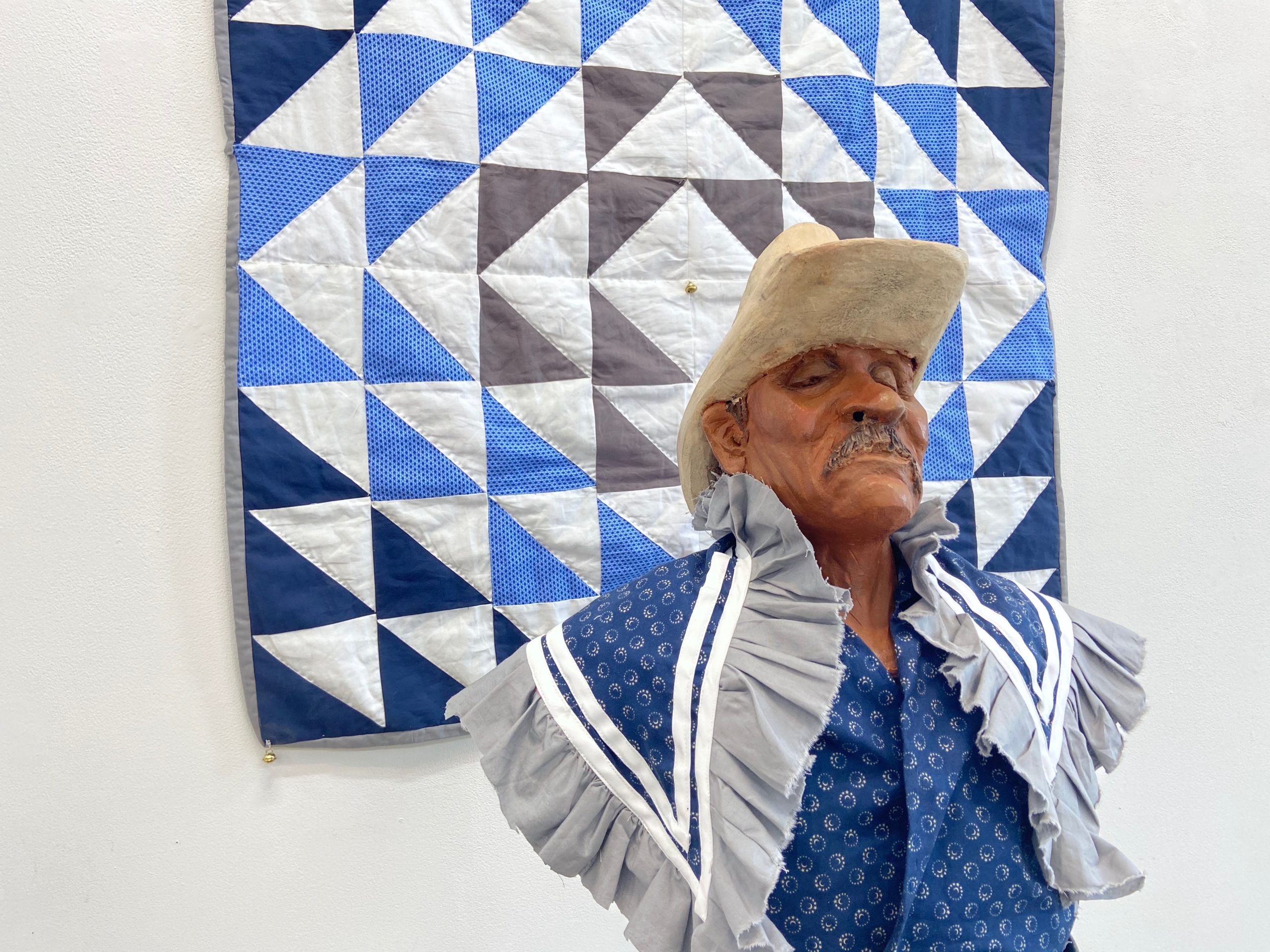
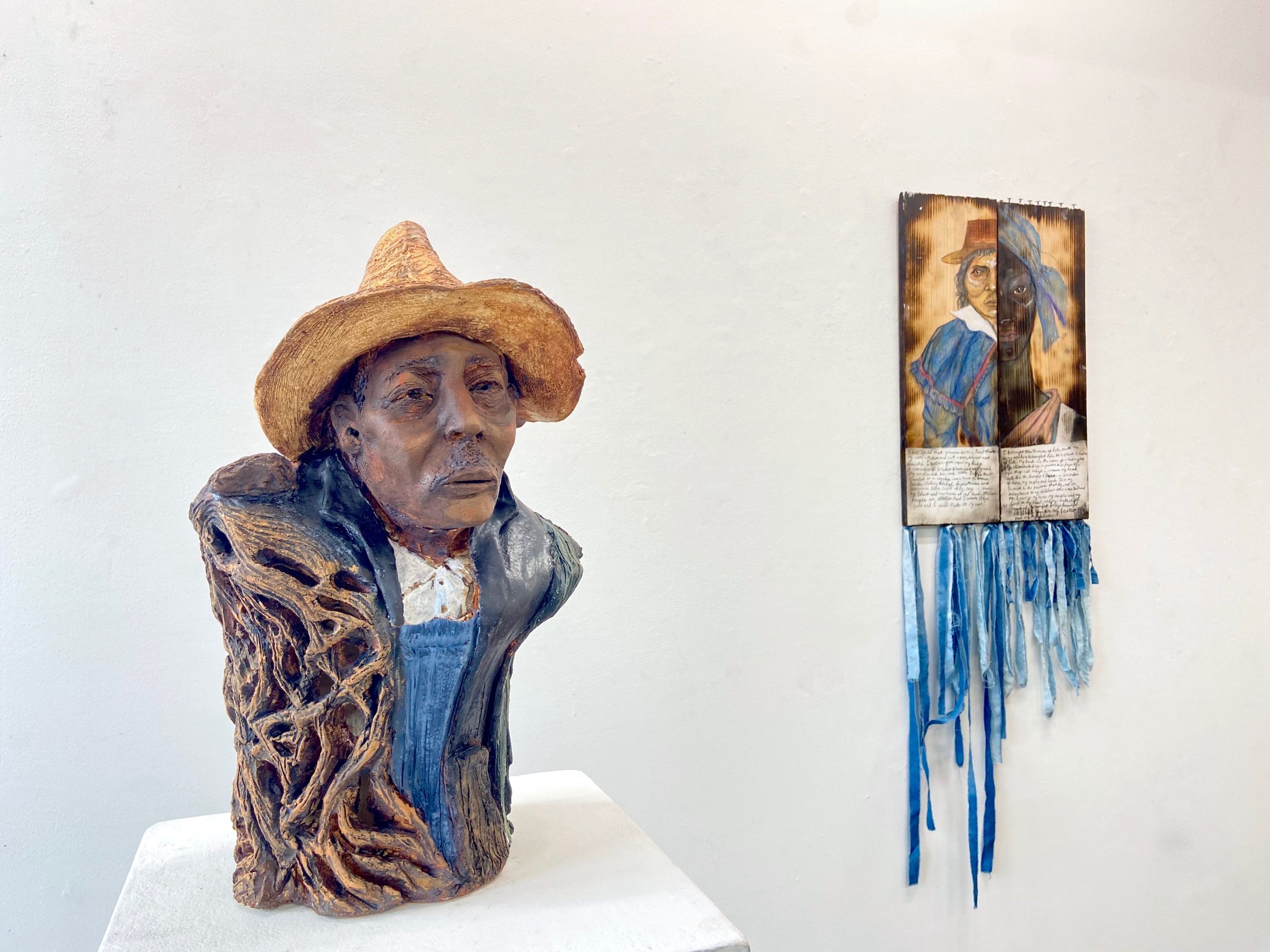
    Gary White is a second year MFA candidate in ceramics at the University of Tennessee. His art exhibition “The Unassumed Among Us” will be installed at UTK’s Gallery 1010 from March 19-21. The exhibition of ceramic sculpture, quilting, and drawing documents his identity and history as a multi-ethnic Southerner which he terms the “Southern Other”.

    “My work is inspired by the rich complex history of the American South,” White states in his artist statement, “from the perspective of a multi-ethnic Southern experience.”

    White’s work focuses on the undocumented histories of the “Southern Other”, who are people from blended heritages of Native American, African, and European decent.

    “It is generally perceived and assumed that the South exists only in Black and White, metaphorically, and racially,” says White. “The narrative that I present is the grey areas that exist between the two.”

    White creates what he refers to as “hybrid archetypes” through the merging of Catholic Santos figures from Europe, Bakongo Nkisi spirit figures from the Congo, and Mississippian effigy pottery. While White’s work contains references to religious imagery, it creates its own spiritual significance through recording White’s own “secular sainthood” of individuals from the past.

    “I am investigating [the creation of] what I refer to as a Southern cathedral,” said White, “of the other in southern history.”

    Secular saints of root workers, midwives, shamans, and everyday individuals fill the gallery where White’s quilts act as stained-glass windows in his “Southern cathedral”.  His sculptures and drawings feature historical and fictional characters who develop into archetypes of the “unassumed” in Southern culture. According to White, “The Unassumed Among Us” are those in society who are unknown or unassuming and have inherent spiritual power.

    “The identities that the [unassumed] people have are… not fitting into boxes or being categorized,” White said. He elaborated that the “unassumed” have an “unbending and unyielding spirit of determination, defiance, both active and silent resistance… that people would assume that these figures don’t have.”

    White continues that while the “unassumed” have spiritual power, “They’re not boasting about it. They’re not flaunting it. But it’s there, you know. It’s existing. And that’s what I want the figures to exude in the space.”

    Through his work White visually documents and honors the oral traditions that maintain the history of the “Southern Other”. He hopes that doing so will create a space for their histories to be discovered and talked about in a wider community.

    The opening reception for “The Unassumed Among Us” will be held via Zoom Friday, March 19 at 5:30PM. White’s work will be on display at Gallery 1010 Friday, March 19 from 6PM to 9PM and Saturday and Sunday, March 20-21 from noon to 4PM. Visits to the gallery are by appointment only though Gallery 1010’s website [https://gallery1010.utk.edu/] where the zoom link can also be found.

    IMG_4999 IMG_5013 IMG_5009 IMG_5018
  • Frida Kahlo and “What the Water Gave Me”
    Written by Josh Strange
    Edited by Ben Hurst

    Lately I have been taking a lot of baths. Feeling the warm water rinse my body as the white porcelain of the tub hugs me tightly is a kind of a therapy. The kind of therapy that has helped ease the stress of being couped up in my house for seemingly endless amounts of time. In the warm embrace of my bathtub, the problems of the outside world are far away, and I feel safe to let my thoughts out to float on the water. The more time that I spend in my bathtub, soaking in the warm therapeutic waters, ruminating over life, the more a Frida Kahlo painting comes to mind. One in which she, like me, ponders the state of her life in a pool of warm, stagnate water.

    The 1938 oil painting “What the Water Gave Me” offers deeply personal insights into Kahlo’s life at age 31. Unashamed and vulnerable, she invites us to take a bath with her and peer from a first-person perspective into the depths of physical and emotional suffering. Through the aggressive and surreal images floating on the surface of her bath, she paints a disturbing world of pain and frustration—a symbol for her life at the time.

    Frida Kahlo’s bath contradicts the typical healing, relaxing bath where a person might escape the stressors of everyday life. Instead of a safe haven, Kahlo’s bath is a fever dream of unpleasant and wretched images: the Empire State Building, amid putrid ribbons of noxious green smoke, spews forth from a volcano, while a man lounges on a beach and strangles a naked, floating woman with string that mosquitoes and spiders are balancing on, crawling towards the soon-to-be-dead woman.

    It is uncomfortable for the viewer to witness these grotesque scenes because Kahlo wants it to be uncomfortable. By offering the viewer a first-person point-of-view of a cacophony of terrible sights while at the same time depicting the mundane task of bathing, Kahlo intimately suggests her suffering follows her everywhere in life. 

    When Kahlo was painting this piece, her relationship with her husband, Diego Rivera, was incredibly tenuous. The two were notoriously quarrelsome with each other, frequently having extramarital affairs. Kahlo created the painting as the couple’s volatility culminated in their divorce a year later, in 1939. Her pain is reflected in the image of a man, Rivera, lounging on a beach carelessly choking a naked woman, Kahlo, from a distance with string. 

    Notable amongst the other images of the painting are two female lovers on a bed of soil. Kahlo had many affairs with both men and women, and she was not afraid to paint about it. Out of all the other scenes in the painting, which come across as unsettling, the women offer a much more tender depiction of a side of Kahlo’s life. One woman holds the other in her lap, in a soothing, intimate posture. The fondness which Kahlo paints this scene juxtaposes the frenzied pandemonium of the rest of the piece. Indeed, the two lovers offer a kind of respite amidst the symbols of a dying marriage. Kahlo may be presenting an ideal of a relationship that her other romantic partners should strive towards, especially Rivera himself.

    These two painted women also appear in Kahlo’s other painting “Two Nudes in a Forest”. While there are many speculations as to who the other female lover in the painting is, some believe it to be famous Mexican Hollywood actress Dolores Del Rio. 

     In 1938, the pair had been living in Mexico City for four years and had previously lived in the United States. Even when the couple moved to Mexico, they still visited America often due to Rivera’s popularity as a mural painter. However, Kahlo was a staunch member of the Mexican Communist Party and disliked the capitalist consumerism of America. We can see Kahlo’s pain at being forced to America by Rivera in the way the man in the painting pulls, chokes, the woman towards the island with the Empire State Buildings. He pulls her toward the menacing symbol of American culture and away from the beautiful Mexican dress that slowly floats away from her. Kahlo is being tragically ripped from her beloved Mexican culture to the ominous, destructive volcano of America.  

    Throughout her life, Kahlo suffered physically as well. In 1925, she had gotten into a serious trolley accident that left her unable to become pregnant and with chronic pain for the rest of her life. Her pain is evident in the painting: Kahlo’s left foot is disfigured and oozing blood from a wound caused by a jagged piece of wire in the bathtub. In Kahlo’s time, the expectation that society placed on women still lay primarily in conceiving and raising children. Her inability to bear a child would have caused her tremendous amount of stress as she was unable to perform the task that her patriarchal society placed on her.

    In the 1920s and 30s, the male-dominated art world condescended to female artists. The art that women made was not taken seriously and were treated as if it were childlike. In Kahlo’s instance this is also true. While Rivera and Kahlo lived in America, a Detroit newspaper interviewed her and published the article with the headline “Wife of Master Mural Painter Gleefully Dabbles in Works of Art”. 

    Sadly, this is how Kahlo’s art was treated for most of her life. Her brilliant and raw pieces were reduced by male art critics to the idle paintings of a bored wife by simple, sexist virtue of her proximity to a famous male artist. 

    Thankfully though, Kahlo did not join the countless ranks of artists whose art was only recognized posthumously. In 1938, when she painted “What the Water Gave Me”, she quickly gained international recognition, holding an exhibition in New York City that same year. The following year, Kahlo would hold another exhibition in Paris and would become the first Mexican artist to be featured in the Louvre after the museum bought one of her paintings. Her powerful paintings have since become famous for their unconventional style and progressive subject matter.

    The unbridled expression of her pain as a bisexual woman in a patriarchal-heteronormative world still resonates with millions of people to this day. Since her death in 1954, Kahlo’s status has grown from a renowned artist to an international icon of feminism and the LGBTQ+ movement.

    In her painting, “What the Water Gave Me”, Frida Kahlo offers viewers a profoundly intimate experience by expertly painting the intricacies of her life at 31. Kahlo’s artistic brilliance prevails when one engages with her work as she intended it to be. There are few painters, if any, that can compare to Kahlo’s fluency in creating powerful, raw images that cut right to the very soul of a person.

  • An Interview with Sarah Goldstein
    eyeroll - Sarah Goldstein LIFE

    Written by Victoria Mullins and Ben Hurst

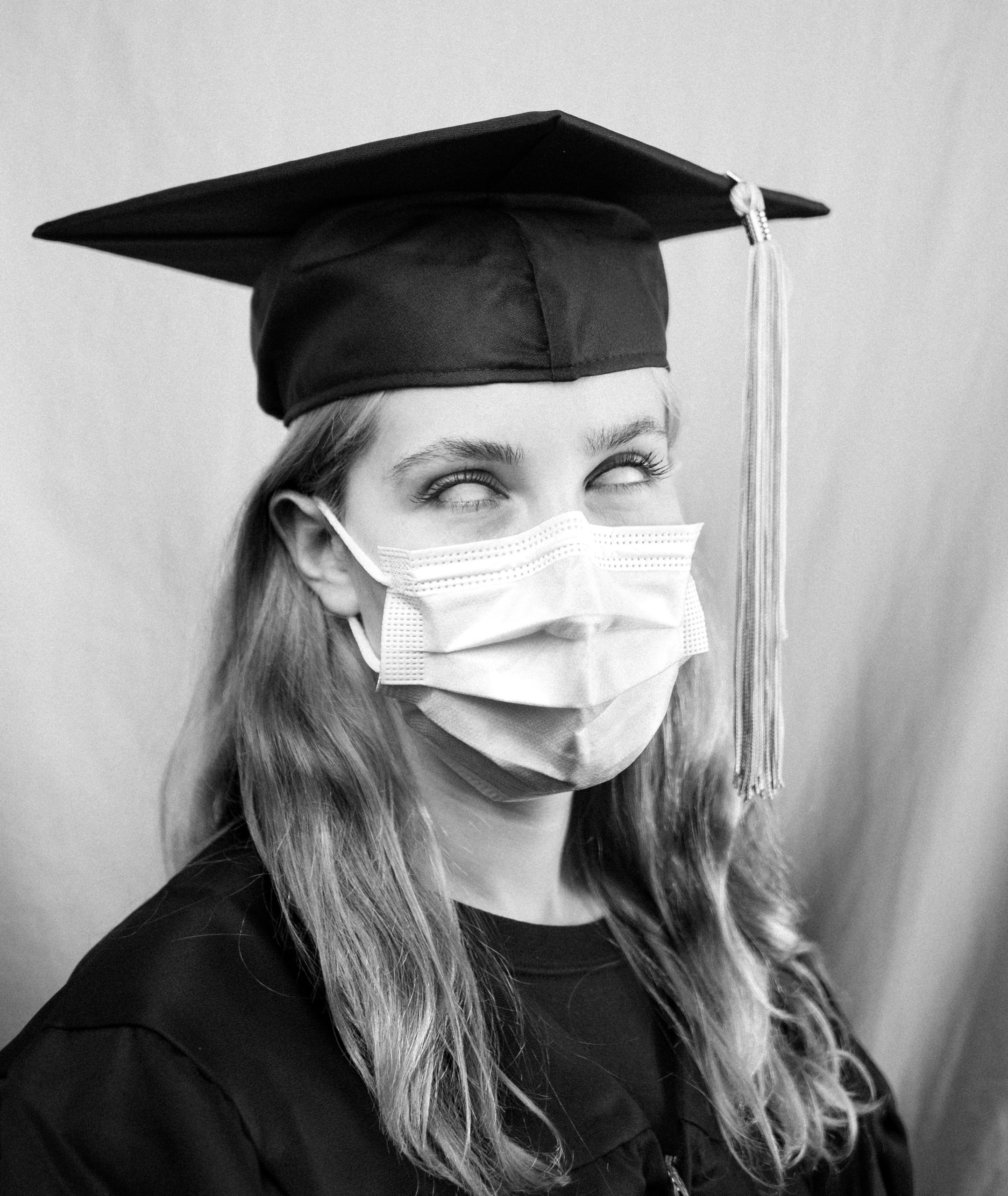
    Sarah Goldstein, the artist whose piece “Eyeroll” will be the cover of the 2020-21 print issue, helps us all to remember that we have both lost and gained so many things in the last year through her work.  Where we have lost certainty, we have gained the ability to improvise. Where we lost all sense of normal, we gained an ability to come together in new ways.

    She notes that her love of photography and art stems from childhood.

    “Art was my first hobby. I went to an art’s high school, and a big part of my curriculum was photography related. I did it for fun was I was younger, but it was helpful having it integrated into school.”

    She highlights music as the prominent inspiration for creating art: “it really helps me set my mood. Outside of photography, I also like having a lot of different mediums. I do a lot of writing.”

    “Eyeroll” highlights the life of a student in 2020. We have all witnessed the moment we work for over four years almost go up in a ball of smoke. Graduation should be a joyful and momentous time in our lives, but COVID-19 overshadowed it. Sarah highlights that “Eyeroll” captures some of these same feelings and its unique origin. 

    She remembers that she was working for the Scoop Magazine of the School of Journalism prior to the pandemic. She took graduation pictures to make a cover for the magazine, but “Eyeroll” was a mistake.

    “It was an outtake I liked way more. It just kinda reflected what was going on. At the time, my boyfriend was helping me with it, and he was so mad he couldn’t use his cap and gown. It just felt really fitting that we caught that picture. It was on purpose, and we thought it was funny.”

    She describes the picture as a metaphor for 2020 because she took it as everything was beginning to shut down. 

    “It was just very ‘the pandemic just hit’. No one knows what’s going on.” 

    Sarah’s work extends to her other piece in the upcoming print magazine: “Life.” An image that physically shows the word “Life” on a destroyed building, a feeling that we have all witnessed as our daily lives were interrupted—even destroyed—in a matter of months. 

    “I was just in Chattanooga with a friend, and we were driving around town (since there was nothing to do). We saw that building. I thought it was crazy, so I ended up going back the next day and photographing it. I also felt like that was a really good reflection.”

    She also notes that “Life” captures the overarching feeling of change that loomed over 2020. 

    “I feel like I already had a weird feeling toward construction and buildings being replaced but seeing the context of the ‘Life’ building felt very different. Something about the day and the time and the setting made it feel like more than just a building.” 

    We each experienced COVID-19 completely interrupt our academic careers. Spring Break turned into months locked in our homes, taking classes online—some of which weren’t built to be online. The anxiety of the unknown whether it be about school, or the news became a major part of our lives.  She notes that the significance of these pieces stems from the importance of overcoming the uncertainty of a pandemic-centered world.

    “When I took ‘Eyeroll’, my class wanted to switch the theme to be pandemic-related. I felt like it was really hard to make art I enjoyed surrounding a time period that I don’t want to think about. Pandemic-related art can be really uncomfortable. Art is, in a sense, a form of entertainment, and it’s hard to talk about what’s going on in that light. But at the same time, I guess it also shows how people are feeling. So, I guess both pictures, ‘Life’ and ‘Eyeroll’, reflected my year a lot on a personal level. Over the year, so much of the stuff I was photographing was playgrounds with caution tape around them and an ambulance sitting in a park. Things that were very much ‘What’s going on?’ and sad. And those pictures were a way to encompass those personal feelings. I still feel like this year has had so many downsides but also so many upsides, so the ‘Life’ building being really colorful stuck out to me.”

    “2020: the year of the pandemic” as it will come to be known in textbooks. We witnessed our lives change completely. We lost the simple coffee dates with friends or visiting the mall. Sarah’s work captures that feeling of loss. “Eyeroll” emphasizes the annoyance of graduating in a pandemic. We must choose which family members get to experience a graduation that we worked for years to achieve. “Life” embodies our lives crumbling around us. Sarah’s work embodies 2020 for the student along with the lives of everyone who escaped such a tumultuous year. 


    Photography by Sarah Goldstein

  • Book of the Month: Prey
    IMG_3385

    By Javen Calhoun

    Edited by Ben Hurst

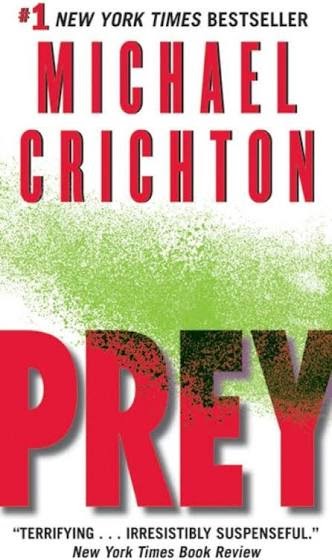
    It’s not uncommon for one to be absolutely terrified of the capabilities of modern day technology. As the possibilities increase for engineering and technological fields, the fear of such newfound possibilities does as well. Such is the case in Michael Crichton’s Prey. Within Prey and many of Chrichton’s other novels such as Jurassic Park or The Andromeda Strain there is a cautionary tale about what could happen when you experiment with science that is not yet completely understood. A mix of sci-fi and psychological horror work to keep the story of Jack Forman, an unemployed software developer, a harrowing and curious adventure. Nanotechnology, artificial intelligence, and genetic engineering are all major topics of interest and terror in this story of what could go wrong if science gets “too ambitious.” The relevance of this novel in today’s society extends past the troubles that Jack faces in his personal life and into the increasingly advanced technologies we work with today. If you are a sci-fi enthusiast, and you don’t trust robots, whether it be because of some dystopian world or your own intuition, then you will enjoy this novel.

    As a STEM major, the endless possibilities of what could happen as we explore new technologies has always interested me. I find myself constantly pondering what could happen as we travel into the uncharted territories of science. For me, this book resembled more than just another case of poorly hidden pessimism about robots; it resembled a real possibility of what might occur should our tech start to transcend past our original intentions. I think it is important as an engineer to explore more than the positive avenues of what comes with a seemingly good idea. The cynical realism of this techno-thriller left me wanting to do more than simply become afraid of new technologies: it left me wanting to create them and to master them in a way that the characters in the novel could not.

    Chrichton’s past medical and technological expertise is on display as he explores the background of the antagonistic killer nanobots of this cautionary tale. All the computing and mechanical vernacular that Prey uses give the story another layer of horror as it makes it more realistic. Reading this novel will probably cause you to lose some trust and faith in the scientists and engineers who are constantly conducting secret research. The inspiration of this novel actually came from the increasing amounts of studies that institutions such as The National Nanotechnology Initiative (NNI) had been conducting. Announced by President Clinton in 2000, the NNI was one of the first public and government funded companies capable of probing into the complex world of nanotechnology. Chrichton also likely found himself motivated by the growing examples of what artificial intelligence could do as companies like IBM, MIT, and Honda designed their own functional AI’s that could do things like play chess, recognize and simulate emotions, and much more. Knowing that the inspiration for such an advanced subject came from all the way back in 2002, you can only imagine how close we might actually be to the events of this story.

    As this is being written, scientists and researchers have already designed nanotechnology capable of entering bloodstreams, surgery, and much much more. Since it is a techno-thriller, this novel is almost timeless as the fear of technology will always be universal. Furthermore, contrary to how society typically imagines robots as metal humanoids that stick out like a sore thumb, Chrichton chooses to paint them as something that can be found and disguised in nature, thus creating an unexpected sense of terror by hiding them in plain sight.

    For those hoping to one day get into the medical engineering field, or any other sort of technological STEM career, this book is perfect. It relays a realistic story about fear and possibility, urging even the most carefully creative scientists and engineers to consider what could happen as technology advances. To say I encourage a read of this book is an understatement, just be careful when digesting it since it is easy to become a cynic and paranoid of the new and unknown. Technology is sometimes a hard concept to understand, and in the same sense, it can be even harder to control. Especially, if it advances to the point where it begins to control us. Chrichton really puts civilization under a lens as he analyzes our society all the way down to the core ideas we hold as a people. This book is as much a psychological thriller as a technological one, and it will constantly leave you wondering about the validity and justification of the advancements we have made as a society. It taunts your imagination by sewing the seeds of possibility, only to later ruin the soil by watering it with terror and doubt. Prey is a rollercoaster to say the least, but it is definitely a ride worth riding until the wheels fall off so I suggest you find a good place to read and buckle in because it will get bumpy.

  • Food as a Medium: Eating, Invention, and Inequality
    Written by Sadie Kimbrough
    Edited by Ben Hurst

    I have yet to bake bread but maybe I should. The sourdough trend at the start of the pandemic resulted in yeast shortages and many Instagram posts. While I originally scrolled right past the bread-baking fad, I grew to understand how the practical creativity of the kitchen brought people joy in a time where typical hallmarks of food, like togetherness and communion, were no longer feasible. 

    Cooking compounds the comfort of sustenance and the innovation of art. As with any creative project, there are decisions to make. Take bread– should it be fat and round? Crumbling like cornbread? Flat like focaccia? Whatever you make or bake is entirely your own. Picking produce is like choosing paint pigments– carefully choosing the right colors and consistencies of your comestibles. 

    In the kitchen there is an intimacy you cannot always find in a gallery. Art evokes strong emotion, but food produces a physical sensation. The capsaicin in a chili pepper activates receptors on nerve endings and produces a burning sensation. The sweet taste of sugar releases dopamine, a reaction similar to that of sex or drugs. Cooking is an exhilarating engagement of all the senses. Not only are your thousands of taste buds working to perceive palates, but your eyes, ears, hands, and nose all collaborate toward the culmination of your feast.

    I enjoy taking pictures of my food, which is not an admission of guilt. Aesthetic is a perfectly acceptable motivation for cooking. Over summer, I made a peach galette: a bouldered pie dough surrounding a whirlpool of ripe peaches, finished with the white polka dots of powdered sugar. There’s beauty in presentation and surrealness in preparation, like watching turmeric transform the hue of vegetables to a golden yellow. The hues of fruits and the marbling of meats are images that deserve remembrance whether it is photographed or not. 

    “Food is art, and art is food.” Ashlyn Anderson is a junior studying Food Security and Public Health Nutrition at UT, as well as an artist on both canvas and stovetop. Her passion for food led her to experience creativity in the kitchen from a young age. 

    “Cooking is a manifestation of many different peoples’ masterpieces. Every meal that people make or cook is their work of art. That’s what’s so special about cooking, that it can be unique to the individual.” However, Anderson acknowledged that empowering people to cook requires an understanding of food efficacy and efficiency. 

    “You can’t tell people what to eat until they know how to eat it.”

    It’s easy to romanticize food but doing so doesn’t acknowledge the plights of people who don’t have adequate access to it. According to the UT End Hunger/Feed Change initiative, 32% of our student population is food insecure or lacking financial resources for safe and nutritious food. Contributing factors, such as income, race, disability and whether someone has children, exacerbate this problem. The pandemic intensified food insecurity among households as a result of rising food prices and reduced incomes.

    In Knoxville, campus and community organizers are taking action against food insecurity through programs and pantries that directly provide food assistance to those who need it. The Student Basic Needs Coalition (SBNC) of UT is an organization working to meet student needs, such as food and housing, through “equitable, systemic means”. Their opening of the Big Orange Pantry will equip members of the university community with emergency assistance. 

    Through her work with organizations such as SBNC, where she acts as director of advocacy, as well as her studies at the university, Anderson explores issues of food insecurity and inaccessibility in the Knoxville community and beyond. 

    “Not everyone has safe and consistent access to healthy and affordable food,” she says, emphasizing the importance of food sovereignty, an indigenous concept reflecting peoples’ and communities’ right to control the production of their food. 

    Cultivating crops and creating meals is what makes human civilization complex. We have ceremoniously dined and digested for as long as we have existed. Cooking embraces ritual and welcomes inventiveness. By reshaping the way we view food  as not just a vessel for calories but as nourishment to both body and brain, we understand the vitality of providing this simple pleasure to all walks of life. The food we eat and the way we bring it to the table are shaped by external factors like class and culture, but food remains the common denominator for how we all function and thrive. 

    https://endhunger.utk.edu/wp-content/uploads/sites/115/2021/01/2020-End-Hunger-FEED-Change-Report.pdf


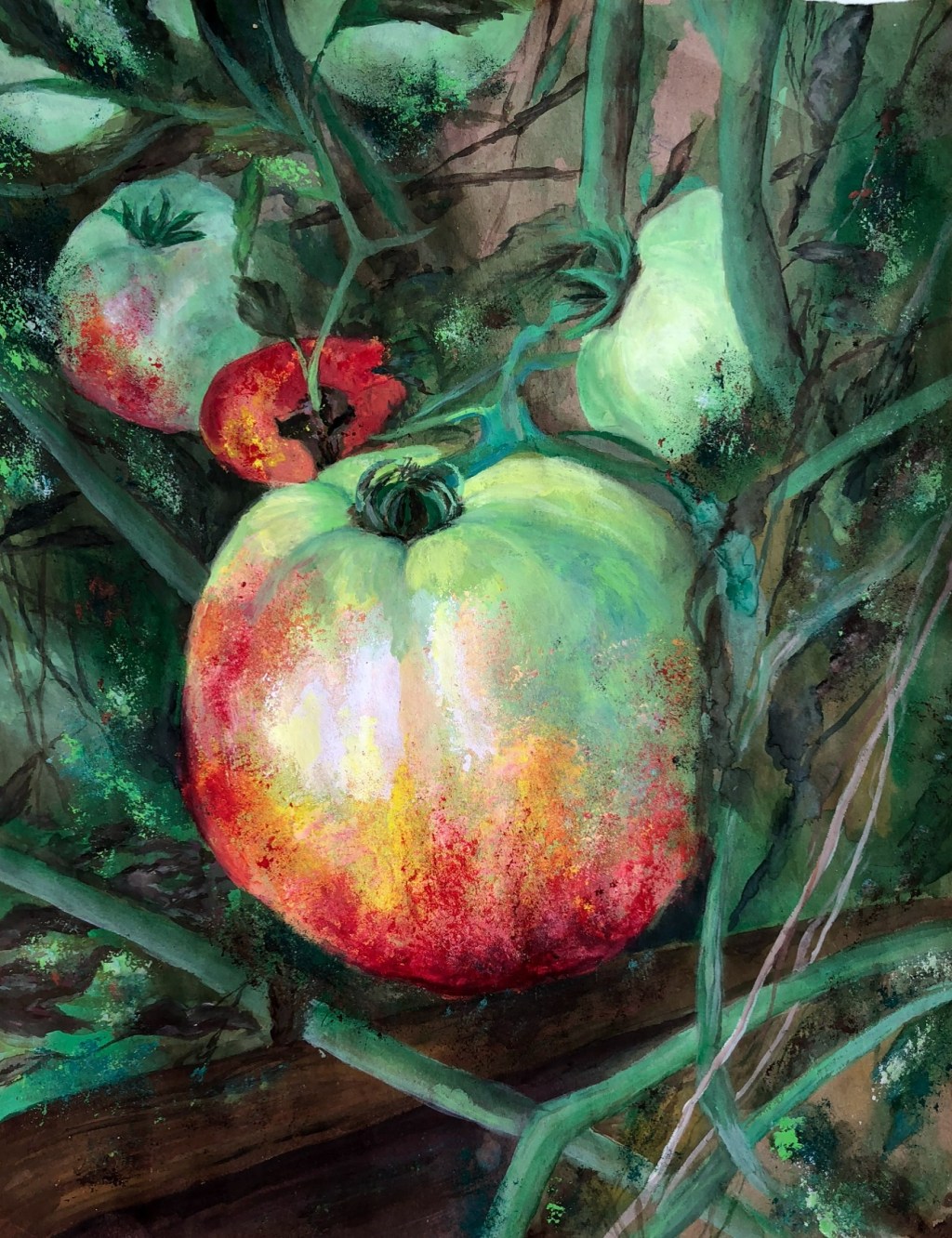
    Article Painting by Ashlyn Anderson

  • Book of the Month: Code Talker
    Code Talker

    By Lynda Sleeter

    Edited by Ben Hurst


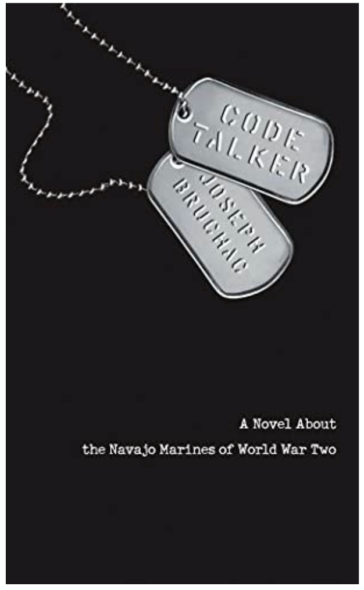
    Code Talker: A Novel About the Navajo Marines of World War Two (2005), is a young adult historical fiction novel by Joseph Bruchac about the Northeastern Indigenous peoples of America. Code Talker is based on true historical events and is narrated by the protagonist Ned Begay whose Navajo name is Kii Yázhi.

    Ned’s story begins at six years old when he was taken to the Rehoboth Mission boarding school in New Mexico over 100 miles away from his home.  At school, the teachers essentially stripped American Indian children of their tribal ways and forced to abandon their language and culture in favor of adopting Anglo-American ways which included being punished for speaking in their native tongue. They are even given English names, hence his new name: Ned Begay.

    Ned excels in school and learns English, yet he and some other students secretly speak and retain their knowledge of the Navajo language.  When he was a teenager in 1942, Ned joins the Marines and goes to boot camp. After he finishes boot camp, he and other Navajo recruits are taken to Camp Elliot in California where they learn that their role in the military will be that of code talkers. The Marine officials explain that since their Navajo language is so esoteric and difficult to learn, their language will become the basis for a code that will be used to transmit valuable indecipherable information to the US Allies. Their native language will become a unique and valuable tool for use in the war effort.

    The Navajos are sent to Hawaii for their training and they experience their first battle in the Solomon Islands. From there they take part in battles in the Pacific (Bougainville, the Marianas Islands, Guam and the small Pacific island of Pavuvu) and then finally they see their most violent battles in Iwo Jima and Okinawa, Japan.  Some military men and officials doubted the benefits of code-talking, but Ned describes how invaluable he and the other code talkers were. It was the Navajo soldiers who relayed messages between the military leadership, providing important intelligence and driving the tactical decisions that helped to end the war.

    During their time in battles and the downtimes in between, Ned demonstrates how the Navajo soldiers both assimilate with the other soldiers and how they fail to integrate. Many of the Navajos maintain their cultural and spiritual practices while overseas. They also face discrimination from other troops and leadership, and sometimes run the risk of being confused as being enemy combatants.

    After the war, Ned returns home only to find that service as a marine who served his country, cannot shield him from racism. He uses his GI Bill to become educated, involves himself in his community, and becomes a Navajo educator.

    Throughout Code Talker, Ned Begay’s story is interwoven with many aspects of what he simply calls “the Navajo Way”—basic survival skills, personal empathy, religious beliefs, and coping strategies that prepare him for Marine service, sustain him during World War Two, and they help him heal afterward. By portraying the Navajo Way as an integral part of Ned’s warrior identity, Bruchac argues that Native American marines like Ned weren’t excellent soldiers despite their cultural background, but precisely because of it.

    As a Navajo person, Ned Begay’s story is filled with an understated dignity and pride, both in his people’s heritage and in their role within the United States. Because the Navajo people have suffered so much, often at the hands of the U.S. government, Ned feels a particular obligation to do what he can to improve the circumstances of his family and people. Yet that very devotion to his people, and his gratitude for what he’s received from them, also compel him to fight for the U.S. in World War Two. By embedding Ned’s patriotism within a lifetime of grateful service to his own people, Bruchac suggests that Navajo soldiers’ American patriotism emerged from their history and culture, rather than being at odds with it.

     Code Talker is a wonderful read for those who want to gain a greater understanding for the Navajo people (or Dine,’ which means “The People”), who perhaps moved into the American Southwest around 1,000 years ago settling in the area that is known today as the Four Corners region—where New Mexico, Arizona, Colorado, and Utah come together.

    The Navajos see this region as being bounded by four sacred mountains. The enslavement of many American Indians by the Spanish Empire was a catastrophic event for the Navajo people and when United States settlers moved into this region, rather than freeing the Navajos, they decided to wage war against them. The Navajos were brutally defeated and exiled for several years in what became known as the Long Walk, an event that’s often compared to the Cherokee Trail of Tears. In the late 1860s, they were allowed to return to their homeland, which today makes up the United States’ largest Indian reservation. The Navajo culture and traditions survived slavery, war against the Spanish, the Long Walk, and still thrives today.

    If for no other reason, pick up Bruchac’s novel and enrich yourself by learning about these real-life heroes, the rich Navajo culture, and their commendable service during World War Two. The United States and undoubtedly the rest of the world owe a huge debt of gratitude to the Navajo marines. The American military used their native language to create an unbreakable code during some of the deadliest, most consequential fighting in the war’s Pacific Theater. Because of the top-secret nature of the code talkers’ work, their story was not fully told for almost 25 years after the war’s end in 1945. After the details of the code talker program were declassified, the code talkers received numerous recognitions from the White House. In 2000, President Bill Clinton awarded Congressional Gold Medals to the original 29 Navajo code talkers. In 2008, President George W. Bush awarded Congressional Gold Medals to every Native American code talker who served during both World Wars, with distinct medals designed for each of their 33 tribes.

    Bruchac closes out his novel with Ned communicating the importance of one’s culture:

    “So, my grandchildren, that is the tale this medal has helped me to tell. It is not just my story but a story of our people and of the strength that we gain from holding on to our language, from being Dine’. I pray that none of you will ever have to go into battle as I did. I also pray that you will fight to keep our language, to hold on to it with the same warrior spirit that our Indian people showed in that war. Let our language keep you strong and you will never forget what it is to be Navajo. You will never forget what it means to walk in beauty.”


  • Starry Night’s Relevance in the 21st Century

    “If you truly love nature, you will find beauty anywhere”

    -Vincent Van Gogh

    Written by Sadie Kimbrough
    Edited by: Ben Hurst

    Vincent Van Gogh’s “Starry Night” sits at the Museum of Modern Art in New York City, collecting dust and value by the second. The $100 million painting depicts a French countryside, lustrous stars draped across the sky. Nowadays, we can only dream of such a starry night, as light pollution worsens with each day. Armed security guards, hefty fines, and prison sentences protect Van Gogh’s masterpiece. Yet we do not hold these same standards when it comes to the real night sky, the real starry night. It’s one thing to preserve a work of art, it’s another to preserve what it represents.

    When the sun goes down, a delicate radiance still clings to the night sky, a phenomenon known as skyglow. This luminance is due to the pollution of artificial light sources, prominent especially in urban areas. Not only does skyglow prevent us from starry nights, it also profoundly impacts the continuation of many species and ecosystems. Many organisms, from plankton to human beings, are highly dependent on the cycle of light days and dark nights. Biodiversity and conservation specialist Kevin Gaston claims that the current level of skyglow surpasses the thresholds to trigger various biological responses of wild animals, such as sleeping patterns and metabolic changes, which can greatly negatively impact their health (Irwin). Environmental issues are extremely multifaceted. Skyglow alone disturbs sleeping patterns, night vision, our view of the night sky, as well as entire ecosystems. Artificial lighting in the United States pumps 14.1 billion tons of carbon dioxide into the atmosphere each year at a cost of about $2 billion dollars (FAU). Climate change is both ethically and financially detrimental not just to governments and corporations but to every organism on the planet.

    As a publication, we are completely reliant on our community., We at Phoenix Literary Arts Magazine have seen how art can truly unite people of all backgrounds, colors, and creeds. Environmentalism does just the same: it is a cause that affects all walks of life, often disproportionately so. Climate activist Xiye Bastida describes the environmental crisis as the “biggest opportunity for unity and striving for a better world for all of us” (PBS). When we organize, march, and clean up our communities, we see real, substantial change.

    While it’s not been proven, I’d like to think that Van Gogh once said “if you truly love nature, you will find beauty everywhere”. Obviously he found the beauty in his surroundings, whether it be a wheatfield or a bouquet of sunflowers. Though we do not experience the same all-encompassing nature of the 19th century French countryside, it is still possible to find beauty in our post-industrial world. We must find and preserve it together if we wish to see another starry night.