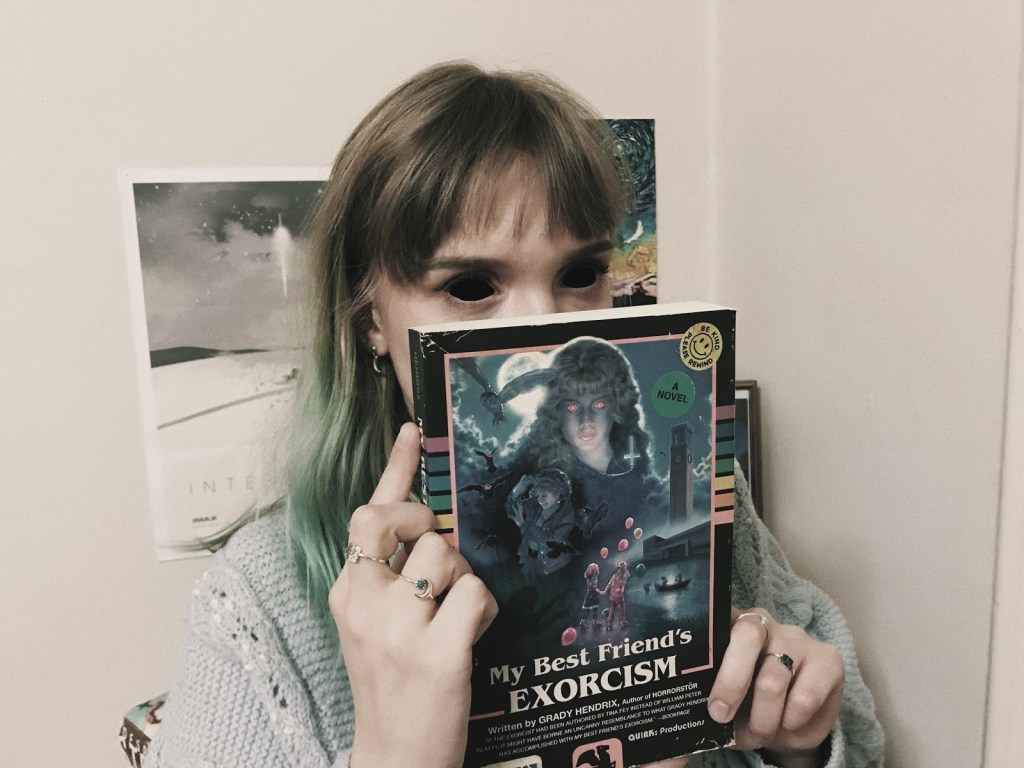
• Book of the Month: My Best Friend’s Exorcism

    For Abby, “friend” is a word whose sharp corners have been worn smooth with overuse. “I’m friends with the guys in IT,” she might say, or “I’m meeting some friends after work.” But she remembers when the word “friend” could draw blood.


    By Jenna Dirksen

    March is a month between two seasons: winter and spring. It has the cold, biting temperatures of winter, and the odd mix of rainfall and the sunshine of spring. To match this month’s melange, why not pick up a book that has the terrifying aesthetic of an 80s cult horror film, while also having the feel-good vibes of a classic coming-of-age story?

    My Best Friend’s Exorcism by Grady Hendrix is set in the year 1988. It follows the friendship of two high-school girls, Abby and Gretchen, who have been joined at the hip since they were ten years old. While trying LSD for the first time with a group of friends, Gretchen disappears for a few hours. After Abby finds her, Gretchen appears to be fine. But in the coming weeks, odd changes in her behavior lead Abby to believe Gretchen has been possessed by a demon. Abby’s intense loyalty and love for Gretchen drives her to do whatever it takes to save her soul.

    The love that exists between Abby and Gretchen is something that the audience can hold onto, believe in. When reading this book, you will remember what it’s like to be ten years old and in love for the first time with the kid in your class who likes the same weird movie as you. You will be reminded of the purity of friendship, and you will understand exactly why Abby risks everything to save her best friend. You know because you would do the same.

    In this novel, Grady Hendrix has thrown convention out the window by creating a horror novel that is  frightening because of how much you care about what happens to the characters. It’s fast-paced and delicious–I read it in one sitting, unable to put it down for a second. Plus, it has only minimal violence and gore, so it’s perfect for that squeamish person who wants to try out the genre. If you’re looking for a book to take on the road to Panama City Beach this spring break, I encourage you to try My Best Friend’s Exorcism. And if you’re taking LSD, make sure you keep your eyes peeled for those pesky demons!

    NOTE: Phoenix Magazine does not encourage or condone the use of LSD.

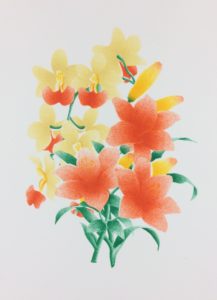
  • Defining the Undefinable: Artwork by Elisa Razak

    Elisa Razak is a printmaker, graphic designer, and recent graduate of the University of Tennessee. According to her website, Elisa loves challenging herself, making honest work, and working on community driven design projects. You can find out more and view her work on her website or her instagram.

    Expressing one’s identity is a process, conscious or not, to “define the undefinable.” The work I make is intended to do the same. I am fascinated by the complex intersections of race, gender, and sexuality that constitute one’s identity. I draw inspiration from my own cultural identity and Malaysian heritage. In creating this work, I confront and dissect my strained relationship between the space I currently inhabit and the memory of my home in Malaysia.


    -Elisa Razak


    ElisaRazak_AirYangTenang ElisaRazak_MonicaAndYuchan
  • RAFT: Friendship Floating on the High Seas

    By Collin Green
    Edited by Ben Hurst

    When you find yourself stranded, floating on the high seas, there are a few important things to remember: rescue is uncertain, be wary of the sun, and above all, don’t pop the bouncy castle. Of course, a bouncy castle is better than nothing and at least you have your best friend by your side.

    This seemingly ridiculous situation serves as the foundation for a new play making its theatrical debut at the Tennessee Stage Company as part of their annual New Play Festival. Co-written by former UT students Carolyn Thomas and Harrison Young, “RAFT” is the story of two friends stranded in the Pacific Ocean. 

    More than that though, “RAFT” is a symbolic and humorous take on the journey from adolescence into adulthood for the millennial generation. Both Tennessee natives, Thomas and Young say that more than anything the play is about the way that relationships can help guide us through times of transition. 

    “It’s got humor. It’s got heart. It’s going to sound cheesy, but it’s a lot about friendship,” Thomas said. “It’s about aging and reflecting and going into this wild unknown of adulthood and just deciding that it’s ok if we don’t know all the answers and we don’t know how this is going to work out.”

    Just as friendship plays an integral role in the play itself, it can also characterize a years-long relationship between Thomas and Young that began at UT. 

    Coming to school, they both had ambitions outside of the drama department. Thomas says that theatre has always been a part of her life, but it wasn’t until she got to college that she started working seriously in the medium. Still, she never intended to study theatre. During her time at school, she bounced around from major to major before finally settling on media arts. 

    “I realized I’m an artist, that’s never going to change,” Thomas said. “I thought I might as well hone the skills I have, the skills I love, and make something of it.” 

    Young also came to UT with goals outside of the performing arts. He was in a few plays in high school but never sought to make a career in the industry. Nevertheless, he too was pulled back into the world of theatre. “I ended up majoring in theatre,” Young said. “But those first two years I really tried not to.” 

    Try as he might, the now accomplished playwright couldn’t ignore his calling for the one subject where he was seeing measurable success. After those first two years, Young managed to secure his first leading role, and he’s been working in theatre ever since. 

    Their shared love of theatre is what destined the two to meet. Carolyn was doing a play on campus as a part of All Campus Theatre and needed someone with choreography experience to develop some fight scenes. Harrison was just the guy she was looking for.

    After college the two fell off a bit, but later reconnected to discuss theatre projects. From there the idea of “RAFT” was born.

    Thomas, who lives in Phoenix and has worked for The Phoenix Theatre Company, wanted to submit a play to a local festival but didn’t have anything that fit the bill. That’s when Young and her decided to put something together. 

    Under a tight deadline the two got started immediately. They worked remotely—over Google Docs and a program called WriterDuet—work-shopping the play one piece at a time in a frenzy of collaborative effort.

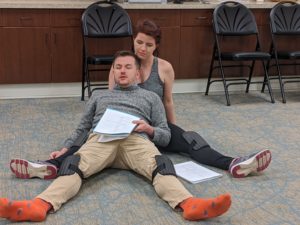
    Actors Caitlin Corbitt and and Nathan McGhee as Morgan and Hedgehog.

    “We would talk, just message each other and talk about where we wanted it to go with each particular scene,” Thomas said. “Somebody would start it off and the next person would jump in and take it over.” 

    It was a whirlwind process. Less than two months after they’d started, the two had a fully formed play ready to submit to the festival. 

    But, of course, the creative process didn’t end there. “RAFT” has been in development for years. They’ve held table readings and stage readings where they first previewed the work to a live audience. From those experiences the playwrights were able to gather real feedback from a live audience that would go on to inform the final version of the play.

    Staff members work hard to build the set for “RAFT.”

    On top of that, Carolyn and Harrison have built themselves into the play in a way that they say is both personal and universal. As the entirety of “RAFT” relies on just two cast members, it was important that they got the characters right. 

    The goal was to create a relationship that everyone could connect to. They wanted to build characters that were both flexible enough to remain gender-blind and realistic to the point that audience members could see themselves on stage.

    The result is a pair of fictional friends that everyone seems to know. Morgan Vargas is cynical, a practical thinker and straightforward. Hedgehog (full name Heath or Heather Hodge), on the other hand, is easy-going, lovable and optimistic. The duo of personalities is one that the writers hope audience members will be able to connect with wherever they are. Both Thomas and Young said that they see themselves in each of the characters, and that’s what gives the play legs. 

    “I think the strength of it is that it’s universal in its core themes. It’s something that everyone can relate to regardless of age,” Thomas said. “People have found something in it no matter which walk of life they were coming from.” 

    Now, the characters are ready to connect with audiences in a way that they never had before. The Feb. 7 premiere at the Tennessee Stage Company’s 25th annual New Play Festival marks the true theatrical debut of “RAFT.” Young, who recently joined the board of the Knoxville nonprofit, said he’s honored to see how far the play has come. 

    Friday’s debut is the first show in a three weekend run from that ends on Feb.23. But on top of that, it also represents a significant first for Carolyn Thomas. “RAFT” is her first play to make a true world premiere. 

    “It’s really exciting to be a part of this process. That’s something that’s beautiful about theatre” Thomas said. “I just really hope people enjoy seeing it as much as we enjoyed bringing it to life.” 

  • Amber Albritton: Navigating UT as a Nontraditional Student

    By Ben Hurst

    Amber Albritton epitomizes the nontraditional college student. She manages a loving relationship with her husband, three kids, and a full time class schedule with an unprecedented finesse. Amber has been a prominent part of the poetry and prose sections of the Phoenix over the last three issues, and we chose her most recent piece, “Code Switching: As Survival a Lexicon of Place,” to represent the prose section in our recent Fall 2019 issue. Amber talks about her childhood, the origins of her writing, and the shifting vernaculars which she manages to comprehend through her conversations with the students on campus. 

    “I am originally from Knoxville,” Amber said. “But I moved around a lot with my military father and my husband after I got married.” Amber’s family embodies the “American Dream” starting with her grandfather. “My great-grandfather was a sharecropper on my paternal great grandfather’s land and that’s where Mamaw and papa met,” Amber said. “My grandfather joined the navy and married my grandmother.  After graduating from UT College of Medicine as an anesthesiologist.” 

    Amber grew up coming to the University of Tennessee with her father who took nursing classes in the what is now the Communications Building. “I was the oldest of three, and the best behaved, so he let me come with him to classes and he would introduce me to his professors.” He was a full time nursing student, a medical technician, and a father—something Amber remembers fondly. She uses the great memories from her childhood, like those visits to the University of Tennessee with her father, as the basis for many of her short stories. 

    Amber notes that she doesn’t have a good imagination, so she uses her past for her stories. “As Tim O’Brien writes about his military experience he and his soldiers in The Things They Carried, it’s really a conglomeration of experiences,” she said. Amber recalls from her childhood a potato, which was her only sustenance for the week, and it would later become a basis for one of her short stories.  “My husband always says ‘Do not let the truth get in the way of a good story’, but in my case the truth is a good story,” she says in summation.

    “When I was in second grade, I wrote a story about Ray Charles, and I was very brave walking home, so my dad said we could go get a treat a few weeks later—I had no idea that he had been saving money to afford it.” She remembers that she picked out a gilded page Webster’s dictionary and she decided that she was going to learn all of those words A-to-Z. 

    Amber notes that most of her inspiration for becoming a writer came from her seventh-grade teacher: Mrs. Brown. She recollects that Mrs. Brown prompted her writing by allowing her to submit a story late because she wanted Amber to create the best piece possible. Mrs. Brown stayed willingly in the computer lab after hours with Amber so she could “get her words right.” She also gave Amber Naomi Shihab Nye’s This Same Sky which Amber credits as one of the most paramount influences on her writing. 

    In answering some of the questions about “Code Switching”, she notes that she returned to her academic pursuits because keeping her mind active helps her overcome depression, or “blues” as she calls them. 

    “I realized that I was tired of the hardest challenge of my day being to do a load of laundry,” Amber said. “The students here help me speak with my kids in a vernacular that I don’t normally speak and that helps me maintain a pretty sweet relationship with my kids,” she notes. However, she does not shy away from using the language of her youth. 

    “These days, the language I use is the language of my youth, all of the sounds and noise I heard growing up that are still taking up space between my ears,” Amber said. “As [my children] are getting shoved out of the nest. I have begun thinking about the best way to raise my kids and the seeds I am planting between their ears.”

    At school she has learned about an entirely new world of books and music from her classmates that she could not have anywhere else. “My favorite, favorite part about each of my classes are the reading lists,” she said. “They are so smartly curated you can’t get it anywhere else.” 

    Amber is a third-generation nontraditional student who has chosen to get her bachelor’s degree in English while she maintains a family. She uses the University of Tennessee’s great compilation of students and teachers to create an evolving dialogue that allows her to have a better relationship with her children. Amber relays the effect of shifting vernaculars in her most recent piece “Code Switching as Survival: A Lexicon of Place” which you can find in the Fall 2019 issue.

  • Book of the Month: Girl in Snow

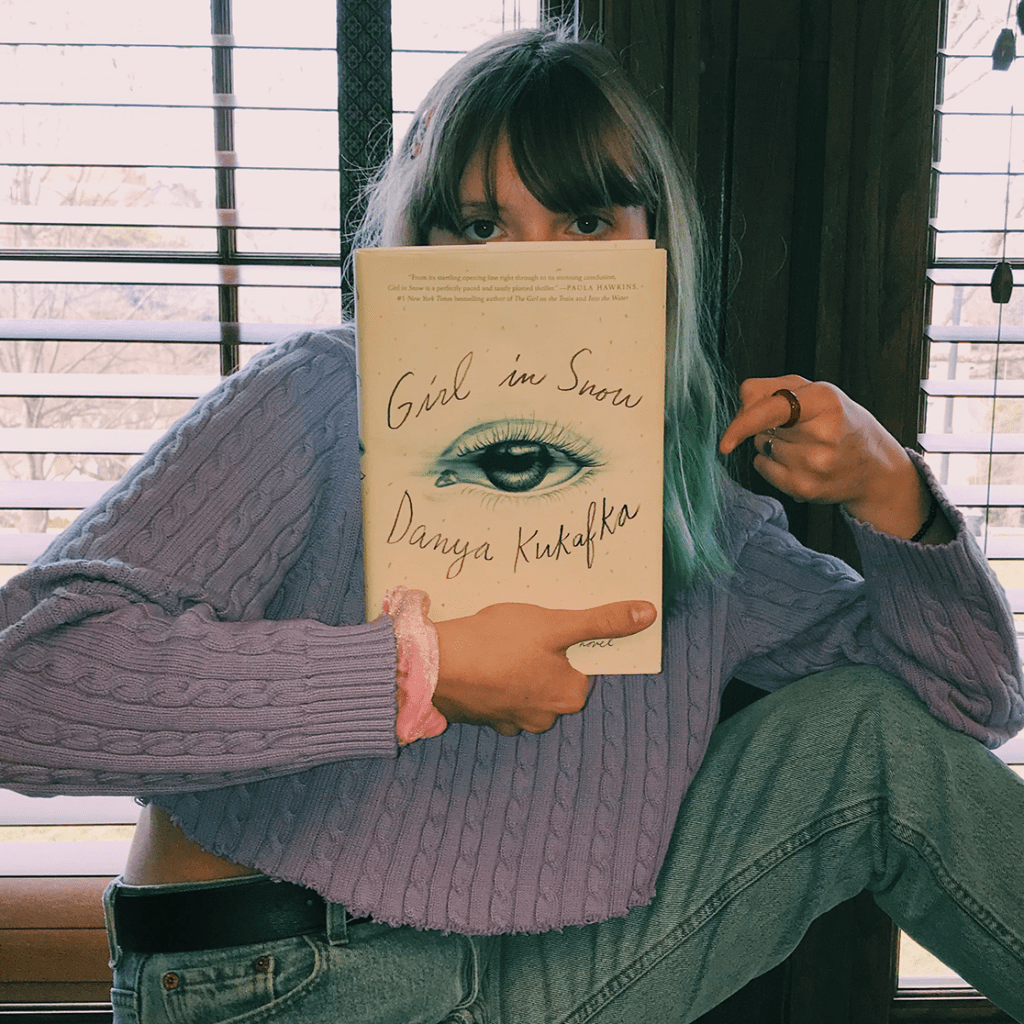
    When they told him Lucinda Hayes was dead, Cameron thought of her shoulder blades and how they framed her naked spine, like a pair of static lungs.

    By: Jenna Dirksen

    February is known for two things: romance and freezing cold. These two things combined create images of kissing in the snow or people holding hands while ice skating. Hear me out, though—what about the image of a frozen dead girl and her harmless but dedicated stalker? Sounds interesting, right? Sounds like something you’d like to read more about? Well, you’re in luck, because February’s book of the month is Girl in Snow, the incredible breakout novel by Danya Kukafka.

    Girl in Snow is harrowing, prismatic—a book about violence that is somehow truly gentle at its core. The novel follows the paths of three characters: a boy suspected of murder, a conflicted social outcast, and a homicide detective; all three wondering the same thing: who killed Lucinda Hayes?

    While following these characters, their personhoods are cracked wide open. What spills out are the intricacies of human relationships, both pre and post-pubescent. Each character has their own demons relating to the murder investigation. We see the bad thoughts as well as the good, from narrators that may try to seem impartial but struggle with the grisly nature of the crime. Kukafka’s novel is truly unique in that it does not censor, soften, or take a side in the events it details. Instead, the book presents them raw and bleeding, like a freshly peeled scab. And despite the way that sounds, the prose is truly beautiful.

    So, if you like crime novels but also like complex teenage angst, grab a mug of hot chocolate and crack this book open during the next snow day. Fans of romance will become absorbed by the web of love stories that surprise at every turn. Fans of Paula Hawkins and Shari Lapena can take a break from Seasonal Affective Disorder with something arguably just as depressing. Fans of me know that this is one of my favorite books of all time. Read Girl in Snow if you’re looking for something heart wrenching to distract you from your devastating loneliness this Valentine’s Day, or if you’re in a relationship, read it anyway, because it’s good.

  • Hurt

    By J. Allen Carpenter

    It wasn’t as if anyone got Hurt. In his weather-worn, leather-torn brogues his momma kept of his daddy’s. Wandering soundlessly, aside from the crunch of highways and backroads between the sole and the Earth. Nobody really got the man, just the image of a forward walking,  hungry-looking young feller, thumb in the wind and shirt flapping a couple days until a wash.     

    On a gravel path in a Georgia country town, he blew into off the fall leaves and humid air trickling down the US. Hunched over shining legs on a dirt pillow, a girl meets his eyes on the red road, looking away quickly like the hiding rabbits in bushes assuredly. The young woman stared at the road’s life story, the constant foot traffic fleeting from one direction to the other;  the endless consumption of distance, time, and pace. If not for the buttons on the ripped and red cloth, he would’ve thought she was draped in a torn bedsheet, wrapped around her body cicada style; a little husk of a past life, something she used to be.      

    “Everything alright?” He asked.      

    Silently, she stirred in the sand a bit, cooking a philosophy with spices of the hot Georgia sun. The sheer weight of heat coming down across her breast like an iron bar kept the breath from her lips. He, with his lips dry and cracked, but still talking, reached down to lift that weight off her chest. His ‘everything’ in sack dangling from a stick over his shoulder, holding the weight of his whole life across his Mississippi deltoids. Shirt sleeves wrinkling under the bow of a vagary staff, yielding to his attention at the girl.     

    “Looks like you’ve had a day. You alright? Need some food?”      

    Doe-eyes down range pierce the young nomad hunter. Cept’ he’s not hunting, he’s barely fishing, he’s just trying to help. Her stomach eventually nods for her in rumbling, and the feller helps her up. He tells her she should change her clothes if she’s gonna go out, but she just stands there on the road; not moving a muscle. From the dangling sack, a spare flannel from his back is gifted to the woman who’s clearly taken a hard time to heart. Cloth spins on thin frames like a Viking ship ride at the carnival, halting when around the young woman’s shoulders,  covering up the detached linen and clips.      

    They both just started walking, never saying a word. Her following him and he following the  sounds of civilization. Up ahead a young boy messes with the basket on his bike, either retrieving a jacket or just now putting one up.       

    “Say there young feller, where might a man and lady get somethin’ to eat round here?”      

    The boy’s freckled face met Hurts. His lips dropped with the sticky bangs on his forehead after he had stopped fighting the breeze with the spokes of the bike.       

    “Say there! Yoo-Hoo? Anybody home? Do you know where I can eat something nice?” 

          “Are you my momma’s friend, Mister?”      

    “Huh?” Hurt looked at the boy puzzled. “Little feller I don’t know anybody here. You alright? You need some water or somethin’?”       

    “You look just like him.” the boy recoiled a bit, the limited gaze towards that man ignited one of them frantic little kiddy dances one of them do when they want to leave, deep in the toes of that child.       

    “There’s a diner up around the bend”, Freckles said.      

    “Which side do I take?”      

    “The left’n.”      

    “Okay, thank you kindly.”      

    The boy slowly led his stray bicycle home at a trot. As the two people pass, the girl turns to look at the boy. His frightened gaze submits, and hops on his bike, riding cautiously away from the two. Hurt suddenly jumps to a spot on the road, bending to retrieve a treasure. A thin little tube of intrigue.      

    “Little guy musta dropped it,” he pocketed the cigarette, “He don’t need it anyhow. Save  him some hurt later.”      

    Shadows mute the passing forest floors down the backroads she inhabits. They walk for a  good fifteen minutes before they reach a diner sewn onto a gas station. Inside they sit down and stare at each other for a good minute before a round waitress pushes fixin’s on em’.      

    “Can I help you with anything?”      

    “I’d hope for a coffee. A pie for the girl.”       

    There was a calm quiet; like those momentary silences that follow fellers after saying the wrong thing at the wrong place. Those silent exchanges between a local and a tourist, saying  “now why in the hell did you do that?”. These glances and happenstances pass by the wanderer, but now, he has no clue as to why the sudden heading of this simple process.      

    “What’s your name?”, the waitress addressed      

    “Doran. Doran Hurt. Do I know you?”      

    “You look awfully familiar. Though, the name ain’t hittin’ me.”      

    “It happens. I’m not from here, so I don’t know who you’d think I was.”     

    Again, that silence fell leaf-heavy upon the diner floor of an antisocial autumn. The woman adjusts her metal clip tucked between her band across her diner-lady dress.      

    “I’ll get your food then.” 

    He and the girl patiently examine oily tiles and frayed, compacted cushions across the establishment. His hands scraping the top the marked-up and worn side of his seat while her hands remain placid; one hand picking at the deep gash made into the fibers of the cushion comforting her. Fiddling an uncomfortable tune with an orchestra of painful instruments,  colored by the white tiles of space beyond her attention. 

    They both just sat there. For Hurt, the inaction was more impressive than the girl’s, which was already understandable on a humanitarian level. He exercised his silence; examining the old salt latched to her cheekbones from a couple long hours earlier as the sky shifted from black to turquoise, in the dirt, crying like a babe in the woods. Inflammation setting in around the nostrils and the eyes; redness found akin, but not the same as the handprint wreath wrapped around her neck and collarbone, covered by his tattered flannel that at least ​looks ​ like it was  born to be tattered and foolish; not like her dress, which was gorgeous and thus destroyed. Tiny fingers laced in her lap, every so often, would release and move a piece of the flannel tighter around her much too small frame. All were perfect except for the tiniest finger on her left hand.  It was bent like a hook turning into all the other perfect tiny fingers as if to ask, “what gives?  Why am I all sigoggled?”. She used it like a hook to grab cloth around her shoulders; her perfect tiny shoulders.       

    The lady came back, arms full of consumables, deadpan and bouncy.      

    “Coffee”, she said as she placed it before the man.” And the pie.” As she placed ​two ​ pieces before them. The young girl fell her eyebrows at the piece mirroring hers, resting before the man in front of her.      

    “You look an awful lot like a guy I used to know in school. What school did you go to? If you  don’t mind.”      

    “I didn’t ma’am. Government didn’t reach my house I guess.”      

    “You don’t say? That musta been some luck then.”      

    “It had its conveniences. But I never learned what that word meant, so who knows.”      

    “That boy used to tease me all the time.”      

    “All the time?”     

    “Why lord yes; The Devil. He was a piss ant all the way up to high school.” She looked off at her composure as it steadily receded into the window pane and further down the road. She went to darting around the diner like it was her job to look disturbed, and like she didn’t want to keep talking about the things she wanted to keep talking about. Then she’d come barreling back their way, sucking in a stout breath to lay out eventual details. 

    “This one time, all of us was at the lake after school. We went over to swim at a friend’s place. And he was there with his friends, and he just. We were all in swimming outfits and he just wouldn’t leave us be. You know? What an ass.”       

    She trailed off looking into the grime of a neighboring table, tackling the off-kilter litter to get away from her rant’s end. Eventually, she pulled back her activity and looked around before tucking her cleaning rag and going behind the counter into the kitchen.      

    The girl watched Hurt toss his calloused hands from palm to palm; interrogating the tiles of his face and the play around the wrinkles of eyes, determining whether or not he was real. His hands always slightly shook; he fiddled with himself lightly all the time. Not too obvious in ways, but enough that if you were looking for it, you could see he wasn’t entirely comfortable  all the time.       

    “He just, I wasn’t even wanting to talk with him and he’d been drinking.” The sudden collapse away from her vacant staring, and into the woman’s story again, startled the girl.       

    “And he just wouldn’t leave me alone. And he just.” She trailed off again, emotionally hiking away from the main roads, beginning to heave dry sobs out of the empty air.      

    Hurt laid a hand on the woman’s thin, wrinkled digits. Their eyes met and stayed trembling with hands on the table. A great deal was said between the silent air separating the two human beings. Eyes staying still, the way two bodies do when they have said enough and can just look deep at each other without having to think about nothing because they know each other. She smiled and wiped her eyes with the freehand wet with dish soap. He released the other from his gentle prison.       

    “Y’all have a nice day.”      

    The girl had not eaten her pie yet. So they sat alone together for another long while. Neither one talking the rest of their dinner. When they finished, Hurt got up to leave and ask for a  check, but the waitress behind the counter waved them on. Unsteadily, behind the gaunt form of the man, the young woman followed him, peering into the avoiding eyes of the waitress, lost in a consistently avoiding floater, always in the direction opposite of the young girl and the wanderer. A stiff arm purchased outside air from the glass entry-way, further garnering rewards, by reaching into his lucky pocket, pulling out a raisiny cigarette. They passed a man going into the diner; fedora, suit, underneath the fancy robes flew coveralls close to his old cavernous body.      

    Hurt stopped the man and said, “Hey fella, got a light?” 

    Squinted eyes narrow the cigarette in the young man’s mouth, then the rest of the  smooth-featured face.      

    “Do I know you?”, the old man said.      

    “Don’t think so. Got a light do ya?”      

    “I swear I’d known you.” the old man clutches his jaw, recounting a time when it was tougher, and less compacted by impactful nights at a bar. He reaches in his coat and withdraws a match. The impacts flicker across his eyes as the young man lights the stick on his leather soles.       

    “Thank ya’.” The girl matches Hurt’s confident strut in foot-placement, just not stride; still watching the man slowly regaining his own attention, reeling it in from the ghost of an unwanted assailing.      

    After that, they walked around the lesser part of the great state of Georgia a bit. For a while,  they didn’t say a word to each other. The sun was setting and neither minded the coming descent of temperature. Sweat perspiring from their bodies late into the stroll could fill a small pool, but when the sun retreated the stars came out and basked them in cool light, misting the salty water from them with cool grace. She didn’t say anything the whole time; just cradled her frail arms in a flannel much too big for her and walked beside the man who gave her a pie.  Strength was fading in Hurt’s exercise of silence, giving way to the heavy burden of curiosity.      

    “You know,” Hurt said, “Most people…  Most people don’t mind talking to me about things.  Specific things. Things that hurt em. Now, before I saw you, an old man gave me some coins for a telephone I wound up not having to use, all because I spoke real nice to him. And you just saw that lady give us some food. Now I’m not saying you have to do the same; If you don’t wanna say nothin’ that’s fine. I just…I’m just curious now is all. I’m just curious. Because.  Usually. I don’t know. I’m not used to it.”      

    “Why’d you not pay for the food?”      

    “Well, I mean hell, I’ve got the money. It’s just that, usually, I don’t have to. I don’t know why. It’s just always been that way, for me that is. I’ve been able to go around this whole damn country. See everything on this side of the rock because everyone who ever done looked at me starts thinking something about me, seeing some part of them in me. Or they start thinking they know me, like I’m a ghost. They all look at me and think they know me; when none of em do.”      

    He caught the shine of her big green eyes in the moonlight. It was striking to him only now  because he had not noticed the color swim in them before; only her dress and the pain that 


    clung to it like the particles of dirt. But now in the pale shining, he can see every color around her.      

    “I’ve met fellers up in Wizconsin that say they know me. Wizconsin! I don’t know a soul in  Wizconsin.  And still they either get really mad or they get really sad or they just ball up when they see this mug. Either way, I keep moving around. I keep getting what I need. I’ve never got an empty belly. I mean I ain’t a big boy, but I ain’t starving.”      

    She smiled, looking at him pat his shirt that fit his boney, wide shoulders, but not quite his stomach.      

    “It’s just…  that’s what happens. It’s a thing of mine. I walk around and everybody tells me what’s hurtin’ em’, what they got outta hurt, how bad their hurt done em’. But, I don’t know these folks. I gotta hear some terrible stuff. I gotta hear about it ​all ​ if I can’t walk off before they start going like that waitress. Everything you can think of. I ain’t gonna repeat any of it because you can maybe imagine it. But I don’t know if I wanna meet anybody who can imagine it. So even if you can… ”       

    The girl kept walking and watching her feet. Glimpses of her big emeralds shining side view bright like a star on the ground.      

    “I guess what I’m trying to say is; why ain’t you told me yet? I know, I know that sounds nosey. And you ain’t gotta tell me nothin’; it’s not my business. It’s just eating me inside is all.  It’s got me wound up you know? I don’t have to know, but you’ve just got me confused. Either  you’ve been to literal hell, or hell, I don’t know what.”       

    The tangled curls on her reddish-brown head unfurled as she raked it from her face, bracing her emerald obelisks to the dark sky. “I don’t know,” the words escaped her before she realized she spoke, “You just don’t bring nothing to my head. Nothing like ​‘that ​ ’ I reckon.” They both walked a couple more paces with the conversation lingering behind, waiting to catch up.      

    “What happened to me today happened before. I don’t know what to say about it other than it’s selfish. I never wanna do it, and when I don’t want to, Pa does me up like this and does it anyway. But, It’s just rude.”       

    They both walked a bit more in the treelines and shrubs. Hurt standing wooden-Indian  straight against the shadows of knotty pines and echoes of barking dogs rustling in leaves.      

    “He just grabs me all angry like, like a dog with a toy. And he just, just goes ahead with it. I  never mind it. It don’t hurt. I never get hurt. Even the first time. It never hurt. But the last time,  it seemed too much. Too much throwing things, hitting me with things. Ripping my dress. He was drunk and I just hit him the way he hit me, just on his head instead. And the bottle cave him in just like that. And…and I didn’t mean it. But, he shouldn’t have been acting like that.”      

    “He gave you them bruises? Do they hurt?”      

    “Nah. He did, but they don’t hurt. Nothing ever hurts.”      

    “I saw them ribs, they look done up darlin’.”      

    “They might be.”     

    “Is that why that pinky finger looks that way?”      

    “Yeah, I broke it long time ago and didn’t tell Pa until long after, because it didn’t hurt.”      

    “So, you just don’t feel nothing?”      

    “No, I feel things I guess. I feel sad, and I get mad. Lord, I’ve never been more torn up than when my dog got hit. And when I met you, I thought of that, but I wasn’t moved to tell you or nothing. I just didn’t think you’d care about it. But no, I don’t feel a lot of it. I don’t feel that hurt. I just feel lost now.”      

    They walked lost into the woods until the night was in full bloom. His route followed the older footsteps of himself, tracking the back heel towards her home. When they reached the red driveway of her faded white house, they both stopped and analyzed tiny pieces of rock in the sand-dirt.      

    “Well, If what you say is true; I don’t know what to tell ya. If there’s a dead feller in there. I’d say you can call the police. They’d believe you from the bruises. And I guess if you’re okay,  then I can just headon.”      

    “Can you stay right here? Just right here, just a moment, please. I’m gonna go inside for a  minute. I’ll be right out though, just wait.”      

    And so he did; not knowing what the girl was up to. Maybe she’d come back with some money for the road, or some traveling tokens. He’d always get keepsakes from his travels that he would just toss in another state after too-long due to the cumbersome weight. Paperweights don’t do well on the road.  The girl came out in jeans and a shirt and some canvas boots. Walked up to him slow and steady like.      

    “What’d you do with the dress?”      

    “Layed it with him.”      

    She looked at him and the world stopped. They knew each other, but neither one cried or felt a kind of power to yield and contort immediate emotion to, well, not in previous ways. They knew each other. And he knew why she came back with a flannel and a jacket in her hand, and a clean bandana smeared with the lipstick of her youth. Hurt went off to a pine thicket and sheared off a stick for her tiny body and he tied up her pole the way he was. He picked up the sack he left at her house that had been left undisturbed.       

    By: J. Allen Carpenter

    They shouldered their sticks and joined hands. Two pairs of feet leaving cuts in the dirt for others to follow and faintly remember. For once, the young man held a person who could understand him; see what he sees and look into him and not see pain, but a memory. Not a  ghost of a ghost, but a person. This time, nobody got hurt.
  • First Field Dressing

    By Catherine Dartez

    Lisbeth watched the doe while her father hoisted it up the tree. The rope pulled its head off the snow, swaying back and forth until the neck elongated. The doe’s face steadied for a moment while her father adjusted his grip on the rope, and Lisbeth peered into the deer’s black and amber eye. The eye shimmered in the morning sun as though the deer remained permanently suspended in a mirthful laugh or amused by her beloved companions. Perhaps the doe thought she was still in a golden meadow splashed with Indian paintbrushes and bluebonnets with the breeze whispering over big bluestem grass – her sisters, brothers, and lovers plucking wild blackberries from the edge of a cool, green thicket of elms and cypress. Maybe the doe was grooming her speckled fawns or teaching them to crowd beneath her belly when a scent or sound sprung her head up from the dewy foliage with ears pricked.

    The doe’s head lifted higher toward the branch and out of Lisbeth’s reach. She turned her attention to the tawny coat while her father tied off the rope. Without giving thought toward her compulsion, she reached out with an open palm to stroke the deer’s back. The wiry fur was prickly on her skin, and she found herself disappointed. She wanted to feel dense silk and warmth of rabbit’s fur. She leaned into the deer’s back, stretching her arm around its side and moved her palm toward its belly in search of a satin coat. Her fingers found heat and sticky liquid.  She pulled her hand away to find her fingers painted red-black. She held her hand away from her body and leaned left, then right, straining to see around the deer without stepping from her spot.

    “You have to be silent,” she remembered her father saying. “Deer hear you, and then they’re gone. Look where you step. Not moving’s best.”

    Lisbeth looked down at her feet in the snow. A glossy, black pool collected inside a bright red ring at her toes. Condensed vapor lifted from the surface and flew away in the breeze.

    Her father grunted from the other side of the deer. Then, the doe’s windpipe and entrails fell, splattering blood on Lisbeth’s powder blue boots.

  • Phoenix Magazine: 60 years of arts and literature at UT

    By Collin Green 
    Edited by Ben Hurst

    Deep, down on the basement level of the University of Tennessee Communications Building sits an unassuming, single-room office. Clearly meant for a single person, the small L-shaped space is quaint. There are no windows, no open spaces. A small couch, a couple chairs and a tiny knee-high table dominate the small room . Towards the back, a modest desk sits alone piled high with papers, magazines and books, and in the corner a decades-old filing cabinet lingers, gathering dust. It may not look like much, but the tiny office space is home to one of the university’s most esteemed publications: The Phoenix. 

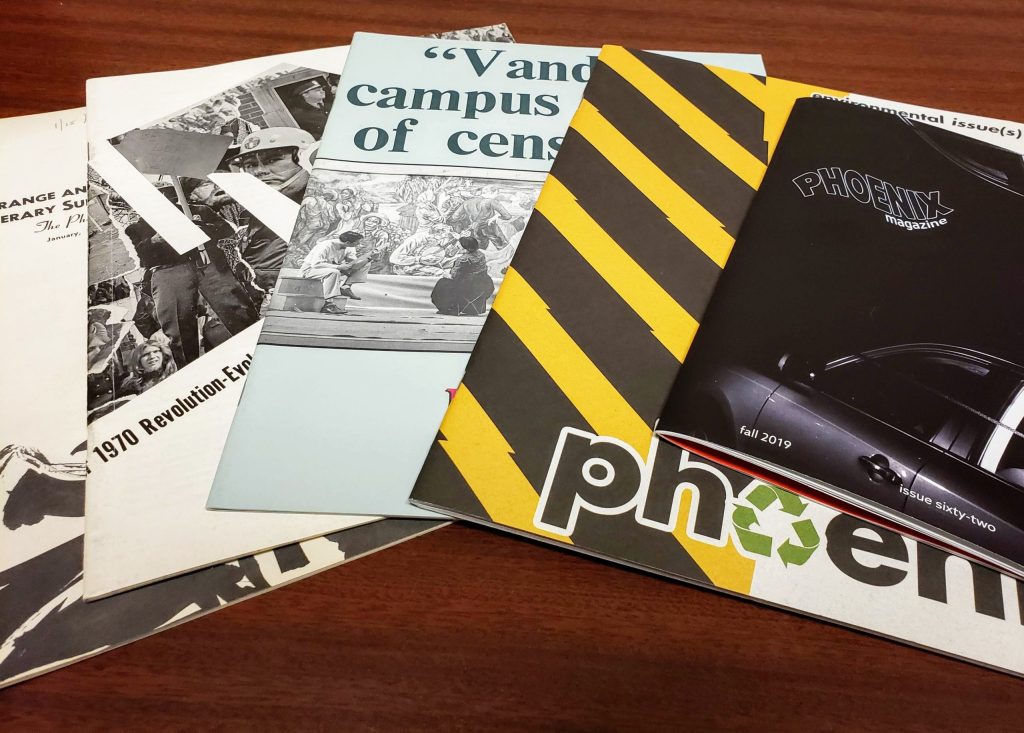
    Developed within these walls, each issue of the magazine holds a piece of the university’s cultural history. From its first issue in 1959, The Phoenix Literary and Arts Magazine has been a student-led haven for UT’s brightest authors and artists. Now celebrating 60 years in publication, the magazine is known as a home for student artistry on campus. Its history goes far deeper. The Phoenix staff has always sought to provide students with a platform to speak truth to power and share their own stories through art. Today, the publication renews that commitment as it transitions into the new world of print media. 

    But before The Phoenix became a hub for cultural conversation on campus, the magazine came into being as a supplement to the student newspaper, The Orange and White. Rising from the ashes of the discontinued, student-led literary magazine The Tennessean, The Phoenix has always harbored a commitment to student art and literature. 

    From the opening pages of its first edition in 1959 to today, the mission has remained the same. “We dedicate the first issue of “The Phoenix” to you, the students and faculty of the University of Tennessee,” the original dedication reads. “Rising from the flame of challenge, ‘The Phoenix’ offers you an opportunity to participate directly in the literary experience as contributors and as readers. Thus we hope to encourage the creation and appreciation of literature and the arts at the university.”

    Indeed, the “flame of challenge” would go on to become a prevailing theme for the magazine. Cormac McCarthy, Pulitzer Prize winning author of “The Road” and “No Country for Old Men,” UT alumnus and first contributor to The Phoenix, wrote several stories for the magazine during his stint as a student. Each of his stories were graphic and brooding—precursors to the dark material he would come to be known for. 

    In 1965, The Phoenix’s first independent issue matched pictures of Bob Dylan alongside an essay analyzing the morality of protest surrounding America’s role in the Vietnam War. Counterculture would go on to be a favorite topic of Phoenix editors during the 1960s and 70s. In ’67, the magazine attempted to investigate student usage of marijuana and lysergic acid diethylamide (LSD) on campus, but the story was dropped after threats of a police raid on staffers’ homes began to surface. In 1967, the publication parodied the Harvard Lampoon, and in 1970, The Phoenix put out a “Revolution-Evolution” edition of the magazine—dedicated to the waves of change in that era. 

    Largely, the “Revolution-Evolution” was concerned with how America’s music had changed and its effect on society as a whole. The exploration of new American art would set the stage for magazines to come. In ‘88, The Phoenix investigated vandalism, censorship and cultural criticism as places for artistic expression. It has tackled contemporary controversies throughout its lifespan.  In 1998, the magazine hoped to bring new understandings of underrepresented cultures to the university. Then, in 2005, The Phoenix dedicated itself to issues concerning the environment. 

    Telling untold stories seems to be one of Phoenix’s priorities, and that legacy continues today. Recent issues have sought to provide unrepresented peoples with a voice in our increasingly noisy political landscape. Year after year the magazine continues to explore contemporary cultural issues and provide students a place to extend their thoughts without fear of censorship.

    “I think that’s what makes it so important,” said former Phoenix Editor-in-Chief Michaela Roach-Ellis. “It’s more of a cultural publication that embodies the student perspective on campus.” 

    Indeed, the publication is well equipped to serve as broadcast point for the university perspective; the magazine accepts all kinds of work from UT’s students, alumni and faculty. 

    “It’s a physical and creative representation of student life,” Roach-Ellis said. “We have always had submissions that have a take on taboo or controversial topics—topics people are afraid to touch.” 

    The recent UT grad said that is exactly where the value of the magazine lies in its promotion of cultural conversation. “We get pieces from all across the board, from every viewpoint, and it is interesting to see work that sometimes challenges one another,” Roach-Ellis said. 

    Conversation is the only way to curb controversy, the former editor continued. “Even during my two short years as editor-in-chief, there were so many topics and themes that were confronted and addressed,” Roach-Ellis said. Publishing those kinds of things in the magazine, they asserted, “that’s how we start a dialogue.”  

    Beyond giving them a voice, The Phoenix offers an opportunity for students to publish their work and advance their careers in a collaborative environment controlled by their contemporaries. 

    “The best thing about the magazine is that it is totally student operated,” said UT Director of Student Media Jerry Bush. “It’s always run that way, student operated, student produced and student content.” 

    Still, Bush says that it’s hard for magazines like The Phoenix to make it in the increasingly noisy world of modern media. “Sometimes I feel like it’s been forgotten,” he said. “Since print has been dying, how do you remain in front of the student eye?”

    No doubt it is difficult. In recent years the magazine has made strides to modernize. In addition to the printed version of the magazine, The Phoenix has launched a website where it publishes stories covering arts, culture and literature surrounding UT. Bush hopes this will help the magazine keep its place in the public eye while making room for new audiences. “Everyone on campus loves to get their hands on that printed version,” Bush said. “But I think the website and being online allows the whole world to see the magazine.” 

    But even with the uncertainty of modern print media, the student media director maintains that The Phoenix still holds a significant place in the cultural zeitgeist on campus. He  hears regularly from groups across campus looking to get their hands on the latest issue. “Being recognized like that, among students and faculty,” he said, “that’s about as good as it gets.” 

    According to Bush, what keeps the magazine going is the students who run it. For him, the quality of the work produced is a source of pride. “I think that the work generated by students at the University of Tennessee is just as good as the students from any college in the country,” Bush said. “There’s some top-notch stuff that goes into our magazine, and I think it could stand out as one of the best in the country.”

    For Roach-Ellis, The Phoenix is more than the quality or recognition, but the impact it has on students’ homes.  “People take it, and they recreate it and transform it into something new,” they said. “I feel like that’s changed a lot of lives. Even if it’s in a small way, the magazine has helped a lot of people.” 

    Of course, looking at the magazine’s tiny office and small staff, it may be easy to underestimate the impact of The Phoenix. But what can’t be underestimated is its legacy. From the very beginning, The Phoenix has stood as a student-driven haven for art, literature and cultural conversation. That history continues today, a burning example of how high UT students can fly.

  • UT MFA Candidate Quynh Lam Communicates Vietnamese Trauma, Decay in Her Practice

    By Zoe Evans
    Edited by Collin Green 


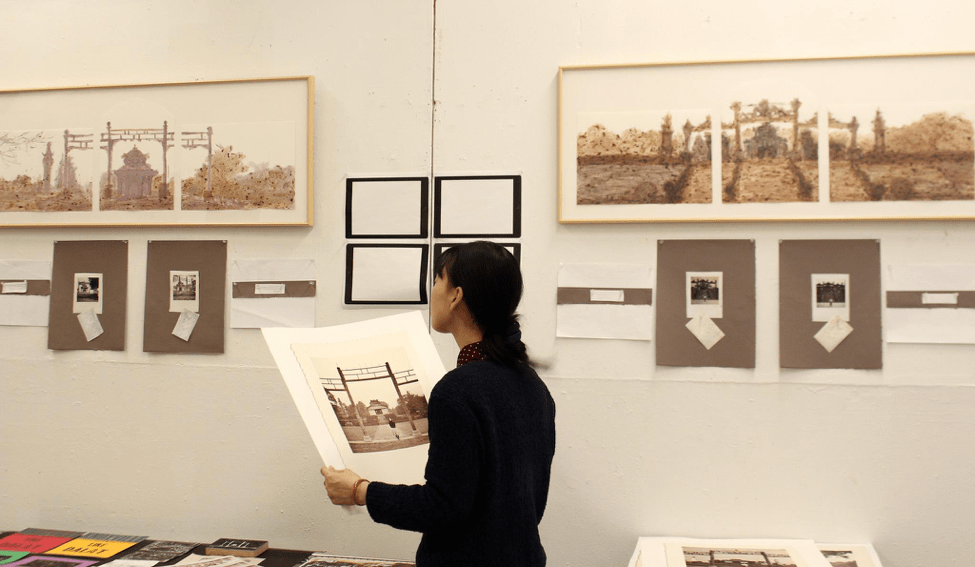
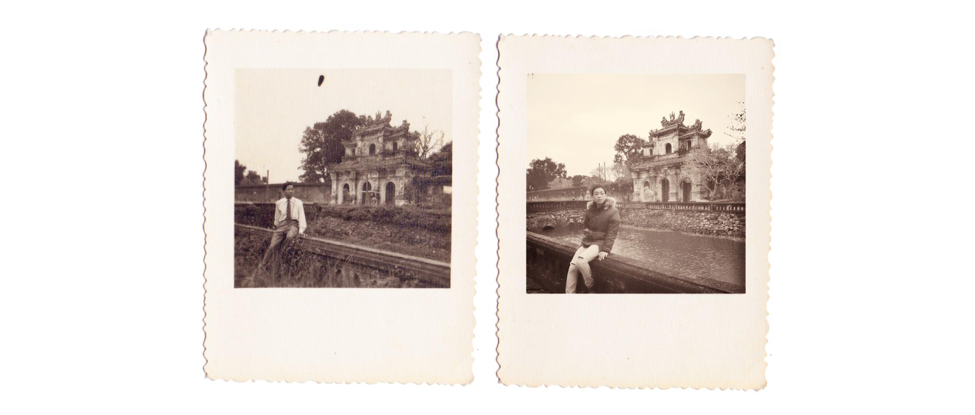
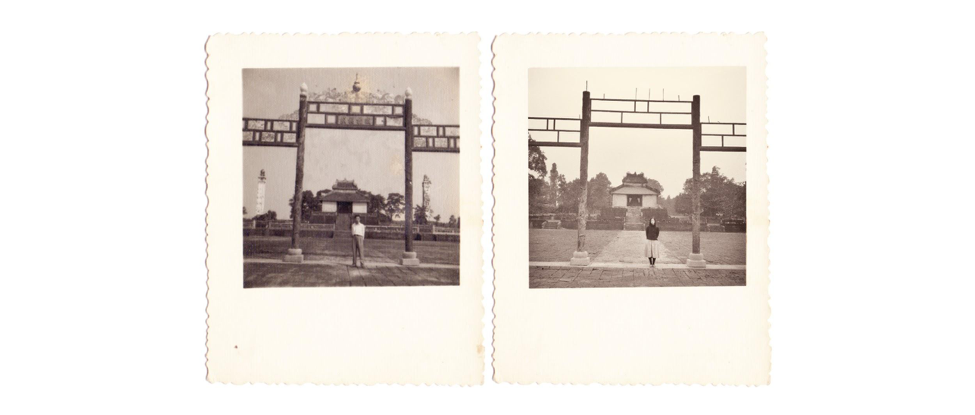
    Nguyen Duc Diem Quynh, also known as Quynh Lam, is a first-year graduate student and Fulbright scholar here at the University of Tennessee, Knoxville, studying Painting and Drawing for her MFA. Her work focuses on the ability of historical trauma to decay identity and community. In the Fall 2018 semester, Quynh shared with the Phoenix some of her photos from the Dalat and Hue chapters of her ongoing Mnemonics project.


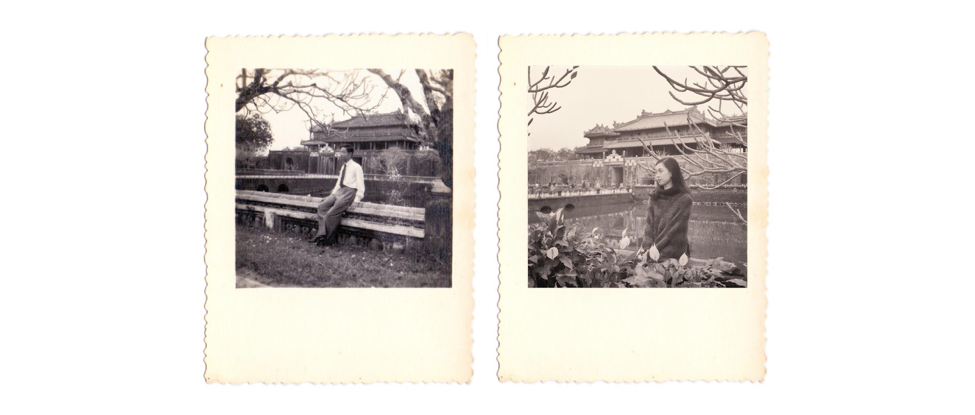
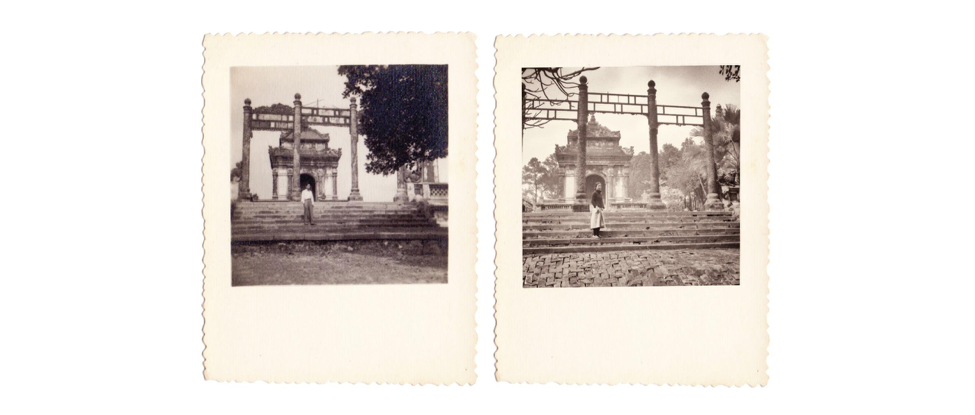
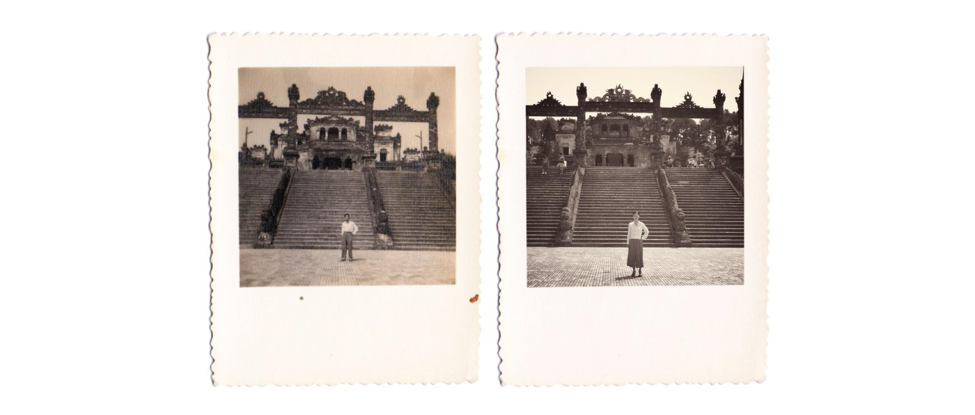
    Each of her photos are presented side by side with an almost identical photo. On the left of each pairing, Quynh’s uncle stands in front of Vietnam landmarks, and on the right, Quynh poses herself in her uncle’s position. Some decay over time is visible physically in the representation of the landmarks; seen specifically in Quynh’s image of the Dong Khanh Mausoleum, where bricks have shifted, been uprooted, and whole parts of the arch have gone missing.

    In her artist statement on Mnemonics, Quynh discusses her motivation for focusing on and recreating these old photographs:

    “When I was a child, I found a treasure chest in my uncle’s room. After many times I persuaded him to open for me to see, it turned out to be filled with old family photos and letters from my relatives. My family moved from the North to the South before the war in 1954, so I myself was born in Saigon. I know nothing about my northern relatives.”

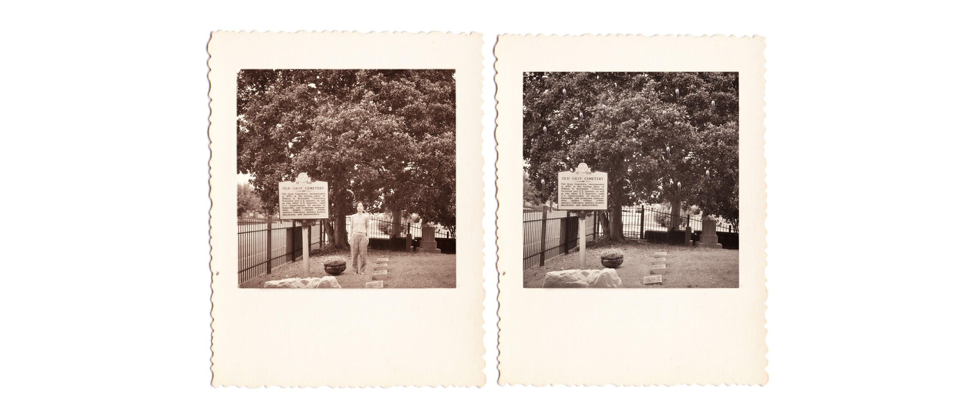
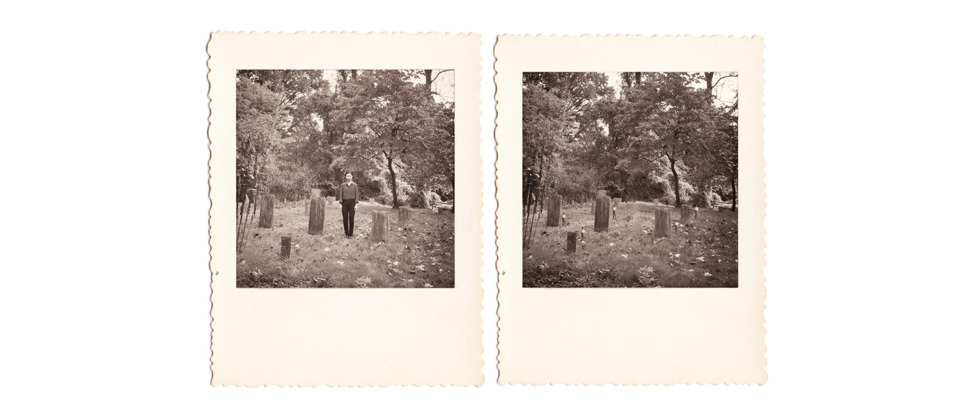
    These chapters of Mnemonics, which draw a literal connection between Quynh and her Uncle, all take place in Vietnam. However, Quynh has also developed chapters in Knoxville. In these photos, Quynh stands in cemetaries, specifically locations like Knoxville National Cemetery, which is the resting place for some of the American soldiers who died in the Vietnam War. Here, instead of recreating an older photograph, Quynh composes her own, and then removes herself from the composition and takes another photo with no figurative subject.

    “This is another way that I bring my Uncle to the U.S.” she explained. In the same way that Quynh takes her uncle’s place to symbolize her identity in relation to her family and Vietnam as a whole, she lets “ambient air” fill her position in the photographs to suggest that this is where her generation of Vietnamese people lack a connection to their history.

    Quynh’s photographs are intended to emphasize decay. Not only the physical decay of the places she visits, and not only of her connection to her own family history, but also of the young Vietnamese people’s willingness to learn about and discuss the country’s history.

    “My view of society as a Vietnamese woman is with some kind of trauma, because some of the typical Southern Vietnamese, they don’t really want to remind of the past. The kind of way my parents, they never told me what happened in the past, so I just explore by myself.”

    This idea of decay continues through her other projects. In her project Peach from 2015, she expresses her view of women’s oppression in Vietnam. She uses peach peel and fungus as her medium to discuss sexual taboos relating to femininity. In this way, the material itself communicates the theme.

    “In 2013 to 2014, I started to create my own pigment from flowers, fruits, leaves—and then in 2015, I was invited to participate into a residency program in Hoa Binh province, North Vietnam, which calls it ‘Eco Art.’

    From that residency, I had a chance to meet many international female artists, and we discussed much female body, birthing . . . It reminded me of some stories about women’s function from my colleagues in Architecture firm in Saigon. Every day, I heard a lot of stories from female officers, employees who [had been] pregnant or who used to have experience of giving birth. And all those stories inspired me to create the Birth series. The idea of Peach was developing during the time I was in the residency with Eco Art theme—the Peach series belongs to the Birth collection.”

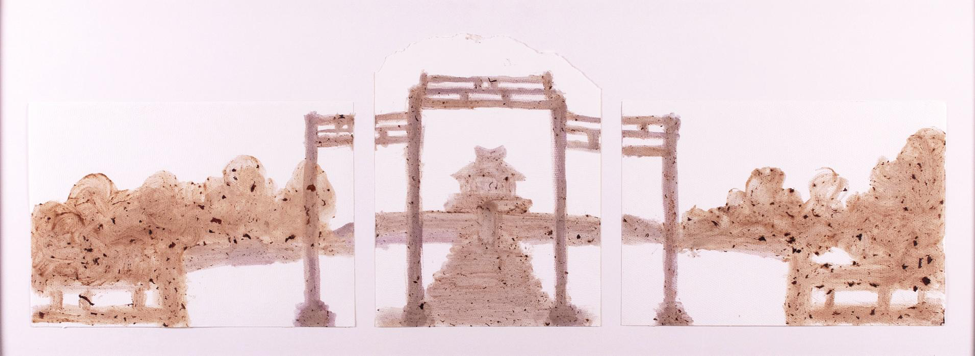
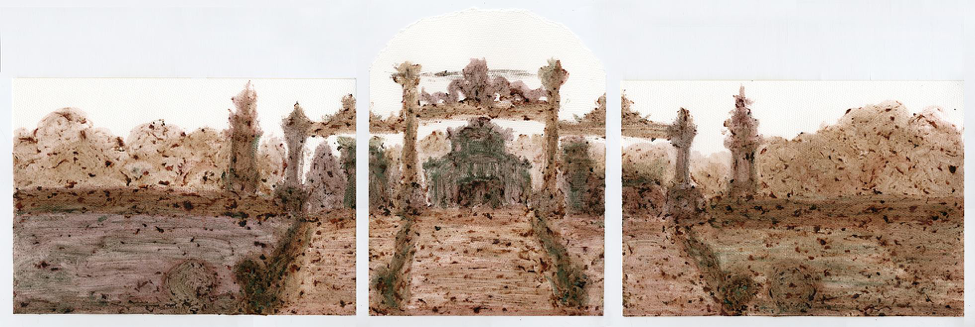
    More recently, Quynh finished a series of paintings using various decayed material. These three pieces depict three different Vietnamese mausoleums, using material sourced from three different stages of decomposition. The first, of Thieu Tri Mausoleum, used organic matter that Quynh collected between July and September. The second, of Dong Khanh Mausoleum, used the same from between October and November. The third, of Khai Dinh Mausoleum, was from between November and December. This progression changes the overall impression of the paintings, since the rich colors develop as time goes on. These pieces belong to a collection titled Ephemera.

    q9 q11 q12

    Quynh had the opportunity to showcase these pieces in an exhibition for winners of the 2019 Art Future Prize in Taiwan. She also won the Special Jury Prize, and was the lone representative artist for Vietnam.

    Her art—the pieces discussed previously, and many more—is not only remarkable for its involvement of natural pigments and organic matter, or for it’s striking beauty, but also for its ability to communicate a desperately held individual need for recognition of the past to others, in attempts to mend in the aftermath of historical community-based trauma.

    When asked, in a few words, how she might describe her identity, and that of the young Vietnamese people as a whole, Quynh said “I would say the word ‘displaced’ for myself, and I feel a terrible sense of loss towards the young Vietnamese people.”

    ___

    To learn more about Quynh’s success in Taipei this past January, visit this link to UT’s School of Art website: https://art.utk.edu/graduate-student-wins-2019-art-future-prize-in-taiwan/

    For more information on Quynh’s past exhibitions and publications, previous works, and history of press, please visit her website: http://quynh-lam.com/

  • A Break From Reality: Laughing with Cumberland Striptease

    By Collin Green

    Behind the curtain, before the show, there is only a brief break from hectic warm-ups as the members of Cumberland Striptease huddle up for their ritual pre-performance peptalk. Standing in a tight circle, the group locks hands as troupe director Daniel Hatch readies the team in what will be the only serious moment in a night full of comedy.

    “Take some time to get your butterflies in formation,” Hatch says calmly, and for a moment the auditorium is silent. Then, the huddle explodes into a cacophony of shouts and laughter. It’s showtime.

    Members of Cumberland Striptease lock hands in a pre-performance ritual.

    This comraderie is exactly what one might expect from the rag-tag group of amateur comedians that make up Cumberland Striptease. One of the only comedy troupes on campus, Cumberland Striptease, or CumStrip, is a student group dedicated to bringing improv to UT.

    “We’re just a bunch of people getting together doing silly jokes,” said veteran performer Kelli Frawley, describing her team before last Friday’s “Halloween Spooktacular” show.

    There’s certainly no lack of silliness when CumStrip takes the stage. A random assortment of gags and skits, shows play out in a chummy back and forth between audience and performers with constant suggestions and jabs from the crowd.

    Everything is off the cuff. There’s no planned material, no props, and no gimmicks. Characters and settings are pulled right from a crowd of familiar fans.

    “We have a lot of regulars, a lot of new people. We’re starting to get more popular,” said the troupe’s director Daniel Hatch. Following in the footsteps of CumStrip founder Miles McDonough, Hatch took over as director and host soon after arriving at UT. According to Hatch, a lot has changed.

    Indeed, the Friday night show marked the biggest in the group’s history. The library’s Lindsay Young Auditorium could barely contain the masses as friends and fans filled the seats from wall to wall.

    “We’re a lot bigger than we used to be and it’s still like a group that I continuously want to hang out with,” said Frawley; who, in addition to CumStrip, preforms in an all female improv group called Femme-Prov. For her, the improv is both scary and cathartic. She explained it, saying “it’s terrifying and there’s huge risks, and it seems like something you wouldn’t want to do, but I really enjoy it.”

    Pictured: Daniel Hatch (left), Lukas McCrary (center), and Kelli Frawley (right).

    Still, not everyone in the troupe is a seasoned veteran. The Halloween show marked a first for several new CumStrip members. Among them was Keith Orlowski, an aspiring stand-up and performer.

    “How can you not be animated when you’re making a fool of yourself on stage?” asked Orlowski after the show. He said that while the boost in attendance was a good sign, he’s hoping to see more people get involved with the comedy scene in Knoxville.


    “It’s weird because obviously we’re no California or New York, but it’s not like we only have one shitty dive bar where you can go up once a month and do five minutes. We have an actual, real comedy scene. I like to say our talent outstretches our audience,” Orlowski added. “We’ve got better stuff than people are going out to see.”

    That said, a full auditorium on a Friday night is nothing to scoff at and a crowd of dedicated fans is emblematic of the type of passion comedians like Orlowski hope to see more of in the future.

    “I do think that there’s a lot of people who are really passionate about it who are coming out in Knoxville, but just not enough people going to see them,” he said in conclusion.

    Even still, a bump in numbers is a good sign for any performer. However, it’s not the numbers that concern this group, but the show. For Cumberland Striptease, the most important thing is making UT laugh.

    “We want to give students a break from classes, a chance to come out and watch some edgy improv,” said Daniel Hatch in closing. “Come to our shows.”